REVIEW · CUSCO
Cusco: Sacsayhuaman Guided Tour and 1-Hour Horseback Ride
Book on GetYourGuide →Operated by Andina Expeditions · Bookable on GetYourGuide
Inca ruins, a huaca lesson, and then you’re in the saddle. I like that this tour stacks big Cusco sights into one smooth 4-hour loop, and I also like the practical touch of safety helmets plus muleteers for the horse time. One drawback to keep in mind: entrance fees and the Cusco Tourist Ticket Site Pass are not included, so your final total can creep up.
The driving time is kept tight, so you don’t feel like you’re just bouncing between stops. You’ll spend short, focused chunks at each site, then get a full hour riding into the Sacsayhuaman National Park area with views and possible llama or alpaca sightings. The horse ride does depend on your experience level, so if you’re unsure, plan to go slow and follow your guide’s lead.
In This Review
- Key reasons this tour works
- Cusco pickup and a tight 4-hour flow
- Sacsayhuaman: Inca engineering and the old empire’s heart
- Qenqo: learning what a huaca meant, plus the mummification story
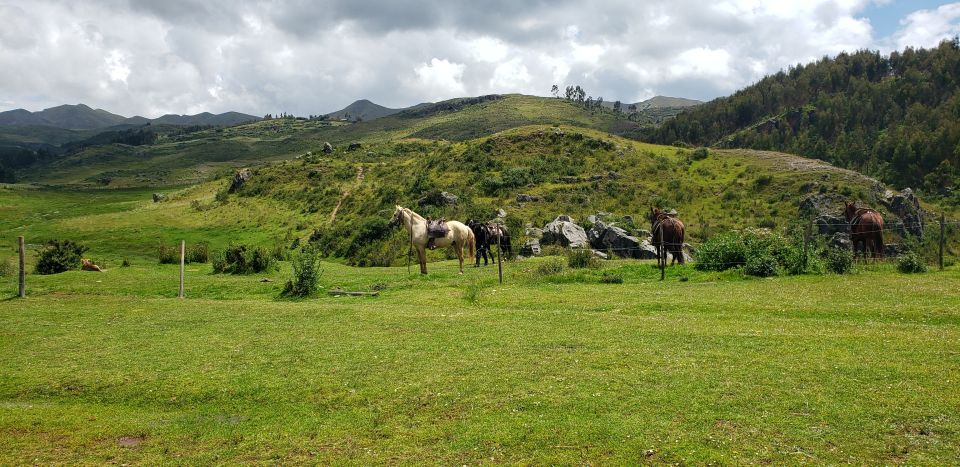
- The ranch and your 1-hour horseback ride in the Sacsayhuaman National Park area
- Tambomachay: the water temple that still makes sense
- Puka Pukara: fortress energy, Inca defense logic
- Price and what $90 covers (and what doesn’t)
- Who this tour fits best (and who should skip it)
- A note on guides and the value of clear explanations
- Should you book this Cusco Sacsayhuaman + horseback combo?
- FAQ
- How long is the tour?
- Where do you get picked up from?
- What languages are the guides?
- Is a helmet provided for horseback riding?
- Are snacks and water included?
- Do I need to pay entrance fees or the Cusco Tourist Ticket Site Pass?
- What should I bring?
- Is the tour suitable for people with mobility impairments or pregnant women?
- Does my horseback experience affect the ride?
- Is there free cancellation?
Key reasons this tour works
- Small group (up to 10) keeps questions realistic and the pace comfortable
- Helmet + saddle + muleteer means the horseback portion feels structured, not random
- Four Inca sites in one day gives you the full Cusco puzzle: fortress, water cult, huaca, royal mummification
- 1-hour ride in the Sacsayhuaman National Park area adds movement and open views beyond the ruins
- Bilingual guidance (English/Spanish) supports clear explanations at every stop
Cusco pickup and a tight 4-hour flow
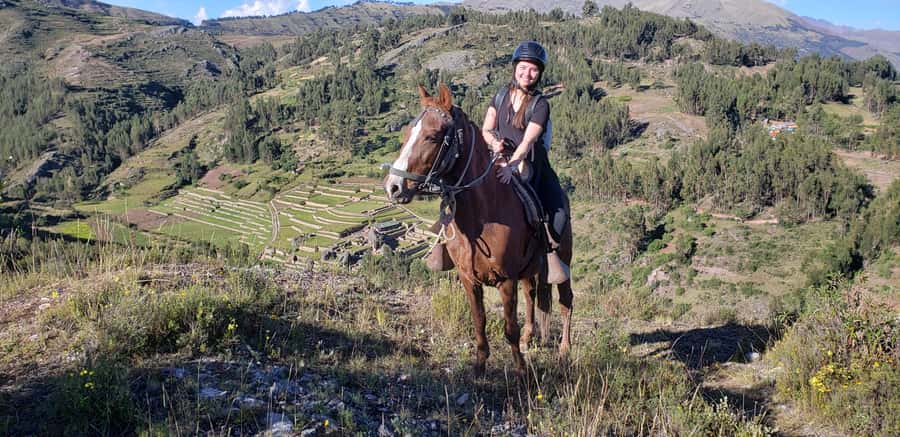
This is a half-day plan built for visitors who want more than one box checked. You’re picked up from hotels in central Cusco, then you start right away with Sacsayhuaman on the outskirts of town.
I appreciate the balance here: the tour doesn’t try to be a marathon. Each major stop is about 25 minutes, with the one full block of time reserved for the horseback ride. That makes the day feel like a sequence, not a blur.
You’ll also be in a small group setting, limited to 10 people. In a place with crowds and altitude, smaller groups can make the whole experience calmer.
You can also read our reviews of more guided tours in Cusco
Sacsayhuaman: Inca engineering and the old empire’s heart
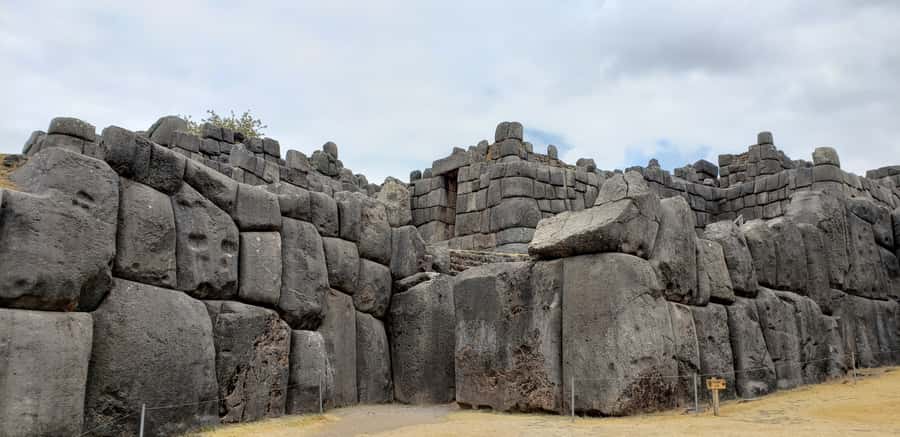
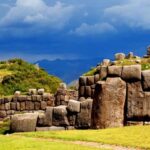
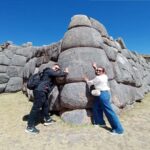
Sacsayhuaman is the showpiece, and the tour starts there on purpose. You get a guided walkthrough for about 25 minutes, focused on why this site mattered to the Inca and how it was built.
What makes Sacsayhuaman special is the combination of scale and function. You’re not just looking at stone; you’re learning how the Inca used architecture to shape the space around them. The tour’s explanation covers the site’s importance, plus how its design reflects serious planning and engineering.
Practical tip: arrive ready for uneven terrain and lots of standing and walking. Even with a short guided time, you’ll want closed-toe shoes that grip. If you’re prone to getting winded at altitude, pace yourself and pause when you need to.
Qenqo: learning what a huaca meant, plus the mummification story
Next comes Q’enco (often written Qenqo), a huaca site. The guide explains it as a designated Incan holy place, and the focus isn’t just on what it looks like, but what people believed and practiced there.
This stop includes a lesson tied to mummification. The tour describes mummification of ancient royal people in a cave at the archaeological complex. That adds a human layer to the ruins, because you’re connecting architecture to rituals and beliefs, not only to stonework.
There’s another practical benefit to this stop’s length: about 25 minutes keeps the story clear without turning it into a lecture. You can stay curious while still feeling energetic for what comes next.
The ranch and your 1-hour horseback ride in the Sacsayhuaman National Park area
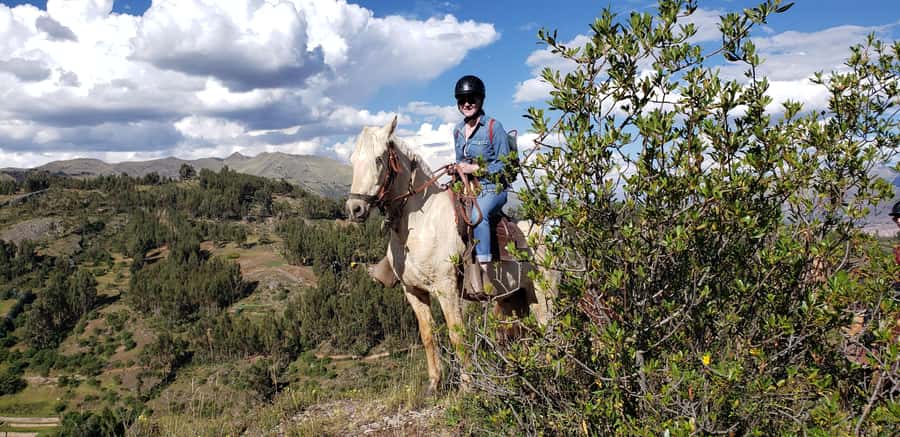
Then the day switches gears. After Q’enco, you head to a ranch near Sacsayhuaman to meet horses and muleteers. You’ll get a short induction on horseback basics and safe handling, and then the guide selects a horse based on your experience and mood.
This part matters for comfort. A guided horse selection is a big deal when you’re not an experienced rider, because it reduces the odds of you getting a horse that’s mismatched for your comfort level. The tour also provides saddles and safety helmets, which makes the ride feel far more organized than many do-it-yourself setups.
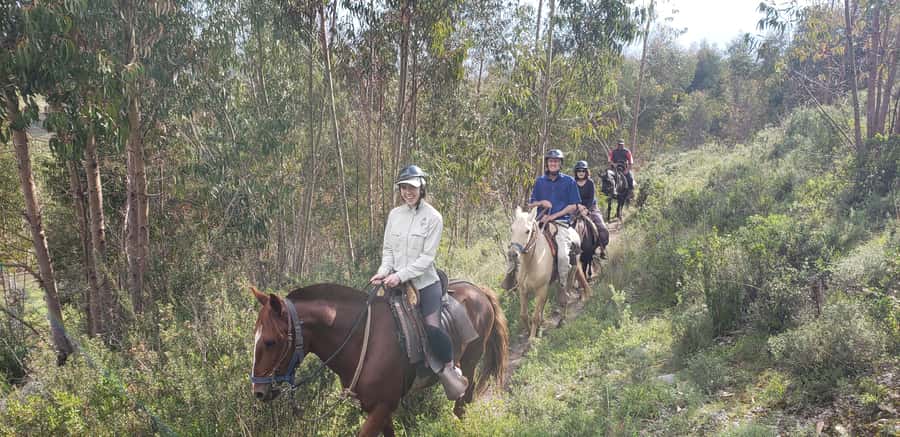
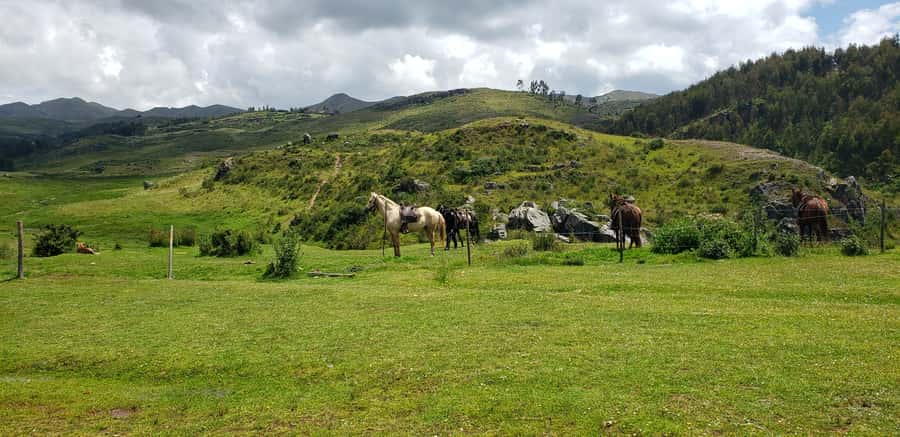
Once you’re mounted, you ride for about 1 hour into the National Park of Sacsayhuaman area, described as roughly 6,000 acres. The ride includes passing views, with chances to see potato farms, areas of new excavations, and, if you’re lucky, local animals like llamas and alpacas.
Altitude note: one account of the ride places the experience around 3,800 meters. That’s not something you should ignore. Drink water, move gently, and expect thinner air, especially if you’re moving uphill.
Speed and control: your pace depends on your comfort and the guide’s assessment. If you want more action, you may be able to trot or even go at a faster pace like galop when conditions and your ability allow. If you just want steady riding and views, you can keep it calm.
Who helps: muleteers are there, and you’ll have a guide overseeing the experience. In real terms, that means you’re not left to guess how to handle situations on the trail.
Tambomachay: the water temple that still makes sense
After the ride, you head back to ruins again, starting with Tambomachay. This is an ancient temple dedicated to water, and the guidance gives you the reason behind the attention to water in an Andean setting.
Tambomachay can feel more specific and less dramatic than some other sites, but that’s the point. It teaches you that the Incas didn’t only build places for ceremonies or power. They also built around systems that mattered every day.
If you’re tired from the horse time, this stop’s 25-minute length is helpful. You get the main ideas without turning it into an all-day grind.
You can also read our reviews of more tours and experiences in Cusco
Puka Pukara: fortress energy, Inca defense logic
The final archaeological stop is Puka Pukara, an ancient Incan fortress. The tour keeps it guided and time-boxed, again around 25 minutes.
Fortress sites can be hit-or-miss for visitors, because they can feel like “just walls” if you don’t know what to look for. Here, the value is the guide’s framing of what you’re seeing: defensive thinking, strategic placement, and the Inca’s approach to protection and control.
By the time you reach Puka Pukara, your brain has usually shifted from “seeing stones” to “reading purposes.” That makes the last ruins stop feel like a finishing move rather than a repeat.
Price and what $90 covers (and what doesn’t)
At $90 per person for a 4-hour small-group day, you’re paying for more than a quick sightseeing stop. You get:
- hotel pickup and drop-off from central Cusco
- a bilingual guide (English/Spanish)
- saddle, safety helmets, and muleteer support
- snacks and water
- guided time at four archaeological complexes
This is why the price can feel reasonable: you’re combining guided ruins plus a guided horse ride with safety gear and staff support. Many tours charge a separate premium for the horseback piece, but here it’s built into the same package.
What’s not included is important for budgeting:
- entrances fees
- Cusco Tourist Ticket Site Pass
- insurance
So your final cost depends on the passes and fees for the specific sites. If you already plan to buy the Tourist Ticket, factor that in. If you don’t, that’s the one budgeting surprise people often run into on days like this.
Who this tour fits best (and who should skip it)
This tour suits you if you want variety: ruins plus real movement on horseback in a single half-day. It’s also a solid choice if you like guided storytelling, because the explanations include the meanings behind each site, including huaca use and mummification in a cave setting.
It’s not suitable for everyone:
- pregnant women
- people with mobility impairments
- people over 200 lbs (91 kg)
If you’re within the weight range and your walking is manageable, the biggest unknown becomes riding comfort. The tour notes that the overall pace and timing can depend on your horseback skills and experience. That means you’ll likely ride more slowly if you’re new, and move faster only if you’re comfortable.
If you’re a beginner, go in with the mindset of learning and following instructions. If you’re an intermediate or confident rider, you may have the chance to pick up speed like trotting or faster gaits when your guide thinks it’s safe.
A note on guides and the value of clear explanations
The guide experience can make or break the day. Clear English guidance, patient explanations, and good Q&A help you connect the dots between sites so you don’t just memorize facts.
Examples from the kinds of guides who have run this tour include people like Beny and Holger, both described as delivering clear explanations and being responsive with questions. Even if you don’t get the same guide, the takeaway for you is simple: prioritize a tour where the guide actively explains and answers, especially when you’re jumping between Sacsayhuaman, Qenqo’s huaca lesson, and fortress sites.
Should you book this Cusco Sacsayhuaman + horseback combo?
I’d book this if you want a compact Cusco “greatest hits” day that doesn’t feel rushed between ruins and doesn’t skip the fun part (the hour on horseback). The value comes from the combination: guided history at multiple sites plus organized riding support with helmets, saddles, and muleteers.
Skip it if you’re sensitive to uneven walking, unsure about riding at altitude, or you’re outside the stated physical suitability rules (especially the 200 lbs limit and the pregnancy and mobility exclusions). Also budget for entrances and the Cusco Tourist Ticket Site Pass.
If you like your travel days planned but not rigid, this one hits that sweet spot.
FAQ
How long is the tour?
The tour lasts about 4 hours total, with a 1-hour horseback ride included.
Where do you get picked up from?
Pickup and drop-off are included from hotels in central Cusco. You’ll wait in your hotel lobby or at the hotel entrance for your guide.
What languages are the guides?
The tour is offered with a bilingual guide in English and Spanish.
Is a helmet provided for horseback riding?
Yes. The tour includes safety helmets, along with a saddle.
Are snacks and water included?
Yes. Snacks and water are included during the experience.
Do I need to pay entrance fees or the Cusco Tourist Ticket Site Pass?
Entrance fees and the Cusco Tourist Ticket Site Pass are not included, so you should plan for those costs.
What should I bring?
Bring long pants and closed-toe shoes.
Is the tour suitable for people with mobility impairments or pregnant women?
No. The tour is not suitable for pregnant women or people with mobility impairments.
Does my horseback experience affect the ride?
Yes. The duration of the tour depends on participants’ horse riding skills and experience.
Is there free cancellation?
Yes. You can cancel up to 24 hours in advance for a full refund.