REVIEW · BUENOS AIRES
Buenos Aires: Hop-On Hop-Off City Bus Tour
Book on GetYourGuide →Operated by Gray Line Argentina · Bookable on GetYourGuide
Buenos Aires can feel huge and loud. This hop-on hop-off loop is a simple way to get oriented fast, then move at your pace. You ride a modern double-decker route that hits both the historic neighborhoods and the newer city areas, with a multilingual audio guide guiding your eyes.
I particularly like how the buses run on a 25-minute rhythm, so you’re not stuck waiting all day. I also like the built-in commentary: it’s designed for you to understand what you’re seeing without needing to stop for research every few blocks.
One possible drawback: the onboard WiFi and comfort features can be hit-or-miss, and the commentary timing isn’t perfect—some audio may feel a touch late when you’re already near a stop.
In This Review
- Key things to notice before you board
- Getting Oriented Fast: Why This Buenos Aires Hop-On Hop-Off Works
- Ticket Options and Time Rules (24, 48, or 72 Hours)
- Last-bus reality check
- How the Route Feels: Frequent Service and a Loop That Takes Time
- Stop-by-Stop: What You’ll See from Diagonal Norte to Teatro Colón
- Stop 0: Diagonal Norte (Av. Pres. Roque Sáenz Peña 728)
- Stop 1: Congreso area (Av. Pres. Roque Sáenz Peña 728 option)
- Stop 2: Palace of the Argentine National Congress
- Stop 3: El Loco Chávez – Paseo de la Historieta
- Stop 4: Plaza Dorrego
- Stop 5: Usina del Arte
- Stop 6: La Bombonera
- Stop 7: Caminito
- Stop 8: Costanera Sur
- Stop 9: Puerto Madero
- Stop 10: Bus Turístico-Circuito Rojo y Amarillo-Estación Fluvial
- Stop 11: Galerías Pacífico
- Stop 12: Plaza General San Martín
- Stop 13: Floralis Genérica
- Stop 14: Museum of Latin American Art of Buenos Aires (MALBA)
- Stop 15: Planetario Galileo Galilei
- Stop 16: Club de Pescadores
- Stop 17: Jorge Newbery Airfield
- Stop 18: Parque de la Memoria de Buenos Aires
- Stop 19: Estadio Monumental Antonio Vespucio Liberti
- Stop 20: Chinatown, Buenos Aires
- Stop 21: Argentine Polo Association
- Stop 22: Carta Magna Monument
- Stop 23: Recoleta
- Stop 24: Teatro Colón
- Using the Audio Guide Like a Pro (and Avoiding Missed Moments)
- Comfort and Practicalities: Open-Air Views, AC for Reality
- What This Costs (and Why It Often Feels Like Good Value)
- My Best Bets for First-Time Priorities
- Who This Bus Tour Fits Best
- Should You Book This Buenos Aires Hop-On Hop-Off Tour?
- FAQ
- How long can I use the Buenos Aires hop-on hop-off bus ticket?
- What hours does the bus run?
- How often do the buses depart?
- Where can I start the tour?
- How many stops are on the route?
- Is the audio guide included, and in what languages?
- Is WiFi available on the bus?
- Are admission tickets to attractions included?
- Will the tour run on football match days?
Key things to notice before you board
- A loop you can do in pieces: hop on/off at 25 stops over 24, 48, or 72 hours
- Frequent departures: buses aim for about every 25 minutes during the day
- Audio in many languages: Spanish, English, Portuguese plus additional options (Japanese, Chinese, Russian, Italian, French, German, Ukrainian, Korean)
- Open-top views with practical comfort: sunroof plus air conditioning
- Route highlights spread out: from La Boca to Puerto Madero, Recoleta, and the stadium areas
- WiFi included, but not guaranteed: some riders reported it didn’t work on their days
Getting Oriented Fast: Why This Buenos Aires Hop-On Hop-Off Works
Buenos Aires is a city you want to see, but also a city you want to understand. This bus tour is built for both—big windows for city views, and an audio guide so the streets don’t blur together.
The route focuses on the contrast that defines Buenos Aires: traditional neighborhoods like La Boca and San Telmo vibes (the tour passes through that general historic side), and more modern areas like Palermo/Belgrano territory (the loop continues through newer, wide-street zones). You’re not doing one highlight and calling it done. You’re getting a full “map in motion,” and that’s exactly what helps you plan the rest of your trip.
On top of that, the bus is practical. It’s double-decker with a sunroof and air conditioning. On a warm day, you can sit upstairs and look around. If you get tired of sightseeing, you can stay on and still watch the city slide by.
You can also read our reviews of more city tours in Buenos Aires


Ticket Options and Time Rules (24, 48, or 72 Hours)
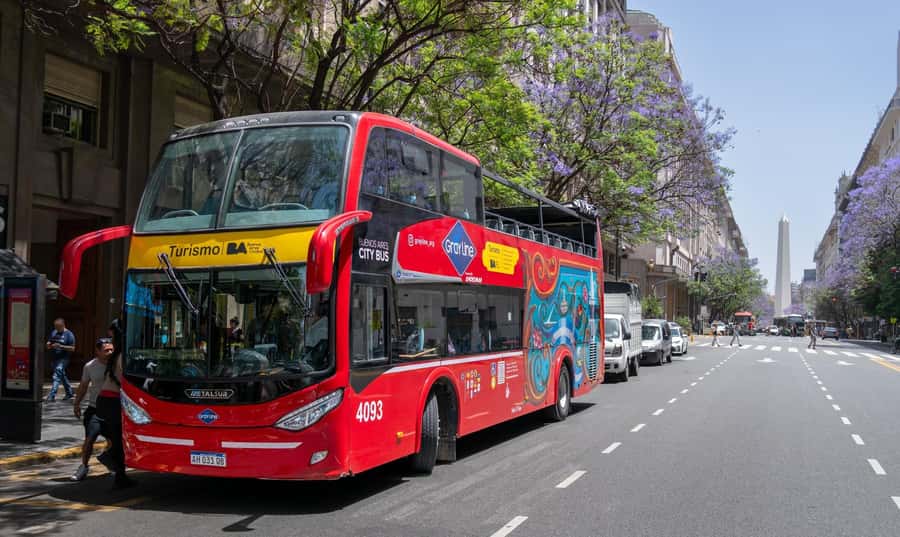
You choose a ticket that lasts 24, 48, or 72 hours, and you can start the tour at any bus stop on the route. The bus operates Monday through Sunday from 9:30 a.m. to 6:00 p.m., but it begins circulating around 9:20 a.m. from the main start points.
Here’s the key timing rule: the 24/48/72-hour countdown starts the first time you board the hop-on hop-off bus on your chosen initial day. After that, you can hop on and off freely for your selected duration.
Also note this useful detail: once you buy your ticket, you have 6 months to start using it. If you’re flexible with travel dates, that’s a helpful cushion.
Last-bus reality check
The last buses leave at 5:30 p.m. and then only do a half return along the route. So if you’re hoping to see far-out stops late in the afternoon, don’t assume the full loop will be available at that hour. Plan your “long hop-offs” earlier, and keep one short hop in your back pocket in case the day runs long.
How the Route Feels: Frequent Service and a Loop That Takes Time
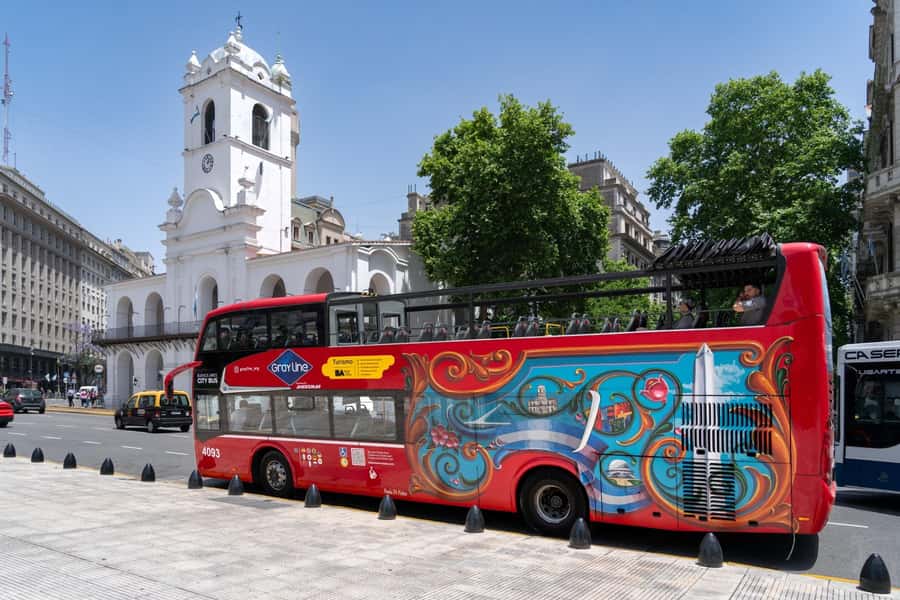
This is not a quick “highlight bus.” The full circuit is longer than you might expect. One rider timed the complete red-bus loop at about 3 hours. That matches the general reality of Buenos Aires traffic and the number of stops spread across different parts of the city.
The payoff is that you don’t have to get off to enjoy it. You can:
- Stay on the upper deck for the whole loop to build your mental map
- Jump off for 60–90 minutes at the places you care about
- Use it like moving transportation between nearby attractions
Buses run about every 25 minutes during the day. And yes, sometimes you’ll wait a bit longer if a stop gets busy or if traffic slows boarding. But the system is designed to be reliable enough that you can build your day around it rather than plan your entire itinerary around the bus schedule.
Stop-by-Stop: What You’ll See from Diagonal Norte to Teatro Colón
You can hop on/off at 25 stops along the route. Below is how I’d think about the sights, what each stop is best for, and what to watch out for. (The tour passes by each major point listed on its route, and those are your hop-off chances.)



Stop 0: Diagonal Norte (Av. Pres. Roque Sáenz Peña 728)
This is a central launch point. It’s a good way to start if you’re staying near the downtown grid and want the city to unfold from the core. Great for an easy first ride so you understand where everything connects.
Stop 1: Congreso area (Av. Pres. Roque Sáenz Peña 728 option)
This stop is listed as a starting location, and it’s also the nearest stop to El Gato Negro. If you’re trying to pair the bus with another planned activity, this is one of the better anchors.
Stop 2: Palace of the Argentine National Congress
Classic monumental architecture energy. Even if you don’t go inside, it’s a strong first “Buenos Aires government-and-history” moment—good for photos and for getting your bearings.
Stop 3: El Loco Chávez – Paseo de la Historieta
This is the kind of stop that works well if you like quirky local culture. If you’re into Buenos Aires beyond plazas and monuments, this is a nice break in the routine.
Stop 4: Plaza Dorrego
Plaza Dorrego is a classic historic stop for atmosphere. It’s the sort of place where you can get off, walk around for a while, and then rejoin the bus when you want to keep moving.
Stop 5: Usina del Arte
A practical hop if you want a cultural stop that isn’t just “look from the sidewalk.” It’s also noted as the way to access the Boca Museum. If you’re serious about the La Boca side of Buenos Aires, this is one of your best entry points.
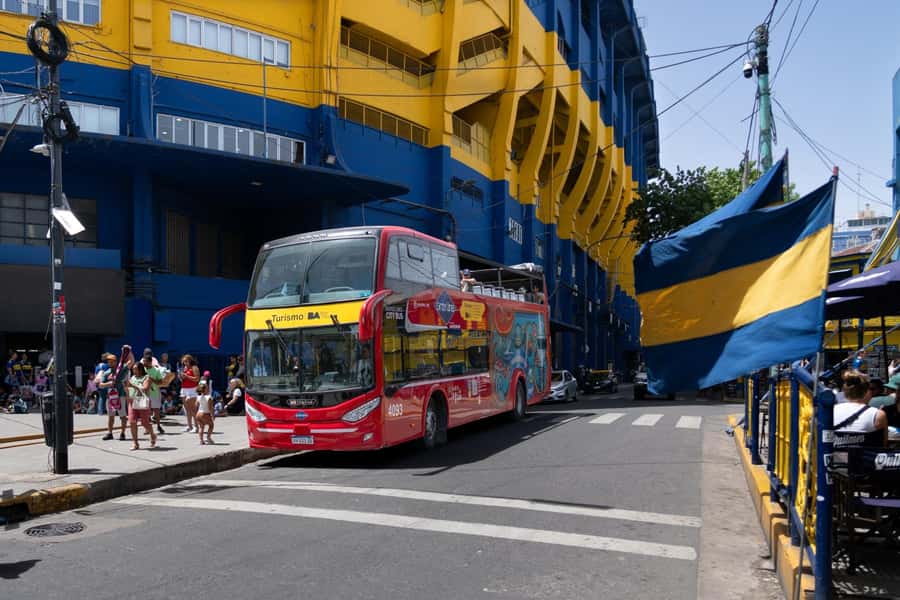
Stop 6: La Bombonera
This stadium stop is the big football draw on the tour. Even from the outside, it’s instantly recognizable. If you want a stadium-focused day, plan extra time here rather than doing a quick photo-only stop.
Stop 7: Caminito
Caminito pairs naturally with La Boca. It’s colorful and walkable, and it tends to be where first-time visitors decide how much time they want to spend in the area. If you only hop off once during the La Boca stretch, this is a strong choice.
Stop 8: Costanera Sur
This is your chance to enjoy the waterfront-zone feel. It can help break up the city-streets intensity and give you a different angle on Buenos Aires.
Stop 9: Puerto Madero
Puerto Madero is modern and clean-lined compared to the historic neighborhoods. It’s a great place to take a slower moment—especially if you want impressive city views without a long commute.
Stop 10: Bus Turístico-Circuito Rojo y Amarillo-Estación Fluvial
This is a route junction point. It’s useful if you want to coordinate your bus ride with other nearby sightseeing plans and keep your day moving smoothly.
Stop 11: Galerías Pacífico
A stop for architecture and indoor strolling. If you get a break in weather or you want a “step inside” pause during the tour, this kind of location fits well.
Stop 12: Plaza General San Martín
This is listed both as a stop on the route and as the tour office location (Av. Santa Fe 808). It’s a strong practical base in the middle of your day if you need to reset, ask for help, or simply regroup.
Stop 13: Floralis Genérica
A signature visual stop. If you like memorable silhouettes and photo-friendly moments, this one helps make your loop feel like more than standard city stops.
Stop 14: Museum of Latin American Art of Buenos Aires (MALBA)
A good hop if museums are part of your plan. The tour gives you location access, but you’ll still handle any admission yourself since tickets don’t include entry.
Stop 15: Planetario Galileo Galilei
A fun option if you want science/culture instead of another plaza. It’s also a useful anchor to structure an afternoon break.
Stop 16: Club de Pescadores
This stop is a nice “Buenos Aires along the water” type of mood. It works best if you like walking around and soaking up neighborhood character rather than just photographing a single landmark.
Stop 17: Jorge Newbery Airfield
This is another “big infrastructure” viewpoint stop. If aviation/transport history interests you, it gives you a broader view of how the city connects beyond the central core.
Stop 18: Parque de la Memoria de Buenos Aires
A meaningful stop for reflection and open-air space. If you want a calmer moment between stadium and neighborhood sightseeing, this fits well.
Stop 19: Estadio Monumental Antonio Vespucio Liberti
Another football icon. This is also the stated access point for the River Museum. If River or Boca matches are happening, the tour notes that no tours will take place on those stadium days—so it’s smart to check your travel dates if football is central to your plans.
Stop 20: Chinatown, Buenos Aires
A great neighborhood change of pace. It’s also one of those stops that helps you eat differently, browse, and get a sense of Buenos Aires as an immigration-and-culture hub—not just the “Argentina classics.”
Stop 21: Argentine Polo Association
A niche stop, but a fascinating contrast. If you want Buenos Aires beyond the most photographed areas, this kind of stop adds texture.
Stop 22: Carta Magna Monument
A quick landmark stop that helps you understand the city’s civic symbolism. It’s usually easiest to enjoy if you keep your hop-off time light and pair it with nearby sights.
Stop 23: Recoleta
Recoleta is one of the big-name Buenos Aires zones. It’s where you’ll feel the city shift toward more elegant streetscapes and classic sightseeing energy. If you’re choosing just a couple neighborhoods to go deeper, Recoleta is usually one of them.
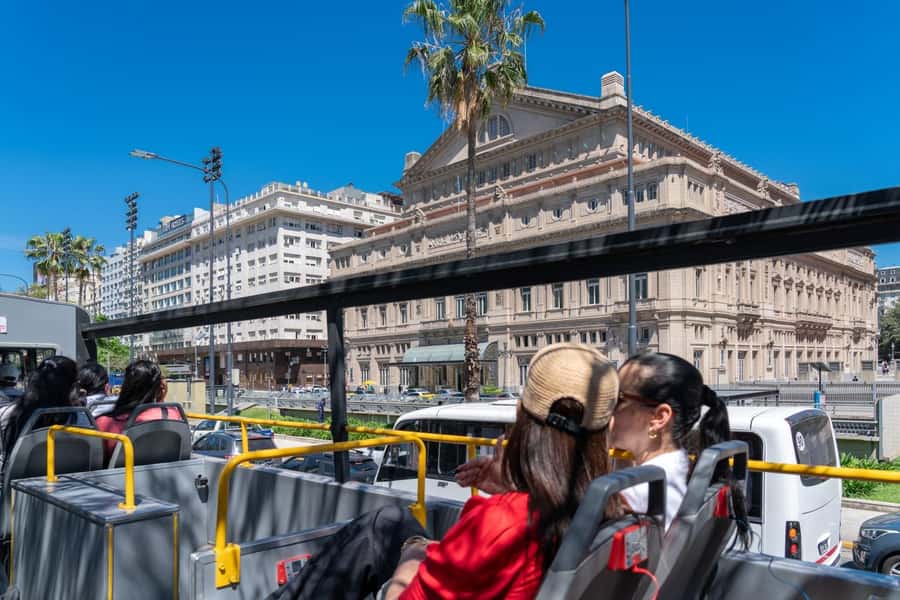
Stop 24: Teatro Colón
For many people, this is the “final boss” stop: grand opera-house presence. Even without entering, the building itself is worth orienting around. It’s also a great place to end the day because it feels like a proper Buenos Aires moment.
Using the Audio Guide Like a Pro (and Avoiding Missed Moments)
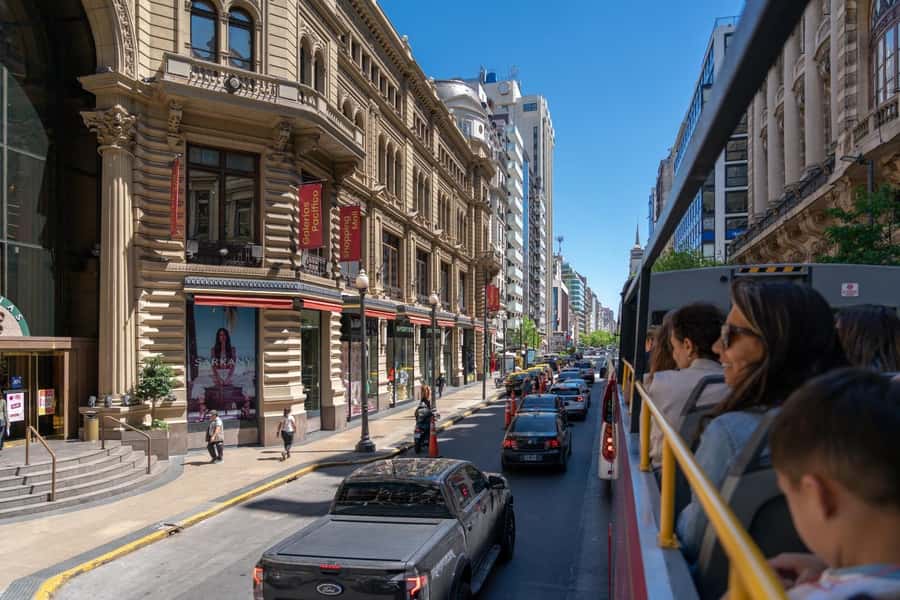
The audio guide is one of the strongest parts of this experience. It runs in multiple languages, including Spanish, English, Portuguese, Japanese, Chinese, Russian, Italian, French, German, Ukrainian, and Korean. That’s a lot of coverage and it means the tour can feel smooth for groups with mixed preferences.
How to make it work best:
- Use headphones early, not at the middle of the route. You’ll build context faster.
- If the bus is near a stop you care about, pause your focus on audio for a second and look first—then let the audio confirm what you’re seeing.
- Plan for the fact that audio timing can sometimes feel off. Some riders noted commentary being delivered when the bus had effectively already moved past the point.
Still, the overall impression is that the narration is factual and gives you a “why this place matters” layer. And between stops, the audio helps you connect neighborhoods so they don’t feel like separate postcards.
Comfort and Practicalities: Open-Air Views, AC for Reality
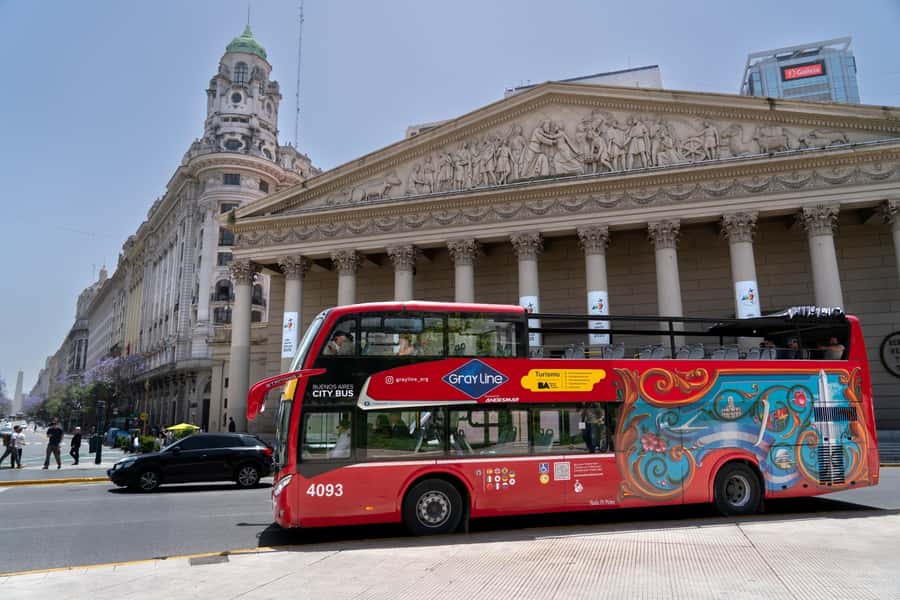
This bus is an open-top double-decker, but it also has air conditioning and sunroof features. That combination matters in Buenos Aires because the weather and light can swing through the day. You can choose your vibe:
- Upper deck for broad views and photos
- Lower areas if you want shade or cooler air
WiFi is included onboard and at bus stops. One common concern: some riders said the WiFi didn’t work during their days. So I’d treat it as a nice bonus rather than something to rely on for navigation or messaging.
If you’re sensitive to audio clarity, be aware that some riders mentioned earbuds/headphone fit issues (like earplugs being short). Bringing your own small headphone set can make the audio more comfortable.
What This Costs (and Why It Often Feels Like Good Value)
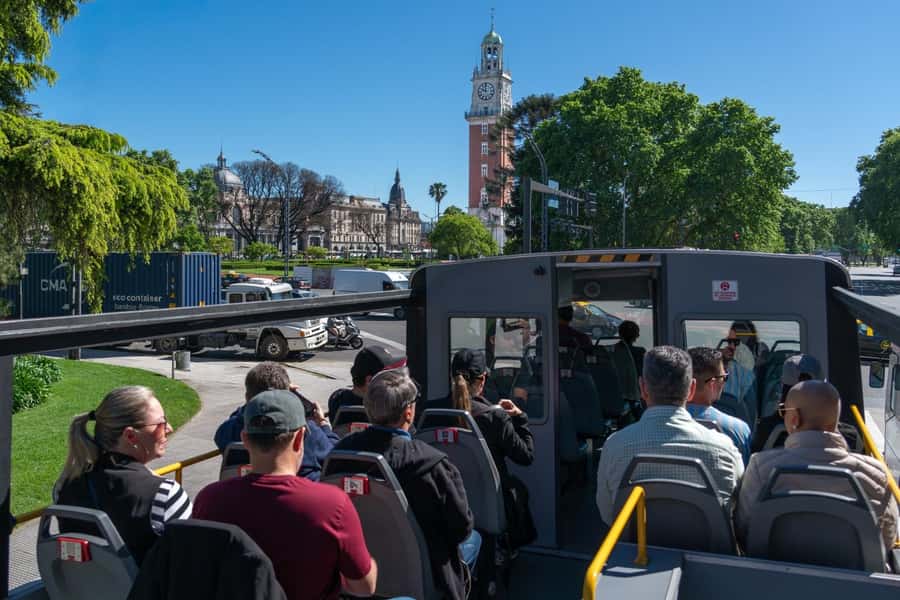
At $35 per person, this tour isn’t “cheap,” but it’s often a good value for a first-timer or for anyone with limited time. Why? Because you’re buying:
- access to a full-route sightseeing network (25 stops)
- multiple hours of guided context from the audio system
- transportation that can reduce the cost and hassle of hopping between neighborhoods
If you choose the 48-hour option, it tends to feel especially efficient. One rider specifically called it good value because it allowed plenty of time to visit several stops rather than rushing. With Buenos Aires, rushing usually means you see less.
The real value comes when you use the hop-on/off flexibility. If you only do one loop with no planned hops, the tour turns into a long bus ride. If you pair it with 2–4 focused stops per day, it becomes a structured way to “cover the map” and then go deeper where you want.
My Best Bets for First-Time Priorities
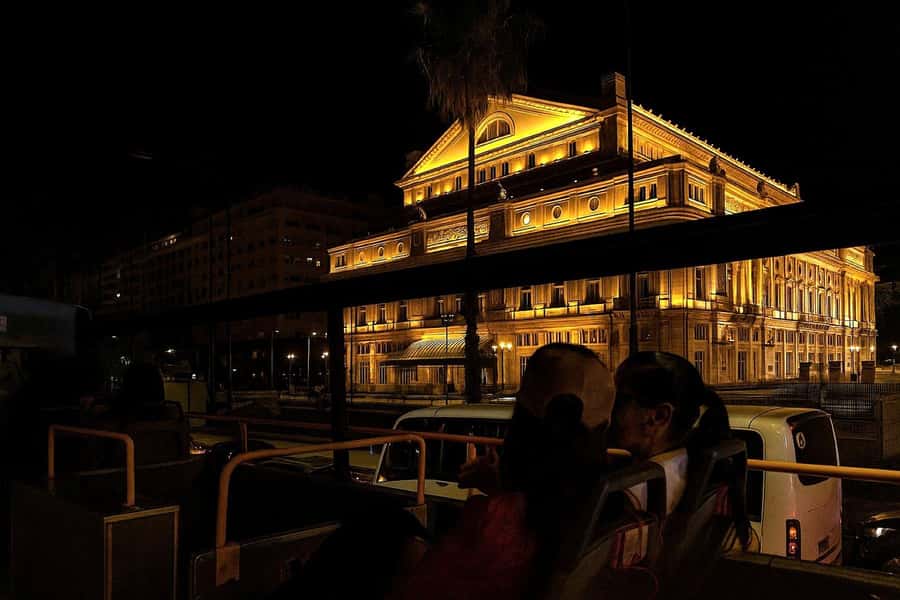
If you’re deciding where to hop off, these stops are the biggest “story anchors” for many visitors because they represent major zones of the city:
- La Boca stretch: La Bombonera + Caminito for the most iconic color
- Classic city landmark day: Recoleta + Teatro Colón
- Modern contrast: Puerto Madero for skyline-style pacing
- Photo/visual moment: Floralis Genérica
- Neighborhood taste and browsing: Chinatown
You can mix these with waterfront and memorial zones for variety: Costanera Sur and Parque de la Memoria both give your route a different emotional tone.
Who This Bus Tour Fits Best
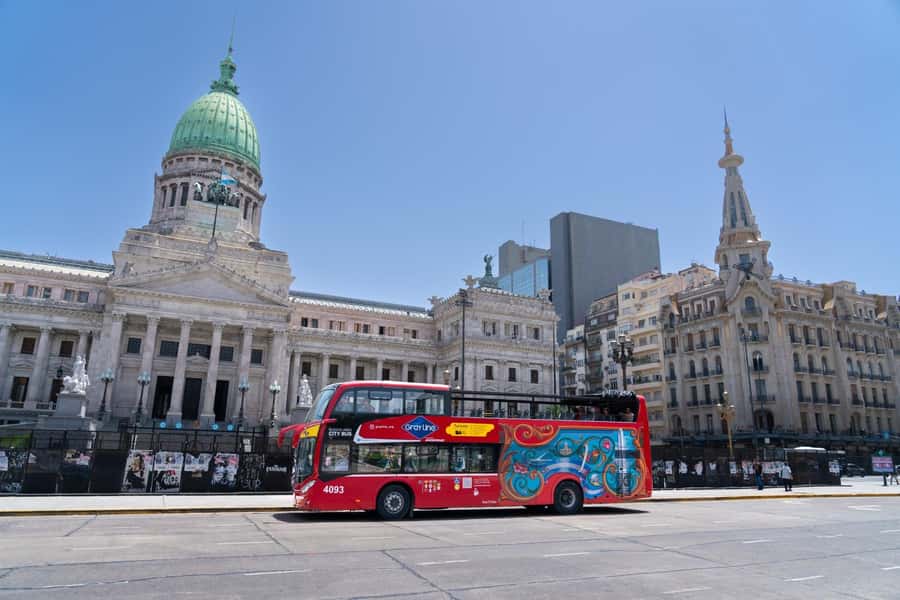
This tour is ideal if you:
- Want an easy way to understand Buenos Aires without renting a car
- Have limited time and need a quick orientation tool
- Like choosing your own pace (quick hop-offs or stay-on-and-watch)
- Travel with a mix of interests, since the route covers stadium, culture, neighborhoods, and waterfront
It’s also a solid “plan B” option. If weather changes, you can stay upstairs under the sunroof and still keep moving.
Should You Book This Buenos Aires Hop-On Hop-Off Tour?
I’d book it if you want a stress-light way to see a lot of Buenos Aires and learn what you’re looking at. The frequent service, the open-top views with air conditioning, and the strong audio guide make it an efficient foundation for the rest of your trip.
I’d think twice if you’re the kind of traveler who hates long loops and prefers point-to-point transit. In that case, you might use the bus as transportation only for a couple key hops—because the full circuit takes time, and your best experience comes from planning 2–4 meaningful stops rather than doing a single pass and hoping it covers everything.
FAQ
How long can I use the Buenos Aires hop-on hop-off bus ticket?
You can choose a 24-, 48-, or 72-hour ticket, based on the option you select. The time starts when you first board the bus on your initial reserved day.
What hours does the bus run?
The bus operates Monday to Sunday from 9:30 a.m. to 6:00 p.m. It begins circulating around 9:20 a.m. from the start points, and the last buses leave at 5:30 p.m.
How often do the buses depart?
During the day, the buses run about every 25 minutes.
Where can I start the tour?
You can start at any bus stop. The main starting point is in the city center at Diagonal Norte (Av. Pres. Roque Sáenz Peña 728, listed as stop 0), and there is also a start via the office at Plaza San Martín (Av. Santa Fe 808, stop 12).
How many stops are on the route?
The route has 25 stops where you can hop on and off during your ticket window.
Is the audio guide included, and in what languages?
Yes. The audio guide is included and is available in multiple languages, including Spanish, English, Portuguese, plus Japanese, Chinese, Russian, Italian, French, German, Ukrainian, and Korean.
Is WiFi available on the bus?
Yes, free WiFi is offered onboard and at the bus stops, though some riders reported it may not work consistently.
Are admission tickets to attractions included?
No. Admission to attractions and food and beverages are not included.
Will the tour run on football match days?
The tour notes that on days when River or Boca play at their stadiums, no tours will take place.