REVIEW · BUENOS AIRES
Buenos Aires by Night: Small Group City Tour
Book on GetYourGuide →Operated by Signaturetours · Bookable on GetYourGuide
Buenos Aires changes after dark fast. I like the way this tour turns a handful of famous sights into walkable moments, with guides who can explain what you’re seeing and why it matters, like Pablo. I also love the stop for the rotating Woman’s Bridge, where night lighting makes Puerto Madero feel brand-new. One heads-up: this is a night walk-and-ride format, and it’s not recommended if you have limited mobility, and luggage or large bags aren’t allowed.
You’ll get a clear arc to the evening: Plaza de Mayo for the big illuminated icons, then a shift toward charming old streets and modern neighborhoods. Expect short guided stops and plenty of time to look up, snap photos, and get oriented fast in a city that can feel big when you’re on your own.
In This Review
- Key things I’d focus on before you go
- How a 3-hour Buenos Aires night loop actually feels
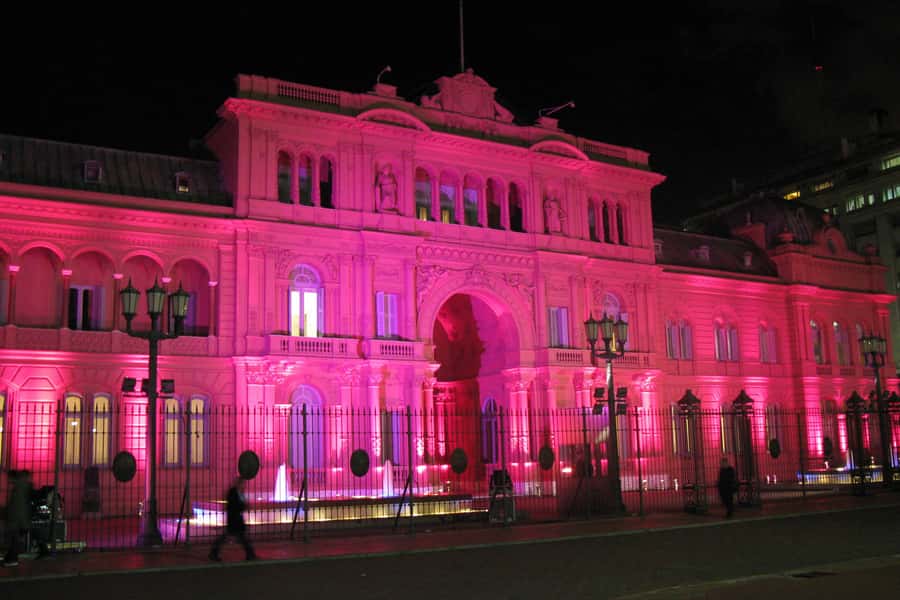
- Plaza de Mayo under lights: Pink House, Obelisk, and the big “wow” factor
- San Telmo’s cobblestones: where the old city feels close
- Puerto Madero after dark: the skyline stroll and the rotating Woman’s Bridge
- Floralis Genérica: a modern landmark you can’t miss once you see it
- Palermo Soho at night: trendy streets, guided orientation, and quick momentum
- Guide energy is the difference between seeing and understanding
- Getting value from $59: why the price makes sense for night touring
- Practical tips so your night stays fun
- Should you book Buenos Aires by Night?
- FAQ
- What is the duration of the Buenos Aires by Night tour?
- Where can I be picked up?
- Where will the tour drop me off?
- What’s included in the price?
- What languages are the guides available in?
- Is luggage or a large bag allowed?
- Is this tour suitable for people with limited mobility?
- Can I get a refund if I cancel?
Key things I’d focus on before you go
- Story-first guiding: guides such as Pablo, Enrique, Jessica, Barbara, and Lucia have a talent for making landmarks click with real-life context.
- Night geometry you can actually enjoy: short walks at major monuments instead of long “stand and wait” sightseeing.
- Puerto Madero’s photo moment: the rotating Woman’s Bridge crossing is the kind of detail you’d miss unless someone points it out.
- A smooth van-and-walk rhythm: you drive between areas, then step out for a few focused walking stops.
- A smart neighborhood mix: old-world cobblestones in San Telmo plus the trendier feel of Palermo Soho.
- Small group feel: one group was noted at about seven people, which tends to make questions easier and pacing less rushed.
How a 3-hour Buenos Aires night loop actually feels
This tour is built for evenings when you want to see a lot without spending your night on logistics. You’re picked up from one of three central areas—Monserrat, San Nicolás, or Retiro—and then you roll through town by van before getting out for several short walking stops. It’s a simple plan, but it works well at night because driving covers distance while walking keeps it personal.
The pace is a big deal here. Because each stop is short, you’re not stuck standing in the cold dark waiting for the group to catch up. It’s more like: arrive, look, learn, take photos, move on. That rhythm is one reason guides like Pablo and Enrique stand out in people’s memories—the tour doesn’t just list monuments, it helps you read the city while you’re there.
One practical consideration: the tour is “night walking” friendly only if you can handle uneven sidewalks and short distances. And since luggage or large bags aren’t allowed, plan to bring a small day bag and keep your hands free for photos.
You can also read our reviews of more city tours in Buenos Aires


Plaza de Mayo under lights: Pink House, Obelisk, and the big “wow” factor
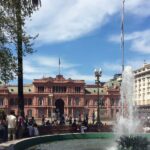
You start with the kind of concentration of landmarks that makes Buenos Aires feel instantly legible. Plaza de Mayo is the center of gravity for a reason: it’s where the city’s national identity shows up in architecture and symbolism. At night, you get that clean, dramatic look—facades and edges stand out in a way they don’t in daylight.
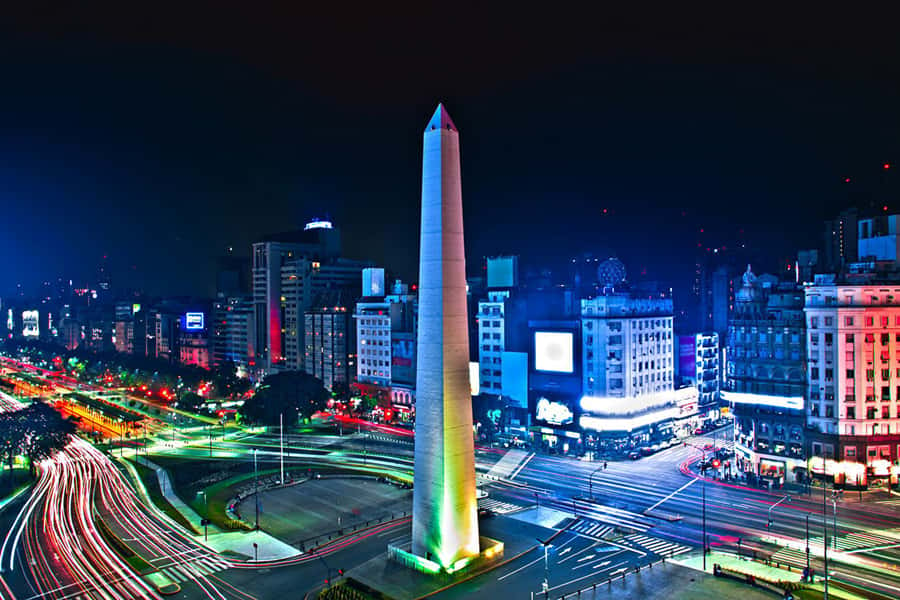
From here, you’ll also see major icons illuminated, including the Pink House (Casa Rosada) and the Obelisk. There’s something satisfying about seeing these monuments lit up first, because it gives you an immediate frame of reference. After this, the rest of the neighborhoods make more sense: you start understanding what each district is and what role it plays.
A common advantage of a guided stop here is context. The guide doesn’t just point out a building; they explain what the landmark represents and how it fits into everyday Buenos Aires. That approach turns “I saw it” into “I get it.”
San Telmo’s cobblestones: where the old city feels close
Then you shift gears to San Telmo, the bohemian-feeling district with narrow streets and cobblestoned lanes. In daytime it’s charming; at night it feels more intimate, like the city’s quieter stories come forward after the crowds thin out.
This is exactly the kind of neighborhood where walking matters. From the van you can pass by fast, but on foot you notice the details: street scale, building rhythm, and how the streets funnel you toward the next viewpoint. The guide helps you connect the mood to the history and culture you’re passing through, which is what makes the stop more than just a photo op.
If you’re hoping for a lot of time to wander on your own, this isn’t that style. The walking stops are short, and you’ll likely be guided from point to point. Think of San Telmo here as a taste—enough to tell you whether you want to come back and explore longer later.
Puerto Madero after dark: the skyline stroll and the rotating Woman’s Bridge
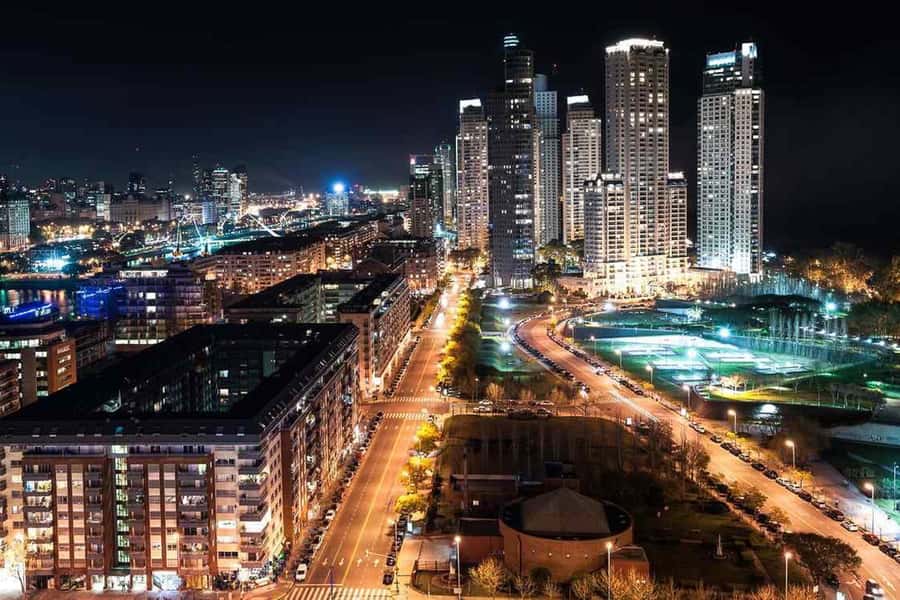
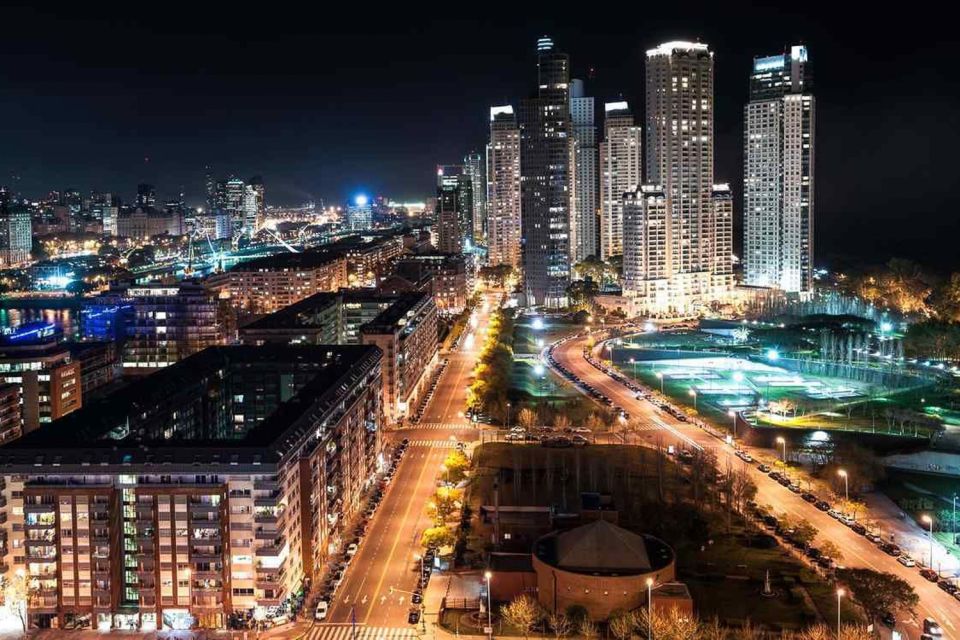
Puerto Madero is the contrast section of the night—sleek, modern, and unmistakably “Buenos Aires now.” You’ll spend time here with a guided focus, including waterfront views and crossing the Woman’s Bridge—the one that rotates. That mechanism is exactly the kind of detail that’s worth seeing in motion, and night lighting makes it more dramatic than in a daytime pass-by.
This is one of the most praised parts of the experience because it hits two things at once: a waterfront setting that looks great on camera, and a unique element you can’t recreate from memory. The bridge moment gives your brain an anchor. After that, Puerto Madero’s skyline-dotted streets become easier to understand as a planned, modern district rather than just another downtown area.
Drawback to keep in mind: Puerto Madero has areas where you’ll be walking in open space. If you get cold easily at night, this is the part where it can affect your comfort the most. Still, the overall pacing is designed to keep the time outdoors manageable.
Floralis Genérica: a modern landmark you can’t miss once you see it
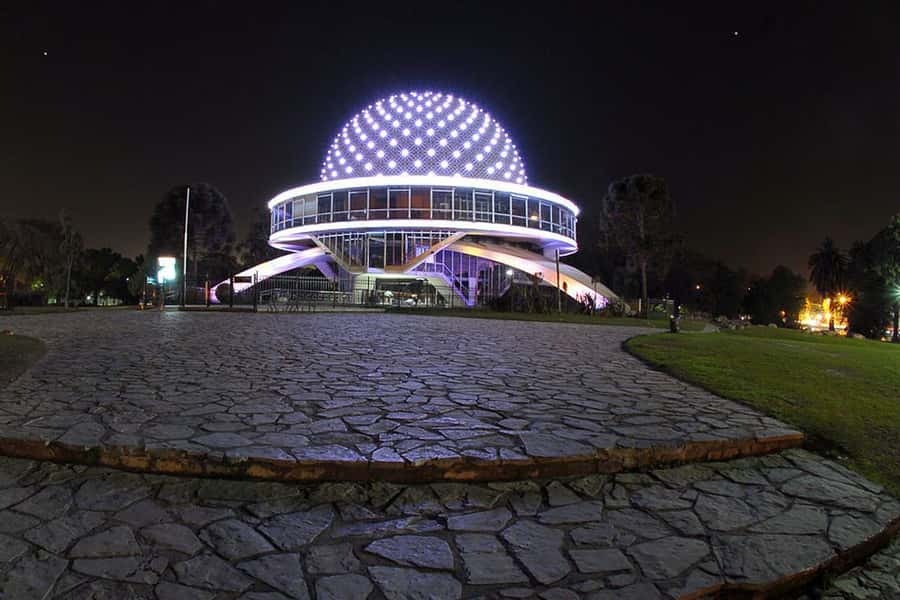
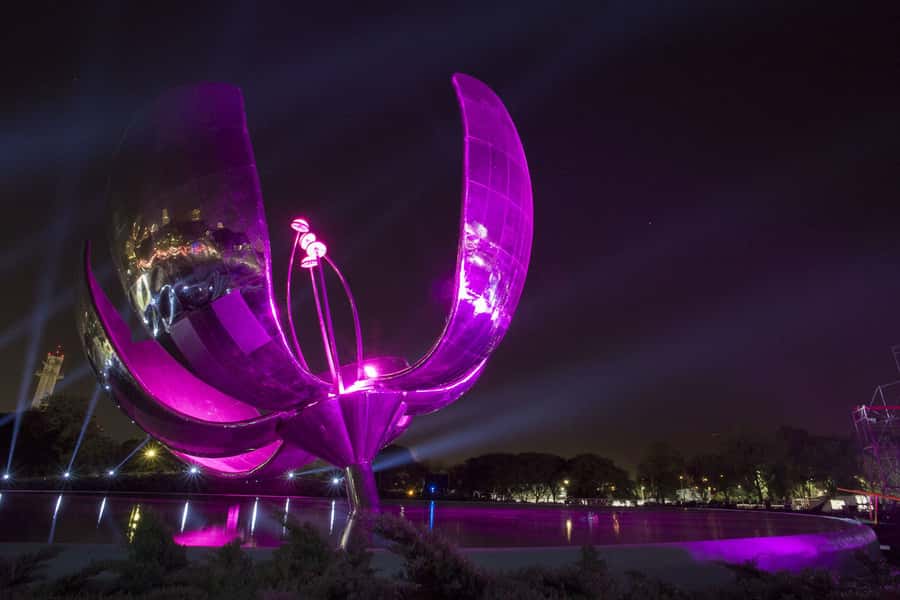
Next comes Floralis Genérica, a famous sculptural landmark that looks like something between architecture and public art. At night, it reads differently: the structure catches light in a clean, graphic way, and it becomes an easy visual target during your stop.
The value here is in how a guide frames the landmark. If you just see it as a pretty object, you’ll move on quickly. But when the guide explains what it is and how it shows up in Buenos Aires’ public space, you get a better sense of the city’s mix: tradition, memorials, and contemporary expressions all on the same map.
Since the stop is relatively short, you should come with a simple goal: look for lines, angles, and how the light hits the sculpture. Let the guide handle the background. You’ll get more out of it that way.
You can also read our reviews of more evening experiences in Buenos Aires





Palermo Soho at night: trendy streets, guided orientation, and quick momentum
The evening winds toward Palermo Soho, a neighborhood known for its youthful energy and stylish streets. This is the point where the tour shifts from “icon sightseeing” to “what life feels like here.” The guide’s job is to give you orientation—where the energy is, what areas are worth exploring later, and how the neighborhood’s vibe connects to the city’s broader character.
You get a guided stop here, but not a long free-roam session. So if you love nightlife and want to keep exploring, this is a strong finish because it gives you leads. You leave with names, directions, and a sense of what kind of street scene you’ll want to return to.
One practical note: if you’re planning a later dinner or drinks, keep your timing flexible. The tour is only about three hours, and traffic and pickup coordination can affect your exact drop-off feel. Using the neighborhoods the tour highlights as your next step is usually the easiest plan.
Guide energy is the difference between seeing and understanding
This tour’s biggest strength is the guide. Not in a generic way—more like: the guide decides whether the night feels like random highlights or a connected story. In the groups described, guides such as Pablo, Enrique, Jessica, Barbara, and Lucia are remembered for storytelling, humor, and for tailoring information to what you can actually notice in the moment.
That matters because Buenos Aires has layers. Landmarks are visually striking, but the meaning often takes a translator—someone who can connect the monument to the city’s culture and everyday rhythm. When the guide does that well, you’ll find yourself looking at streets differently even after the tour ends.
Also, the tour is run with enough structure that you don’t feel lost. People mention smooth organization and good pacing, and that’s exactly what you want on a short night tour: you want to relax, not manage a schedule.
Getting value from $59: why the price makes sense for night touring
At $59 per person for about three hours, the price lands in the “good value” category for a few clear reasons. First, hotel pickup and drop-off is included. That sounds like a small detail, but at night it saves you from navigating unfamiliar streets after dark.
Second, you’re paying for guided interpretation, not just transport. Seeing the city illuminated is fun, but it’s the guide who helps you read it quickly—what to notice, what matters, and how different districts connect.
Third, you get a lot of concentrated points across different neighborhoods in a short time. That’s a big deal in a city where distances can add up. The van handles the distance; the walking stops let you actually experience the spaces.
If you’re comparing options, ask yourself what you’d otherwise do with the same evening. If you’d spend it figuring out routes and still miss context, this tour usually feels like a smart shortcut.
Practical tips so your night stays fun
Here are the things I’d prioritize before you go, based on what this format is built around:
- Bring a small bag only. Luggage or large bags aren’t allowed, so plan for a hands-free carry.
- Wear shoes with good grip for uneven pavements. San Telmo’s cobblestones are part of the experience.
- Keep your camera ready. The best moments here are the illuminated icons and the Puerto Madero lighting around the bridge.
- Expect short walking bursts. You’ll be outdoors, but it’s structured so you don’t run out of steam too fast.
- If you have limited mobility, choose another option. This tour isn’t recommended for mobility impairments.
And one extra thought: if you’re a foodie, you might want to have a plan for snacks after. Some groups have mentioned a brief snack moment like empanadas, but don’t count on it as a main meal. Treat any bite you get as a bonus, not a promise.
Should you book Buenos Aires by Night?
Book it if you want a guided, efficient way to see Buenos Aires after dark, especially if it’s your first time. The mix of major illuminated landmarks, San Telmo’s cobblestone streets, Puerto Madero’s modern views, and a night finish in Palermo Soho makes this tour a strong orientation tool.
Skip it if you need long periods of seated time, or if mobility limitations will make uneven walking uncomfortable. Also, if you’re carrying luggage or large bags, this isn’t the right match.
FAQ
What is the duration of the Buenos Aires by Night tour?
The tour lasts about 3 hours.
Where can I be picked up?
Hotel pickup is available from Monserrat, San Nicolás, and Retiro.
Where will the tour drop me off?
You’ll be dropped off at one of three locations: Retiro, San Nicolás, or Monserrat.
What’s included in the price?
The tour includes hotel pickup and drop-off plus a local guide.
What languages are the guides available in?
The live guide is available in English, Spanish, and Portuguese.
Is luggage or a large bag allowed?
No. Luggage or large bags are not allowed on this tour.
Is this tour suitable for people with limited mobility?
It’s not recommended for people with limited mobility, and it isn’t suitable for people with mobility impairments.
Can I get a refund if I cancel?
Yes. You can cancel up to 24 hours in advance for a full refund.