REVIEW · BUENOS AIRES
Buenos Aires Hop-On Hop-Off Bus and Exclusive Benefits
Book on GetYourGuide →Operated by Buenos Aires Bus (Hop-On Hop-Off) · Bookable on GetYourGuide
Buenos Aires feels like a big movie set. This hop-on hop-off bus helps you see the must-dos—Plaza de Mayo, Caminito, and Teatro Colón—without locking yourself into a walking-group pace. I like the flexible hop-on hop-off setup for lunch breaks and quick detours, and I like the audio that comes in 9 languages so you can understand what you’re looking at while you glide past the landmarks.
One thing to factor in: the ride time can stretch. The full route is about 3 hours 20 minutes without stops, and real-world traffic and events can add delays, so plan your day with breathing room.
In This Review
- Key things I’d note before you buy
- Choose 24, 48, or 72 hours for the pace you want
- Meeting point at 466 Córdoba Avenue: redeem fast
- What the ride feels like: a long 3h 20 circuit through iconic neighborhoods
- Landmark by landmark: Plaza de Mayo, Obelisk, Teatro Colón
- La Boca and Caminito: color, street life, and time well used
- Puerto Madero and Recoleta: waterfront modern vibes and grand old Buenos Aires
- Palermo stops: El Rosedal and Puente de la Mujer from the top deck
- Audio guide and headphones: 9 languages with a real-world volume check
- Discounts and how to make them worth the $35
- Comfort, crowds, and common hiccups
- Who this hop-on hop-off bus suits best
- Should you book Buenos Aires Bus?
- FAQ
- How long is the full bus route without stops?
- How often do the buses run?
- Where do I exchange my voucher?
- What does the ticket include?
- Are meals, drinks, or entrance tickets included?
- What should I bring with me?
- Can I cancel my booking?
- Is the service wheelchair accessible?
Key things I’d note before you buy
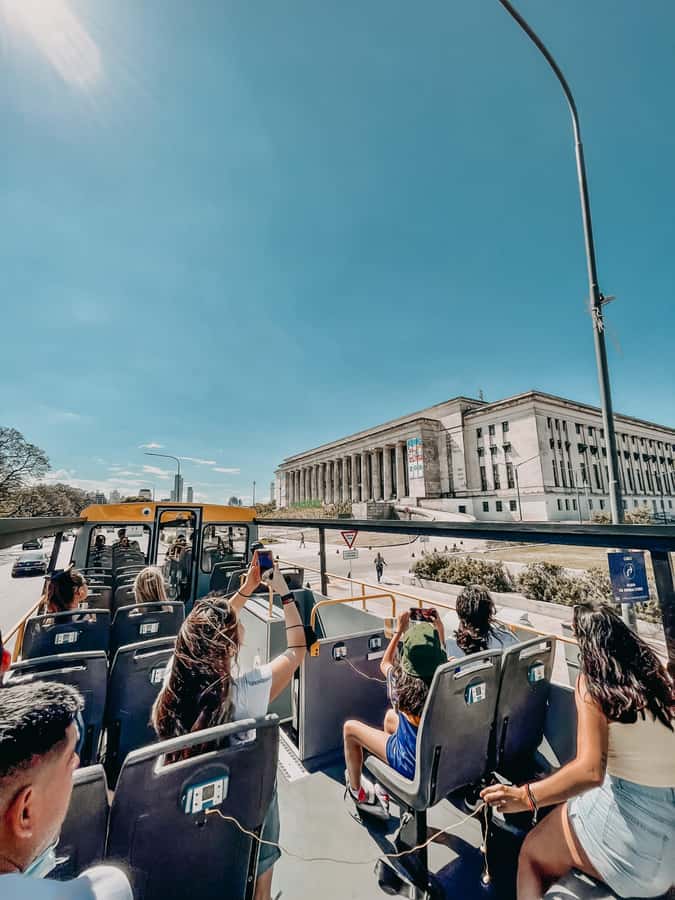
- Real flexibility, fewer decisions: hop off, look around, then hop back on later at your chosen stop.
- Audio in 9 languages with headphones: you get local context without needing a guide beside you.
- A long circuit for a reason: it’s not a quick “one block and done” loop; it’s designed to cover major neighborhoods.
- Stops matter as much as sights: some famous places are a bit of a walk from the stop—check your timing before you commit.
- Discounts can stretch your budget: the ticket includes deals at selected restaurants and shops (not just the bus ride).
Choose 24, 48, or 72 hours for the pace you want
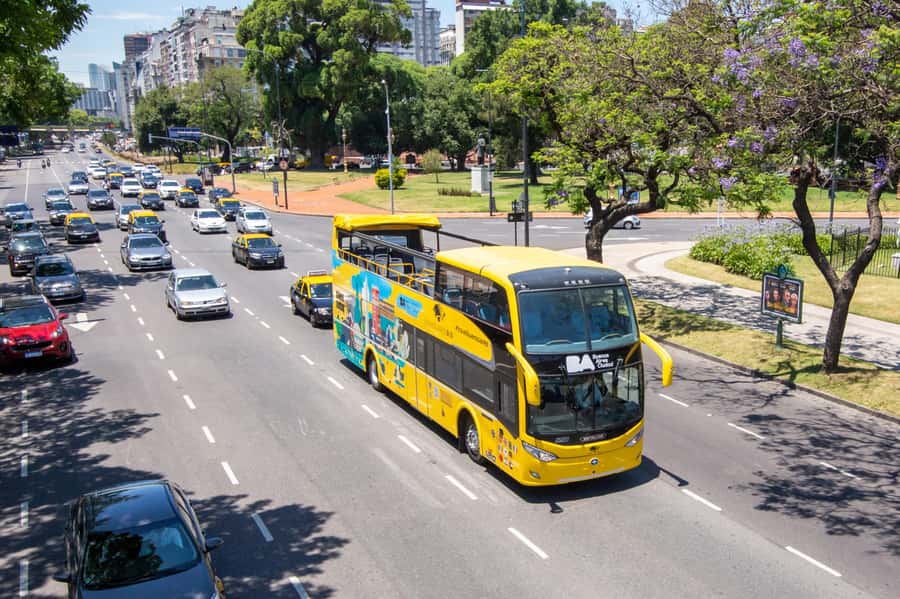
You’re not paying for a one-and-done experience. You’re buying a pass that can cover 1 to 3 days, in 24, 48, or 72-hour options. That’s the real value in this kind of bus: Buenos Aires is big, and moving efficiently matters when you want to see a lot without exhausting yourself.
If you have only one day, I’d treat this as your “orientation + highlights” plan. Ride the route, hop off at one or two neighborhoods that pull you in, and use the rest of the circuit to decide what you’ll do on your own later.
With a 48- or 72-hour pass, you can do something smarter. Get your bearings on day one, then go back the next day for deeper time in the places that grabbed you—like the artsy lanes around La Boca or the grand architecture side of Recoleta.
You can also read our reviews of more tours and experiences in Buenos Aires.

Meeting point at 466 Córdoba Avenue: redeem fast
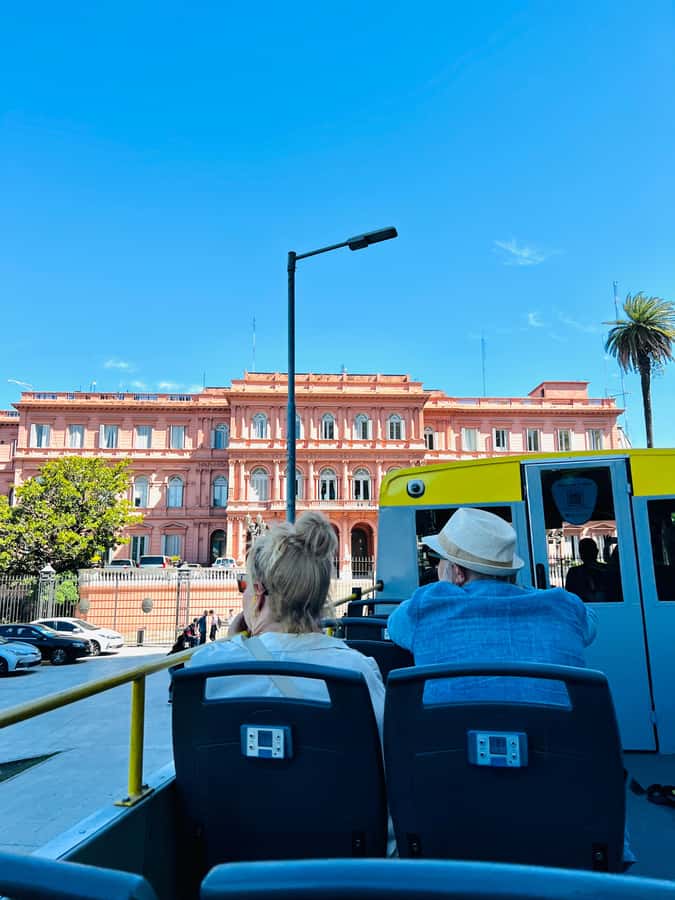
Your biggest job is simple: exchange your voucher for a ticket before you board. The meeting point is at 466, Córdoba Avenue (ticket counter), and you should arrive 15 minutes early.
Once you get the new ticket, you can board at any bus stop. That’s helpful because Buenos Aires neighborhoods are spread out—one stop might be easier for your schedule than another.
Quick practical tip: bring your passport or ID card so you’re not stuck digging for documents when you’re standing in line.
What the ride feels like: a long 3h 20 circuit through iconic neighborhoods

The “whole route” takes about 3 hours 20 minutes without stops. That detail is key. Many hop-on hop-off buses feel like a quick loop. This one is built to cover major areas—so expect a bigger circuit and plan your timing like it’s a real half-day activity.
Buses run about every 15 minutes during the day. In other words, you’re not waiting an hour for the next ride—unless something changes in the city. Traffic, special events, or demonstrations can slow things down, and the schedule you see online is where you’ll get the most up-to-date info.
Also note: buses operate with enough frequency that you can actually live on the timeline you choose. You can stay on board to scan the city, then get off for 60–90 minutes where you want to stroll, photograph, and snack.
Landmark by landmark: Plaza de Mayo, Obelisk, Teatro Colón
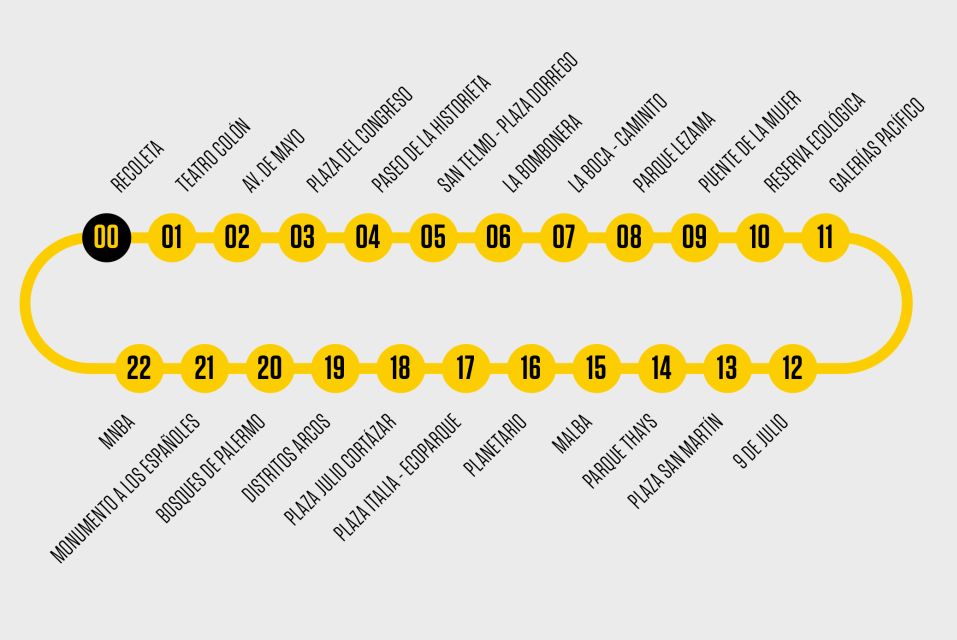
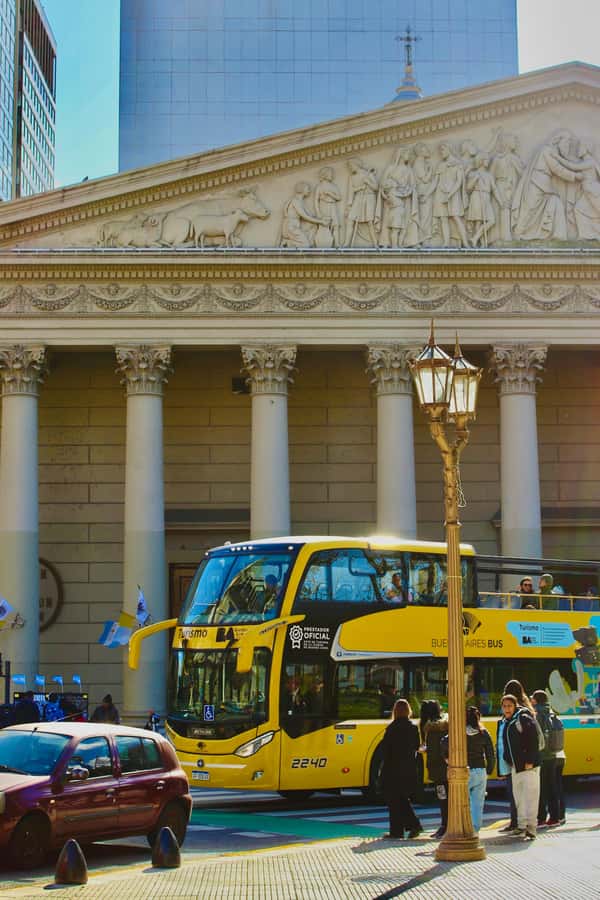
This is where the “Buenos Aires greatest hits” start. The route is designed to show you landmarks like Plaza de Mayo and the Obelisk, which is basically the city’s visual punctuation mark. You’ll get the benefit of seeing how the city’s different eras sit next to each other—government core, grand public space, and nearby architectural landmarks.
Teatro Colón is another stop you’ll want to keep an eye out for. Even if you don’t go inside, seeing it from the bus gives you a clear sense of why it’s such a big name in music and culture. If you do want to visit, remember that entrance fees aren’t included, so decide based on your budget and the day’s opening hours.
The Plaza area is also a strong photo target, especially in clearer light. If the weather is gray or windy, staying on the top deck can be tougher—so think about whether you want comfort first.
La Boca and Caminito: color, street life, and time well used
This part of the city is why people fall for Buenos Aires. The route includes La Boca, including Caminito, the famous colorful street scene where you can feel the neighborhood’s energy.
This is a classic “hop off and linger” zone. If you only hop off for 20 minutes, you’ll miss the point. I’d plan for a slower block-by-block walk: look around, find a spot to sit for a drink or a bite (food and drinks are not included with the ticket), then decide if you want to return by bus or keep exploring nearby.
One realistic consideration: some bus stops are not right at the door of the best views. That means you’ll want to use the hop-off as an arrival into the neighborhood, not as a “drop me at the exact corner” guarantee.



Puerto Madero and Recoleta: waterfront modern vibes and grand old Buenos Aires

From La Boca’s street life, you’ll likely feel the contrast as the route hits Puerto Madero—a more modern, polished riverside area. It’s a good place to pause because you can spread out a bit, watch the waterfront scene, and take photos without racing the crowd.
Then comes Recoleta, one of the city’s most iconic neighborhoods. Even when you’re just passing through, you’ll see the grand architecture feel—wide streets, elegant facades, and a “Buenos Aires at its most classical” mood. This is a great contrast stop after the lively energy of La Boca.
In practice, I’d use these areas differently:
- Puerto Madero works well for an easier stroll and photos.
- Recoleta works well if you want to slow down and soak in architecture and city character before the day gets away from you.
Palermo stops: El Rosedal and Puente de la Mujer from the top deck
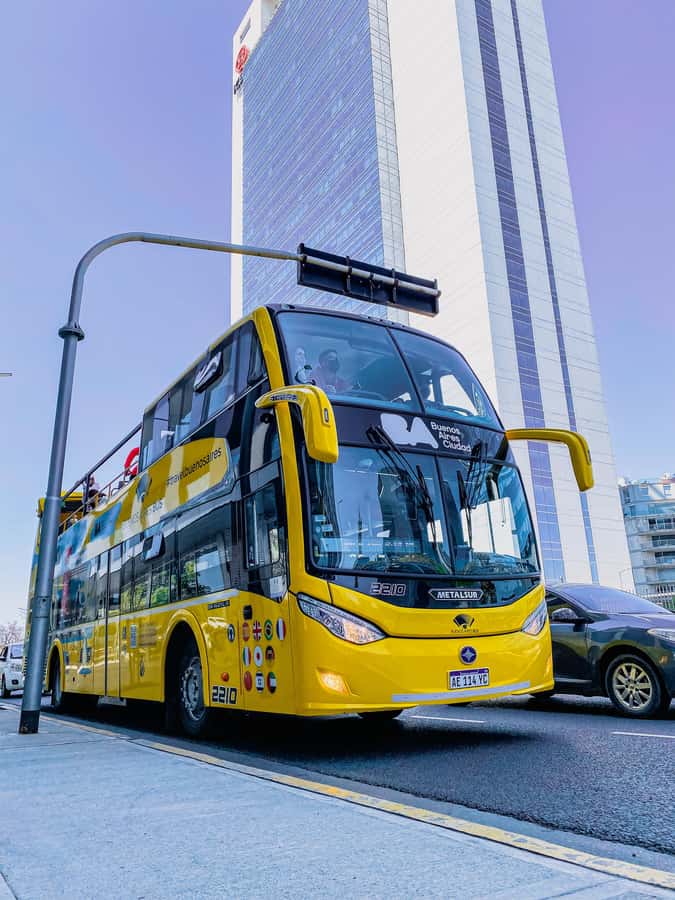
Palermo is where the city’s look changes again—more parks, more open space, and more “Buenos Aires is also about leisure” energy. The route includes recognizable sights like El Rosedal (Rose Garden) and Puente de la Mujer (Woman’s Bridge).
Here’s why the bus ride helps: from the top deck, you get a clean panorama view while the city moves past you. You don’t have to fight for the best angle right away—you can watch for the moment, then stop or photograph when it makes sense.
If you’re visiting in windy or cold conditions, the top deck can still be great for photos, but you may want a backup plan. Some buses offer a more enclosed upper deck experience (panoramic windows are part of what people appreciate), which can help if you’re trying to stay comfortable.
Audio guide and headphones: 9 languages with a real-world volume check
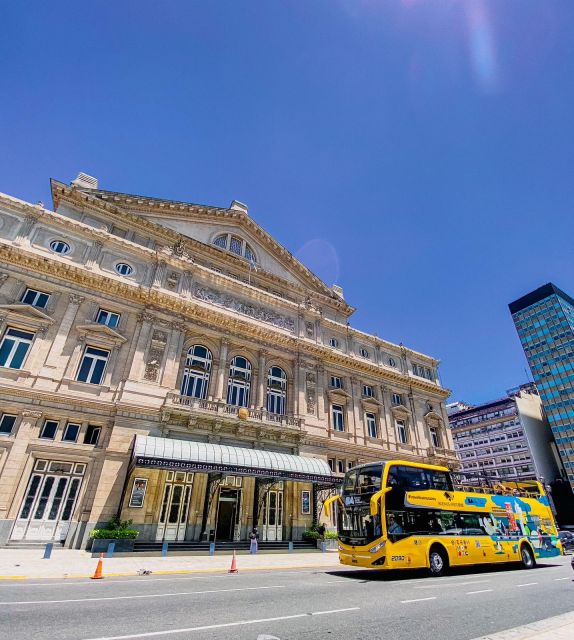
The audio guide is one of the biggest reasons this is more than just sightseeing by bus. You get commentary through headphones in 9 languages, and the design is meant for you to follow along at each stop.
I like that it’s not only facts. It mixes history and cultural context with local stories, so you’re not just ticking off landmarks. That matters in a city where names and neighborhoods can feel confusing when you first arrive.
Still, audio quality can be a mixed bag in the real world. Some people found parts of the music and commentary volume settings a little awkward, and others noted that in certain languages the spoken track can feel inconsistent. My practical advice: don’t assume the volume will be perfect for you. Test the headphones early, then adjust your settings while you’re seated so you’re ready for the first stops.
Discounts and how to make them worth the $35
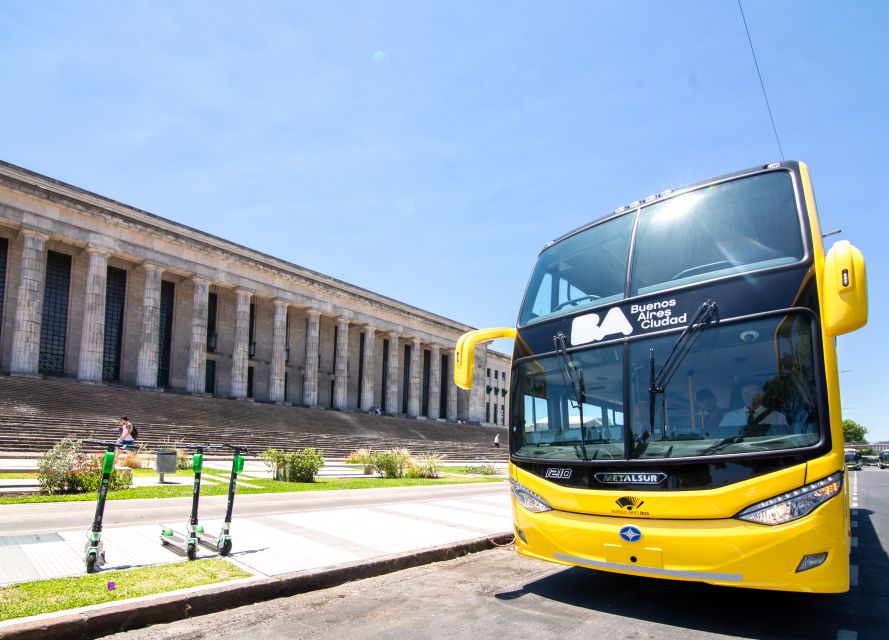
Your ticket includes exclusive discounts at selected restaurants, shops, and attractions. This is where you can turn a bus ride into real savings—if you plan around it.
A smart approach:
- Decide which neighborhood you’re spending the most time in.
- Use the discounts for a meal or a simple treat there.
- If you plan to shop, check whether any of the listed shops match what you actually want to buy.
Don’t assume it covers everything. The discounts are described as “selected,” and they’re not the same as having meals or major attraction tickets included. The bus helps you move; you still make your own food and entry decisions.
Comfort, crowds, and common hiccups
On paper, this is an easy way to see a lot. In reality, Buenos Aires can get busy, and that affects buses the way it affects everything else.
Here’s what to watch for:
- Crowding can happen: even with frequent buses, seats can fill up if people aren’t hopping off.
- The route is long: expect a longer experience than the “short hop” style of some other cities.
- Walking from stops varies: some stops are convenient, but not all are right next to the exact postcard angle.
If you want the best experience, use the bus as your backbone, not your only activity. Do at least one full circuit to understand the layout, then focus your time on the stops that you actually care about.
It’s also worth knowing that the buses are wheelchair accessible, and pets aren’t allowed (assistance dogs are allowed). Smoking and alcoholic drinks in the vehicle are not permitted.
Who this hop-on hop-off bus suits best
This is a great fit if you want:
- Flexible sightseeing without the stress of figuring out every connection.
- A fast way to get your bearings in a big city.
- Headphone-based commentary so you can learn at your pace.
- A practical alternative to constant taxis or rideshare hopping across distant neighborhoods.
It’s also good for rainy days, because you can still see the city from comfort while your day stays intact.
If you’re the type who hates long rides and wants to go point-to-point only, this may feel like too much time on wheels. But if your goal is “see the big stuff first, then go deeper,” the pass makes sense.
Should you book Buenos Aires Bus?
Book it if you want a stress-free, self-paced way to hit the highlights and you value an audio guide in multiple languages. The pass structure (24/48/72 hours) is where it becomes genuinely useful, especially for planning your second day in neighborhoods like La Boca and Recoleta.
Skip it (or at least consider your expectations) if you’re very schedule-driven or you hate long circuits. Also remember what’s not included: food, drinks, and attraction entry fees—so you still need to budget for your actual on-foot time and any museums or guided visits.
If you’re trying to decide between spending money on constant short rides versus one solid overview plan, this bus is the kind of purchase that can pay back quickly in time saved and fatigue avoided.
FAQ
How long is the full bus route without stops?
The full route takes approximately 3 hours and 20 minutes without stops.
How often do the buses run?
Buses operate throughout the day about every 15 minutes, though traffic, events, or demonstrations may affect timing.
Where do I exchange my voucher?
You need to exchange your voucher at the ticket counter at 466, Córdoba Avenue before the tour begins.
What does the ticket include?
Your ticket includes the hop-on hop-off bus service for your selected duration, audio guide in 9 languages with headphones, online tracking, and exclusive discounts at selected locations.
Are meals, drinks, or entrance tickets included?
No. Food and drinks are not included, and attraction entrance fees are also not included.
What should I bring with me?
Bring your passport or ID card.
Can I cancel my booking?
Yes. You can cancel up to 24 hours in advance for a full refund.
Is the service wheelchair accessible?
Yes. The activity is wheelchair accessible.