REVIEW · BUENOS AIRES
Jewish Sites Buenos Aires Private Walking and Car Tour
Book on GetYourGuide →Operated by ROSOTRAVEL Argentina · Bookable on GetYourGuide
Buenos Aires tells its Jewish story on foot. I love the way this private route starts at Templo Libertad on Libertad Street and then lands at the memory-heavy AMIA site, all explained by a licensed guide. I also like that the guide can tailor the pace and the language to your group. One heads-up: the 2- and 3-hour options include some uneven ground and steps, so comfy shoes matter.
If you choose the 3- or 4-hour format, you also get entry to the Salvador Kibrick Museum, where ritual objects and historical documents make the story feel concrete. And for the 4-hour tour, private car transport adds more key landmarks with less walking, plus pickup and drop-off from your accommodation.
In This Review
- Key highlights worth planning for
- Libertad Street’s Templo Libertad: the first-synagogue starting point
- Museo Judío de Buenos Aires and the immigration-to-integration thread
- The Buenos Aires Holocaust Museum stop: how the WWII story connects locally
- AMIA on the walk: remembrance where unity and tragedy meet
- Salvador Kibrick Museum: what you see when entry is included
- The 4-hour private car itinerary: more distance, less strain
- How the licensed private guide keeps it personal (and not robotic)
- Price and value: is $129 per person worth it?
- Practical tips so the tour goes smoothly
- Who should book this Jewish heritage Buenos Aires tour?
- Should you book it?
- FAQ
- What’s included in the 2-hour vs 3-hour vs 4-hour options?
- Do I get entry to synagogues?
- Is the Salvador Kibrick Museum included?
- What ID do I need for the Salvador Kibrick Museum?
- How much walking is involved?
- Is private transportation included?
- Where do I meet the guide?
Key highlights worth planning for
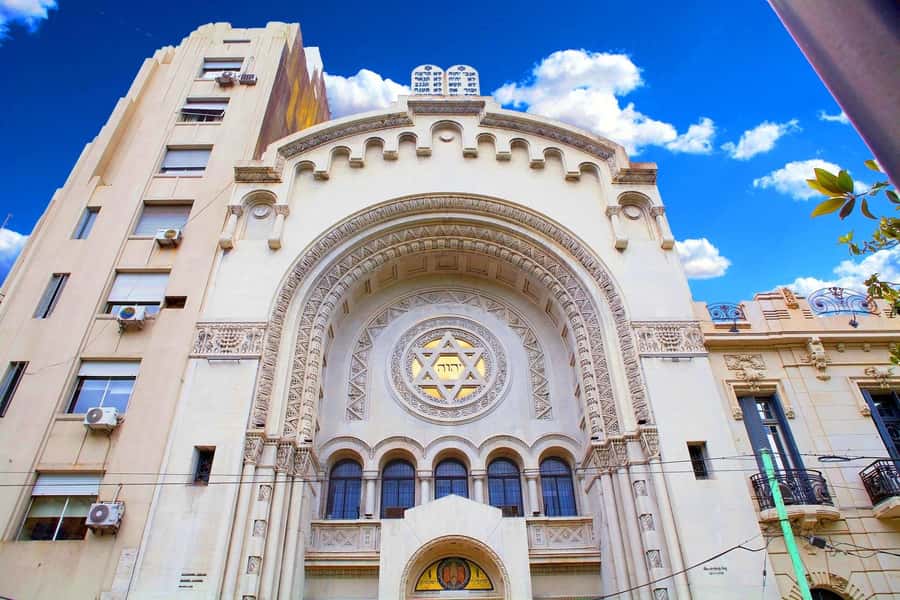
- Templo Libertad on Libertad Street: Argentina’s first synagogue, seen up close from the outside before moving on to heavier sites
- AMIA and the 1994 bombing: remembrance focused on impact and how the community rebuilt afterward
- Holocaust Museum stop with Argentina’s WWII context: your guide connects European events to local aftermath and survivors
- Salvador Kibrick Museum entry in 3- and 4-hour options: ritual objects, photographs, and documents (passport or ID required)
- 4-hour private car option: comfort plus added stops like 9 de Julio Avenue and the Israeli Embassy Memorial
- Small private groups: up to 1–25 per guide, with room for questions and pacing that fits your crew
Libertad Street’s Templo Libertad: the first-synagogue starting point
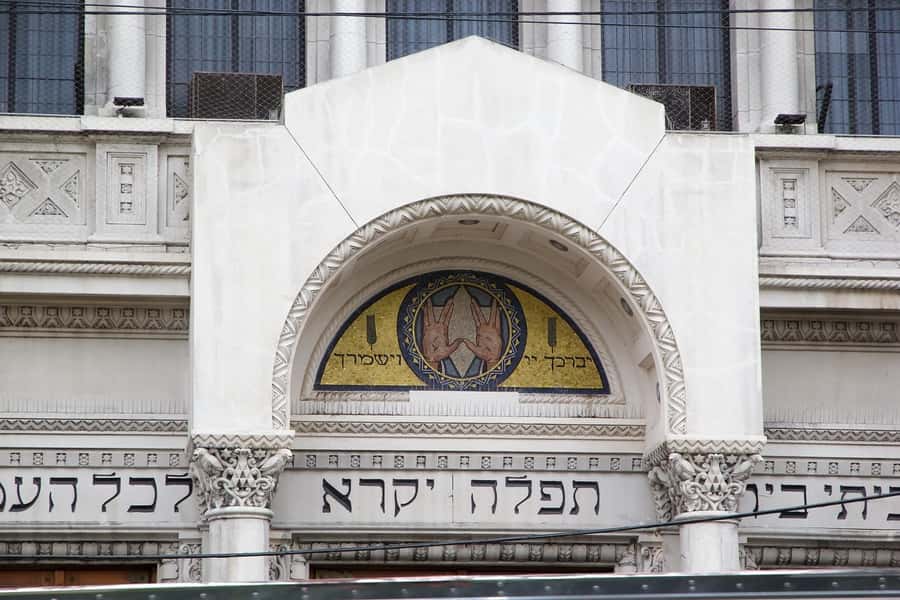
Most Buenos Aires sightseeing is about famous façades. This tour starts with meaning. You begin along Libertad Street, where Templo Libertad dominates the block. The guide frames it as Argentina’s first synagogue, which instantly gives the neighborhood context: this wasn’t an add-on community. It was part of how Jewish identity took root in the city.
You’ll admire the stunning façade and learn about early Jewish roots in Argentina, then you move on before the story gets too abstract. That outside-view format is important. Entry into synagogues isn’t included, so the visit focuses on architecture, location, and what the building represents in the urban fabric.
Tempo matters too. The early part of the walk is a way to get oriented quickly—what streets matter, what buildings connect, and how the guide’s narrative links people to places. Even if you’re not a “history person,” this start gives you bearings fast.
If you want an easy win, arrive on time, listen closely in the first 20 minutes, and don’t rush photos. The guide’s commentary is built for this sequence.
You can also read our reviews of more walking tours in Buenos Aires

Museo Judío de Buenos Aires and the immigration-to-integration thread
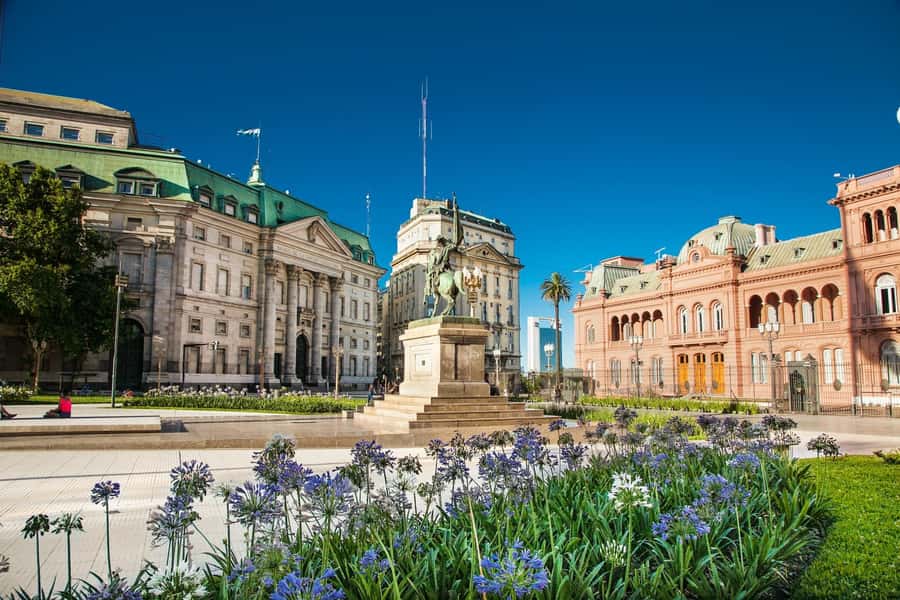
After Templo Libertad, your route passes by the Museo Judío de Buenos Aires. You’re not promised museum entry here, but you do get something valuable: a guided explanation of what the museum represents and why its architecture and collections matter.
Think of this stop as your setup act. It’s the point where the tour stops being only about specific events and starts talking about the longer arc—immigration, adaptation, and integration into Buenos Aires life. Your guide uses the building and nearby streets to connect the dots: how communities come, how they organize, and how they leave lasting marks that survive political and social change.
For a lot of people, this is the moment when the tour becomes more than a list of landmarks. You start understanding why the later stops—Holocaust remembrance and the AMIA tragedy—are so tied to a living city. The guide helps you see that Jewish Buenos Aires isn’t only about pain; it’s also about continuity, community structures, and everyday resilience.
Tip: if you’re taking this tour while you’re still jet-lagged, this “context” segment helps you catch up. It explains the background so the memorials land with more clarity.
The Buenos Aires Holocaust Museum stop: how the WWII story connects locally

Next comes the Holocaust Memorial and/or Holocaust Museum stop, where the guide puts Argentina’s role during and after WWII into focus. This is not a generic “what happened in Europe” moment. You’ll hear how survivors’ lives—and rebuilding—took shape in Buenos Aires afterward.
This part of the tour tends to be the most serious. You’ll be walking into remembrance, not entertainment. It’s worth mentally preparing for that tone shift. The guide highlights survivor stories and explains how Argentina’s position in that period mattered, even when the events originated far away.
What I like about this stop is that it avoids treating WWII as closed-book history. The emphasis on survivors who rebuilt their lives helps you understand why these sites exist in the first place: remembrance is also about identity, recovery, and what a community carries forward.
You should also know: the tour description doesn’t explicitly list Holocaust Museum entry tickets as included. So plan for a guided visit that may be focused on learning and location-based context. If you want to be 100% sure about interior access time, ask your guide at the start of the tour.
AMIA on the walk: remembrance where unity and tragedy meet
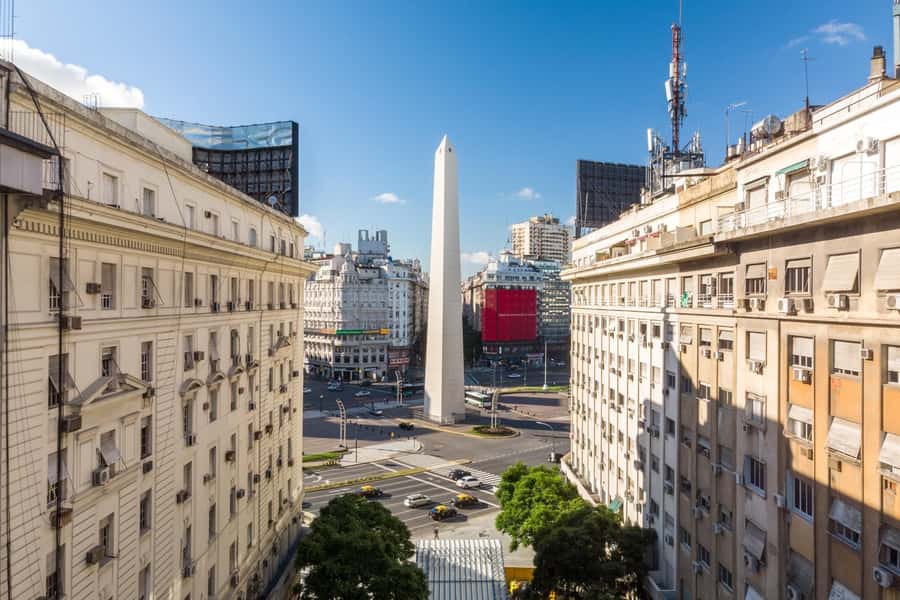
The tour culminates at AMIA (Asociación Mutual Israelita Argentina). This isn’t just a stop on a route. It’s described as a symbol of both cultural unity and tragedy, which is exactly how your guide will frame the final segment.
Here’s what you’ll learn: the 1994 bombing and why it became one of the darkest moments in Argentine-Jewish history. Your guide also connects the tragedy to lasting impacts on the community and the nation.
This kind of storytelling can feel heavy, but it’s also practical. By the time you reach AMIA, you’ve already built a foundation—what synagogues and museums mean, why the neighborhood matters, and how Jewish life developed in the city. So when you hear about 1994, it doesn’t feel like a random “dark event.” It feels like a breaking point inside a longer story of belonging.
A small but important detail: because it’s a private tour, you can ask how the guide relates these events to what’s happening now. One guide named Richard Shpuntoff has been highlighted for making Argentina’s current political climate understandable alongside the historical facts, so if your guide has a similar approach, you’ll probably appreciate the added context.
Salvador Kibrick Museum: what you see when entry is included
If you book the 3-hour or 4-hour option, you’ll get entry to the Salvador Kibrick Museum. This is the part of the tour that gives you a hands-on sense of the community’s internal world, not just the street-level landmarks.
Inside, the museum collection focuses on ritual objects, photographs, and historical documents. In plain terms: you’re seeing artifacts that show how Jewish life looked up close—what people used, how they recorded their experiences, and how the story is preserved in paper and objects.
This museum entry is a key value point. The 2-hour walking option skips it, and for many people, that museum is the difference between seeing buildings and truly understanding the community.
One critical practical note: for security reasons, you must bring the original passport (if you’re a foreigner) or your national identity card (if you’re Argentinian). If you forget the document, entry can be a problem. This rule isn’t a suggestion; it’s part of the museum process, so plan accordingly.
Also, because you’re going inside, museum time can make the route feel tighter. If you prefer slow and airy pacing, choose the 4-hour option so the schedule has more breathing room.
You can also read our reviews of more private tours in Buenos Aires

The 4-hour private car itinerary: more distance, less strain
The 4-hour tour is the “comfort plus coverage” version. The big difference isn’t just more time. It’s private transportation and added stops that broaden your understanding of how Jewish heritage sits across Buenos Aires.
With the car option, you also get pickup and drop-off from your accommodation in Buenos Aires. That means less hassling with meeting points mid-day and less time spent figuring out how to connect between far-flung points.
The extended itinerary includes:
- Plaza Libertad, described as a quiet square with rich architectural surroundings
- 9 de Julio Avenue, known for being one of the widest boulevards in the world
- Israeli Embassy Memorial, a solemn site commemorating the 1992 attack
- Plaza General San Martín, tied to Argentina’s military and immigrant history
You’ll still get the Jewish heritage focus, but you’ll also see how memory lands in the city’s wider geography. The car makes it easier to cover those landmarks without turning the tour into a leg-day workout.
If you’re short on time in Buenos Aires, this 4-hour option is often the best fit. You get walking moments plus the chance to see bigger “city stage” locations where remembrance has official visibility.
How the licensed private guide keeps it personal (and not robotic)
This tour runs with a 5-star licensed private guide, fluent in your chosen language (English, Spanish, French, Italian, or Portuguese). The language option matters here because the tour deals with sensitive material—WWII, Holocaust remembrance, and bombings. You want explanations that land properly.
Group size is limited to 1–25 guests per guide, which is small enough to keep the conversation moving. And because it’s private, the guide adjusts pace to your needs.
That adaptability is worth more than it sounds. In real life, people vary: some want more detail on specific dates, while others want connections to current Argentine society. A guide who can balance both keeps the tour from feeling like a lecture.
If you’re the type who likes questions, this setup works. You can ask why a particular building matters, or how the guide connects diaspora roots to today’s community identity. One named guide, Richard Shpuntoff, has been described as warm and open, with generous personal and familial storytelling that helped visitors connect Argentina today to the Jewish experience. If your guide has a similar style, expect a more human, less textbook feel.
Price and value: is $129 per person worth it?
At $129 per person for a 2–4 hour private experience, the price is really about what you’re buying: a licensed guide, a tight route built around major landmarks, and (in the longer options) museum entry and private transport.
Here’s how the value shifts by option:
- 2-hour option: you get the core walk and major exterior landmarks, but not museum entry. Good if you want the essentials and you’re comfortable with walking and outside views.
- 3-hour option: adds entry to the Salvador Kibrick Museum. This is where the tour becomes more three-dimensional, not only place-based.
- 4-hour option: adds private car transport plus pickup/drop-off, and it layers in more landmarks like 9 de Julio Avenue and memorial sites. If you’d rather reduce walking time and cover more ground, this one justifies the higher effective value.
Also consider what you would otherwise pay to replicate this on your own: guide time, navigation between sites, and interpretation that makes the places meaningful. You’re paying for context and sequencing. In tours like this, the guide is the product.
If you have limited time in Buenos Aires and want a “do it once, do it right” experience, the longer options tend to feel more satisfying.
Practical tips so the tour goes smoothly
This is a walking-and-learning route, rain or shine. The 2- and 3-hour options include about 25–30 minutes on foot at a moderately paced level, with some uneven surfaces or steps.
So pack like you mean it:
- Wear comfortable shoes. You’ll be grateful later.
- Expect variable weather and dress for it. The route keeps moving even when it’s damp.
- Bring your required ID for the Salvador Kibrick Museum if you booked 3 or 4 hours. Original passport or original national identity card is the rule.
Meeting point matters too. Meet your guide in front of Hotel Presidente at Cerrito 850 in Buenos Aires. Don’t go inside the hotel; staff at the hotel won’t be informed about your tour. Just stand at the front meeting area and look for your guide.
Food and drinks aren’t included. If you’re doing the tour mid-day, plan a snack or nearby meal before or after so you’re not hunting down something urgent with history still in your head.
Who should book this Jewish heritage Buenos Aires tour?
This tour makes sense if you want:
- Jewish heritage sites in Buenos Aires explained with local context
- A direct focus on major memory anchors like the Holocaust-related sites and AMIA
- A private guide who can explain what you’re seeing in your language
It’s also a smart choice if you like history that connects to present-day identity, not history that stays locked in textbooks. The AMIA segment and the WWII context are built to show how events shape communities long after the headlines fade.
You might consider another option if you want a purely light, casual walk. The subject matter here includes the Holocaust remembrance and bombings, so it’s more reflective than scenic.
Should you book it?
I think you should book it if you care about understanding the Jewish story in Buenos Aires through the places where it lives—synagogue heritage, museum collections, and the memorial sites that keep tragedy from being forgotten.
Choose the 2-hour version if you want the core route and you’re okay skipping museum entry. Pick the 3-hour option if you want to add the Salvador Kibrick Museum artifacts and documents. Go 4-hour if you want private car comfort plus extra landmarks like 9 de Julio Avenue and the Israeli Embassy Memorial, with pickup and drop-off at your accommodation.
If you’re traveling with limited time, limited patience for transit, or you simply want one well-structured narrative through the city, this is a strong use of your Buenos Aires hours.
FAQ
What’s included in the 2-hour vs 3-hour vs 4-hour options?
The 2-hour option is a private walking tour through the Old Jewish Quarter highlights, focused on Libertad Street landmarks and ending at AMIA. The 3-hour option adds entry to the Salvador Kibrick Jewish Museum. The 4-hour option includes the full itinerary coverage by private car, includes museum entry, and adds additional stops such as Plaza Libertad, 9 de Julio Avenue, the Israeli Embassy Memorial, and Plaza General San Martín.
Do I get entry to synagogues?
Entry to synagogues isn’t included. You’ll see key synagogue sites like Templo Libertad from the outside and learn from your guide.
Is the Salvador Kibrick Museum included?
Yes, entry to the Salvador Kibrick Jewish Museum is included only in the 3-hour and 4-hour options.
What ID do I need for the Salvador Kibrick Museum?
For security reasons, foreigners must present their original passport, and Argentinian citizens must present their national identity card.
How much walking is involved?
The 2-hour and 3-hour tours are moderately paced and include about 25–30 minutes on foot, with some uneven surfaces or steps.
Is private transportation included?
Only the 4-hour tour includes private transportation with pickup and drop-off from your accommodation in Buenos Aires.
Where do I meet the guide?
Meet your guide in front of Hotel Presidente, Cerrito 850, C1010 Cdad. Autónoma de Buenos Aires, Argentina. Do not enter the hotel since it’s only a meeting point.