REVIEW · AREQUIPA
Arequipa: Walking Tour and Santa Catalina Monastery
Book on GetYourGuide →Operated by Tangol · Bookable on GetYourGuide
San Lazaro to Santa Catalina is a great Arequipa combo. I love the sillar streets and small-squares vibe in San Lázaro, and I love the sudden switch to the walled world of Santa Catalina Monastery. One consideration: this is a walking tour and it’s not suitable for wheelchair users, so wear grippy shoes and expect uneven streets.
You get a guided route that links everyday city life—merchant lodging, plazas, and neighborhood names—to the big UNESCO landmark at the end. The guide work matters here. On English/Spanish tours I’ve seen guides like Gisela and Milei handle questions calmly and clearly, which makes the place feel more than just beautiful walls.
This is a 3-hour loop that mixes on-foot time with short van rides between areas. It’s a smart length for first-timers who want architecture, stories, and photos without turning the day into a full-on trek.
In This Review
- Key highlights to look for
- Why San Lázaro’s sillar streets are worth your time
- Barrio del Solar and the Tambos: colonial trade made walkable
- Tambo el Matadero: a dark chapter with present-day life
- Tambo La Cabezona: communal entry and early industry
- Plaza de Armas: the main square with real orientation power
- Santa Catalina Monastery: 20,000 square meters of cloistered life
- The story of Doña María de Guzmán
- What you’ll see as you walk the interior
- When it’s closed
- Price and value: what you’re actually paying for
- Entrance fee included or paid locally
- Timing and pacing: a realistic 3-hour city sampler
- Who this tour suits best (and who should skip it)
- Should you book this tour?
- FAQ
- Where does the walking tour start?
- How long is the tour?
- Is the Santa Catalina Monastery entrance fee included?
- What is the cost to enter Santa Catalina if the fee is not included?
- What language is the guide?
- Are there any closures to know about?
- Is this tour wheelchair accessible?
Key highlights to look for
- San Lázaro in sillar: volcanic-stone streets and white-walled houses right next to Plaza de Armas
- Barrio del Solar and the Tambos: former lodging centers tied to colonial commerce
- Tambo el Matadero: a 17th-century building tied to animal-sacrifice practices, now home to families
- Tambo La Cabezona: a 16th-century communal-house complex with a window into early industry
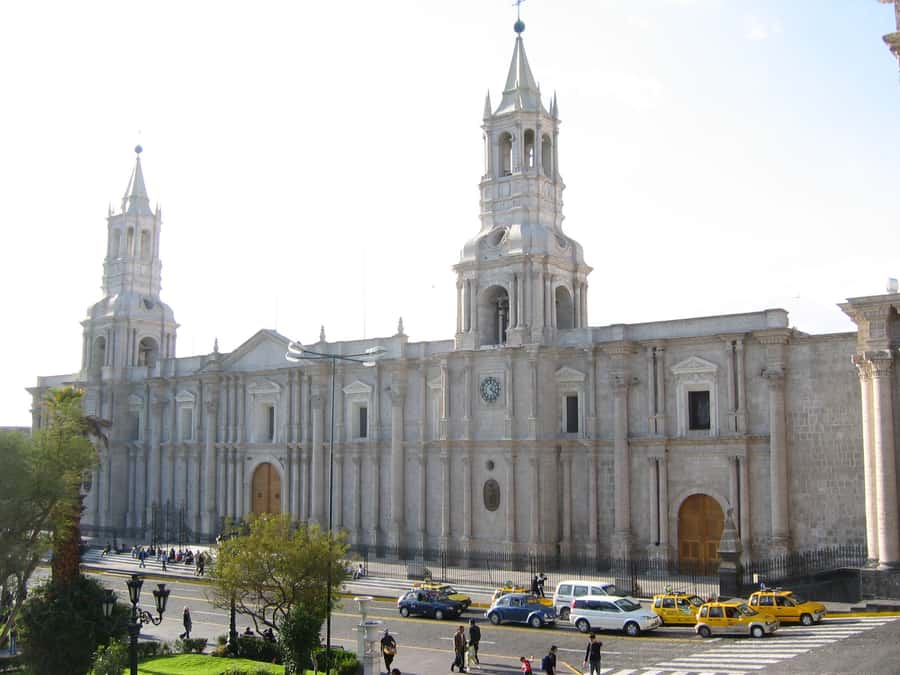
- Plaza de Armas photo time: portals, a bronze fountain, and the Cathedral area as your landmark
- Santa Catalina Monastery: 20,000 square meters of cloisters, patios, and cloister-nun life
Why San Lázaro’s sillar streets are worth your time
The tour starts with hotel pickup in the Historic Center area. If you’re staying outside it, you’ll head to the meeting point at Calle Zela 301, next to the Convent of Santa Catalina (Hotel Mirador del Monasterio). Either way, you’re aimed right at the heart of the UNESCO zone.
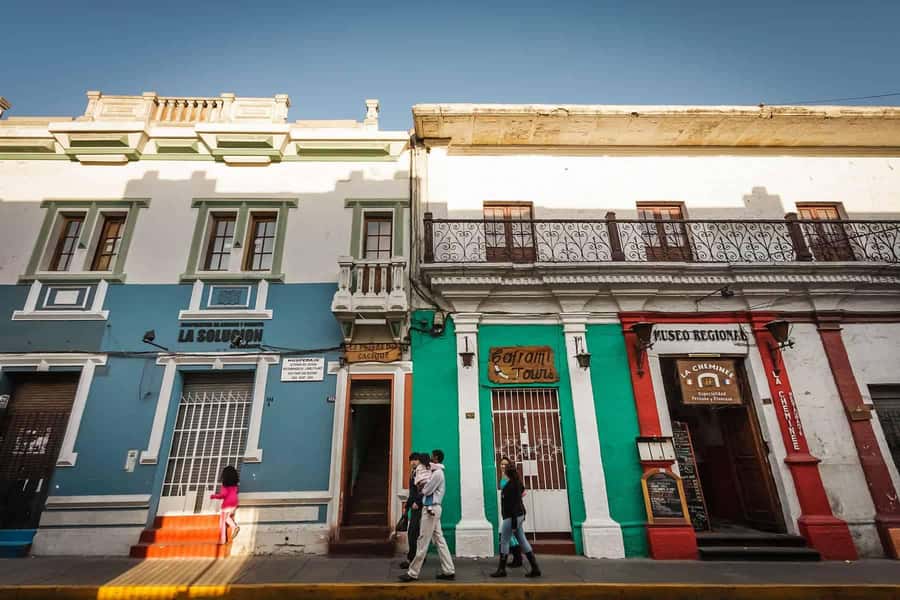
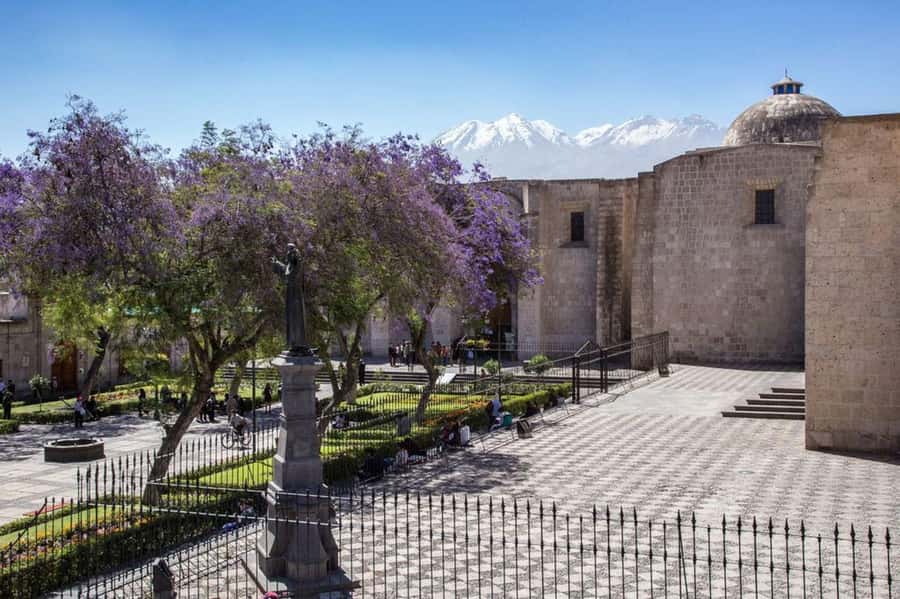
From the start, the neighborhood of San Lázaro sets the tone. You’re about five blocks from Plaza de Armas, but you’ll feel like you’ve stepped into a quieter, older Arequipa. The streets are narrow, with small squares and houses made of sillar, a volcanic stone used across the city. It’s not just pretty. That stone tells you how locals built for heat, durability, and style—so when you see it up close, Arequipa’s look makes practical sense.
This area also has layered occupation. The neighborhood was used by pre-Inca and Inca cultures, and then Spanish conquest and the city’s founding period brought the first major houses here. A good guide turns that into something you can picture: daily life shifting over centuries, without the city ever fully resetting.
The stop is short enough to keep energy up, but long enough to notice details. You’ll get photo stops and a guided walk, not a rushed point-and-snap situation.
You can also read our reviews of more walking tours in Arequipa
Barrio del Solar and the Tambos: colonial trade made walkable
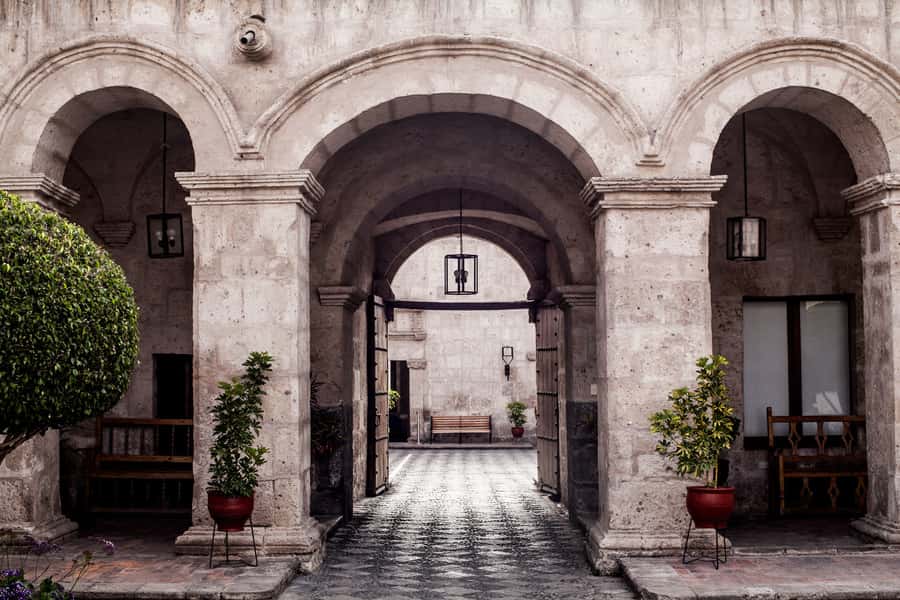
After San Lázaro, you move toward Barrio del Solar near the Río Chili. This part of the route is where the tour starts feeling like a story, because the focus shifts from residential streets to the places merchants used during the colonial era.
You’ll walk through neighborhoods with traditional colonial buildings and hear the idea behind the “tambo” system. Tambos were essentially lodging centers for travelers and traders. Think of them like the city’s old transit-and-stay network—except instead of modern hotels, you’re looking at complexes tied to colonial life and commerce.
Tambo el Matadero: a dark chapter with present-day life
First is Tambo el Matadero, a building from the 1600s. The tour frames it through its former use, including animal-sacrifice practices tied to the period. That’s heavy subject matter, and it’s also why the guide’s tone matters: you’re learning context, not just collecting spooky trivia.
What makes this stop more than a historical label is that it’s still lived-in. The tour notes that around 30 families live there today. So while you’re standing in a place associated with older practices, you’re also seeing how communities adapt buildings across time.
Practical note: you’ll get time for photos and guided explanation, but this isn’t staged. Treat it respectfully and keep your movement slow.
Tambo La Cabezona: communal entry and early industry
Next comes Tambo La Cabezona, a colonial group of houses with a communal entrance dating to the 1500s. This stop helps you understand how space worked in a period when many travelers depended on shared access points rather than private front doors.
The tour also connects the complex to early industry by noting that one of the first mills in the city operated there. That detail matters because it links architecture to work. You’re not just walking through old buildings; you’re following how people produced and processed goods.
Again, you’ll have a guided walk and photo opportunities, with a little time to absorb the feel of the streets around the complex.
Plaza de Armas: the main square with real orientation power
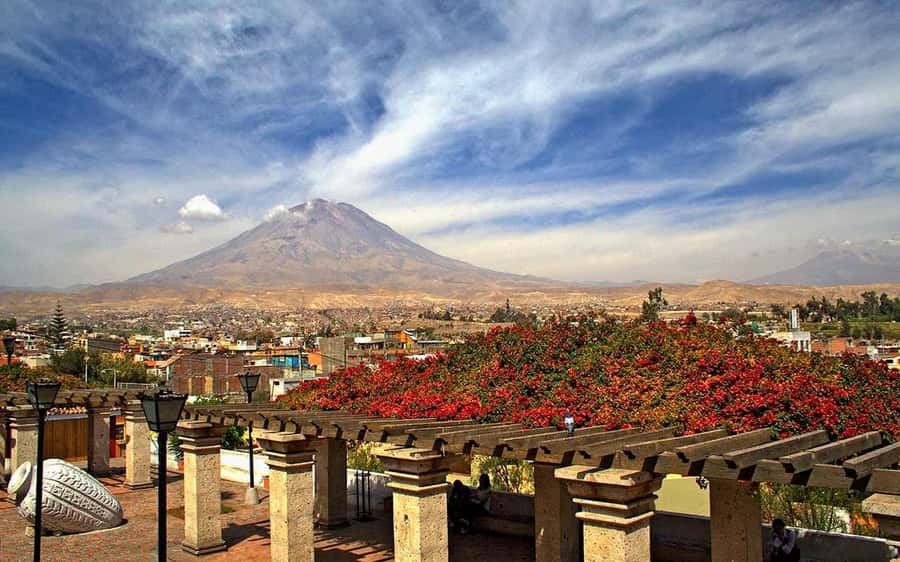
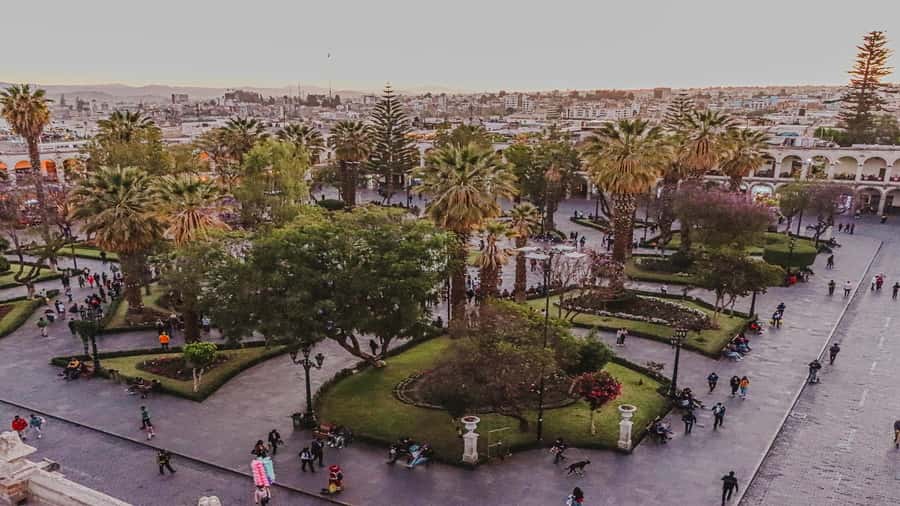
Then the route swings toward Plaza de Armas, Arequipa’s main public meeting point. If you’re new to the city, this is the moment where you get your bearings fast—because the square acts like a mental anchor.
The tour includes a photo stop and a guided look at the square’s features: portals around the perimeter, a bronze fountain in the middle, and the Cathedral area as a key landmark. Even if you’ve seen lots of Latin American plazas in your travels, Arequipa’s feel here is distinct because the surrounding architecture and the volcanic-stone palette echo what you’ve just been walking through.
This is where the guide usually ties themes together. You’ll hear how a city plaza becomes the center for civic life while nearby neighborhoods represent specialized functions—lodging, trade, religious authority, and daily household life.
Expect about 30 minutes here. It’s enough time to take photos, listen, and still feel like you can step aside without missing the next part.


Santa Catalina Monastery: 20,000 square meters of cloistered life
The highlight payoff comes at the end of the walk: Santa Catalina Monastery. The tour shifts from streets to interior spaces, and it’s a major change in scale.
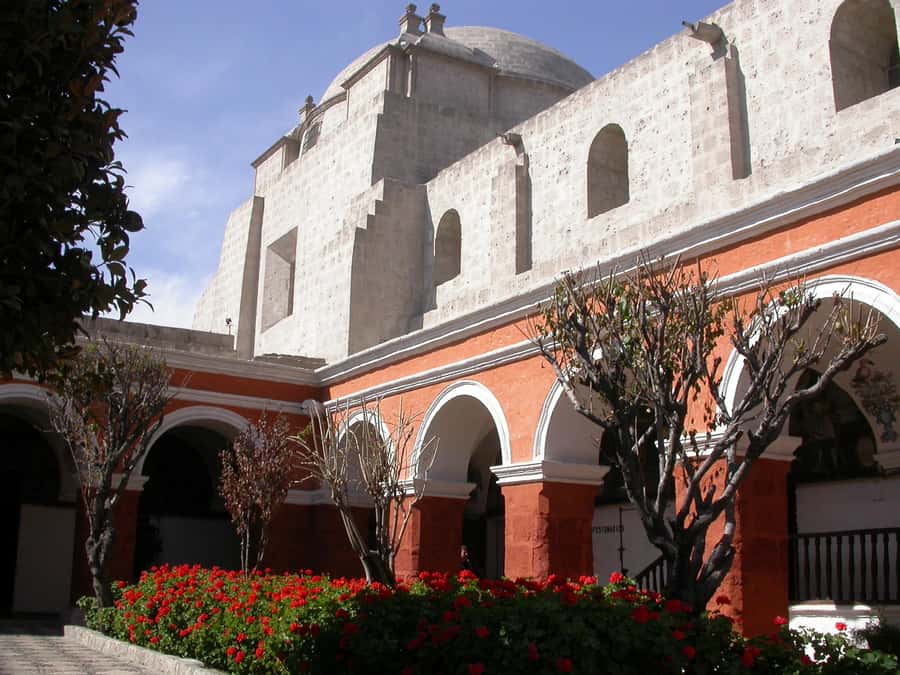
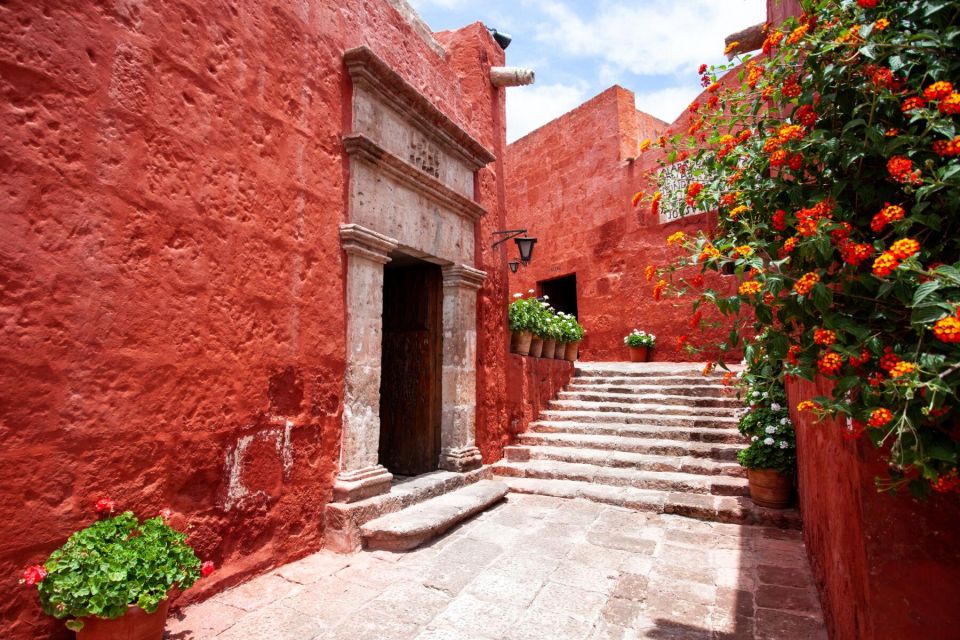
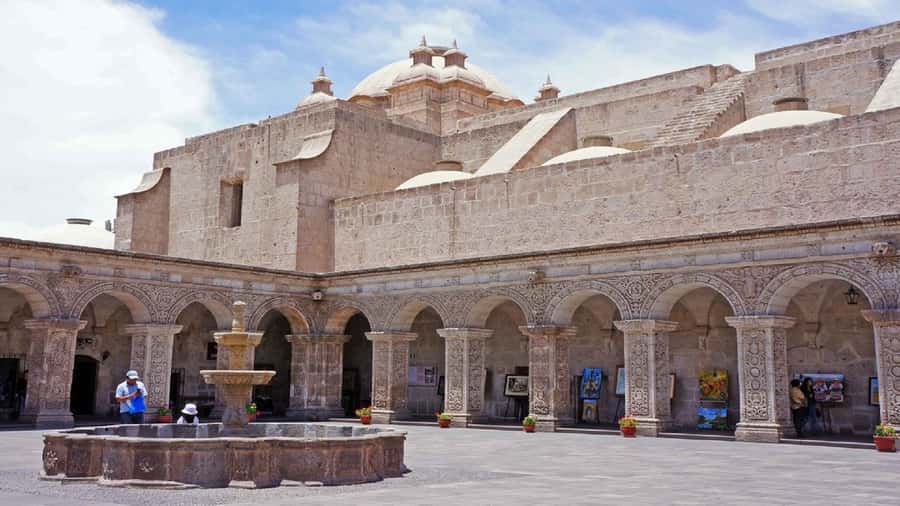
The monastery was founded in 1579. The grounds cover about 20,000 square meters, including cloisters, patios, squares, streets, a bell tower, and a church. In other words, it’s not one big room. It’s a mini-world with its own paths and rhythm.
The story of Doña María de Guzmán
A central character here is Doña María de Guzmán, described as a wealthy woman during the viceroyalty who donated her properties and chose a life as a cloister nun. The tour emphasizes that women often came from wealthy families, and that cloister nuns still live at Santa Catalina.
That modern continuity is what makes the place feel alive rather than locked in a museum. You’re looking at architecture that still supports a real community’s daily routine.
What you’ll see as you walk the interior
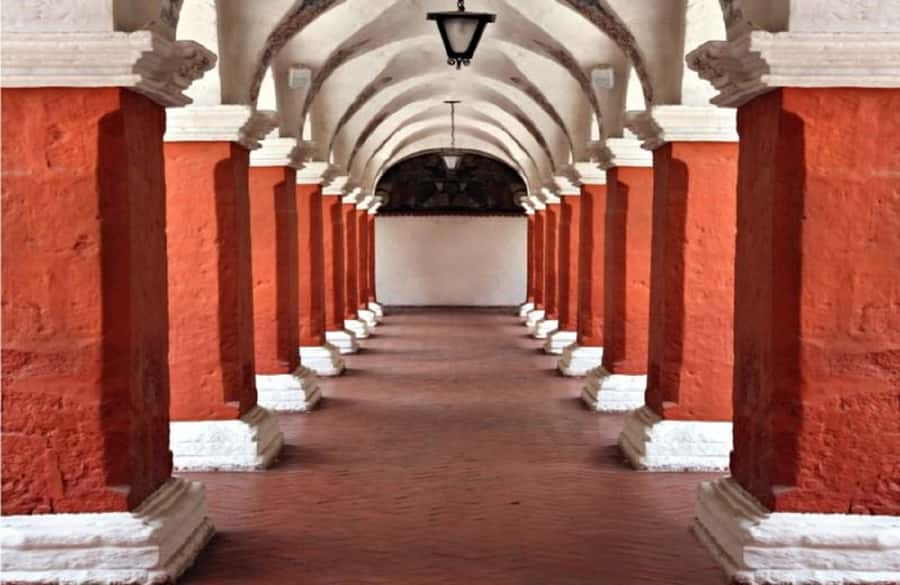
You’ll take a guided visit and also get time to walk and photograph. The tour notes streets made of ashlar and walls with natural red tones, giving the complex a strong visual identity.
You’ll also visit areas such as the Patio del Silencio, presented as a space where the nuns met to pray and read the Bible in silence. Even if you’re not a theology person, these quiet-designed spaces communicate how living and belief were shaped by layout.
The route includes about one hour inside. That sounds short until you realize the monastery is spread out. If you like to linger for photos, you’ll appreciate that the tour includes enough time to do it without feeling like you’re sprinting.
When it’s closed
The monastery closes on December 25th and Good Friday. If your dates land near those days, you’ll want to check ahead so you don’t waste time planning around a closure.
Price and value: what you’re actually paying for
The price is listed as $35 per person for this 3-hour guided experience. That’s reasonable in Arequipa for a route that combines multiple neighborhoods plus a UNESCO-class visit.
Here’s where the value comes from:
- You’re paying for a professional guide in Spanish and English, which is the difference between looking at old walls and understanding what they meant. Guides like Gisela and Milei (from past tour experiences) are noted for clear, empathetic explanations.
- You get structured stops with photo time, rather than trying to piece together San Lázaro, Barrio del Solar, Plaza de Armas, and the monastery on your own.
- Transport is built in. Short van rides connect neighborhood-to-neighborhood so the walking time stays manageable.
Entrance fee included or paid locally
The tricky part is that monastery entry can be handled two ways:
- Option A includes the Santa Catalina entrance fee with a local guide.
- Option B excludes entrance, and you pay locally on-site.
If you choose to pay locally, the tour data gives specific costs: 25 PEN for ages 7 to 21, and 45 PEN for adults.
So the smart move for value is simple: if the entrance fee is optional in your booking, compare your itinerary choice. Paying locally is fine if you’re flexible, but having it included reduces decision fatigue.
Timing and pacing: a realistic 3-hour city sampler
The day moves in a clean loop:
- Pickup and a short van segment
- On-foot walking in San Lázaro
- Another short van segment toward Barrio del Solar
- Stops at Tambo el Matadero and Tambo La Cabezona
- A guided stop at Plaza de Armas
- Final guided entry into Santa Catalina Monastery
- Drop-off back in the Historic Center area
The structure matters because Arequipa’s center has hills and tight streets. Using van segments keeps the tour comfortable while still giving you the real street texture on foot.
The route isn’t long, but the walking is still walking. Bring comfortable clothes, and wear shoes that handle uneven surfaces. Also pack the basics the tour suggests: sunglasses, sunscreen, insect repellent, and a hat. Even in shorter city tours, the sun over southern Peru can be a strong character.
One more small consideration: the order of visits can vary. That’s normal in live guiding, and it shouldn’t affect the overall experience. What matters is that all the key sites are covered.
Who this tour suits best (and who should skip it)
This walking-and-monastery tour is best if you want:
- A guided introduction to Arequipa’s UNESCO Historic Center
- Architecture and place-based history without spending a full day planning
- A strong ending at Santa Catalina, where the scale and atmosphere change the pace
It’s less ideal if you:
- Need wheelchair access, since it’s not suitable for wheelchairs
- Prefer a strictly inside-only itinerary, because you’ll spend time outdoors on the street route
If you’re traveling with kids, the tour notes that children 4 and younger are complimentary, which can help families keep costs down.
Should you book this tour?
I’d book it if you’re the type of traveler who likes your destinations with context. Arequipa rewards people who slow down a little and learn what they’re looking at. This tour gives you that without stretching into an all-day ordeal.
The biggest reason to choose it is the combination: the city’s street texture in San Lázaro, the commerce story in the Tambos, and then the wow factor of Santa Catalina’s cloister world. It’s also an easy match for a first visit because it lands on the most orientation-friendly landmarks: Plaza de Armas and Santa Catalina.
FAQ
Where does the walking tour start?
The tour starts with pickup from hotel locations in the Historic Center. If your hotel isn’t in the Historic Center, you’ll meet at Calle Zela 301 next to the Convent of Santa Catalina (Hotel Mirador del Monasterio).
How long is the tour?
The tour duration is about 3 hours.
Is the Santa Catalina Monastery entrance fee included?
It depends on the option you choose. If the entrance fee is not included, you pay it locally when you arrive.
What is the cost to enter Santa Catalina if the fee is not included?
The tour data lists 25.00 PEN for people ages 7 to 21, and 45.00 PEN for adults.
What language is the guide?
The guide provides explanations in Spanish and English.
Are there any closures to know about?
Santa Catalina Monastery closes on December 25th and Good Friday.
Is this tour wheelchair accessible?
No. The tour is not suitable for wheelchair users.