REVIEW · AREQUIPA
From Arequipa: Sillar Route Excursion | Half Day |
Book on GetYourGuide →Operated by journey MachuPicchu · Bookable on GetYourGuide
White stone tells a bigger story. The Sillar Route tour shows you how Arequipa’s famous pale buildings are made, from quarry to canyon carvings, and you even get volcano views from a high viewpoint. I especially love the stop at the Añashuayco Quarry, where you can see masons at work, and I also like how the canyon walk makes the whole thing feel like living geography, not a lecture. One drawback to plan for: bring insect repellent, because you may end up buying it on the spot and paying extra.
This is a classic Arequipa “culture plus outdoors” outing, with a manageable walk inside Cañón de Culebrillas and a final stop for petroglyphs with meanings that still aren’t fully known. The schedule is listed as 390 minutes, but the day plan runs from about 8:50 a.m. to 1:00 p.m., so expect a full morning with a bit of transport time built in.
In This Review
- Key highlights worth your attention
- Why the Sillar Route is really about Arequipa’s White City identity
- Morning pickup and the volcano viewpoint that sets your bearings
- Añashuayco Quarry: watching masons work with ashlar stone
- The Ruta del Sillar connection: how “history” becomes real logistics
- Cañón de Culebrillas: a water canyon walk with tall walls
- Petroglyphs at the canyon: carved stone with meanings still unknown
- Price and value: $25 plus entrance tickets you should plan for
- How long is this really? Timing from pickup to return
- What to bring for a smooth canyon-and-quarry morning
- Guide style and language: English and Spanish that actually helps
- Who should book this Sillar Route excursion
- Should you book this tour?
- FAQ
- What time is pickup in Arequipa?
- Where does pickup happen?
- How long is the Sillar Route excursion?
- What’s included in the $25 price?
- Are entrance tickets included?
- Does the guide speak English?
- What should I bring?
- What items are not allowed on the tour?
Key highlights worth your attention
- You see sillar production up close at the source quarry, with working stone masons and ashlar carving in plain view
- The viewpoint explains the setting with volcano surroundings that help you picture why this stone-and-city story matters
- Cañón de Culebrillas is short but scenic with a walk of about 20 minutes under tall canyon walls
- Petroglyph stop adds mystery: carved stone figures whose meaning remains unknown
- English and Spanish interpretation from a professional guide keeps the trip comfortable if your Spanish is limited
- Timing feels efficient at each stop, without turning the morning into a long waiting game
Why the Sillar Route is really about Arequipa’s White City identity
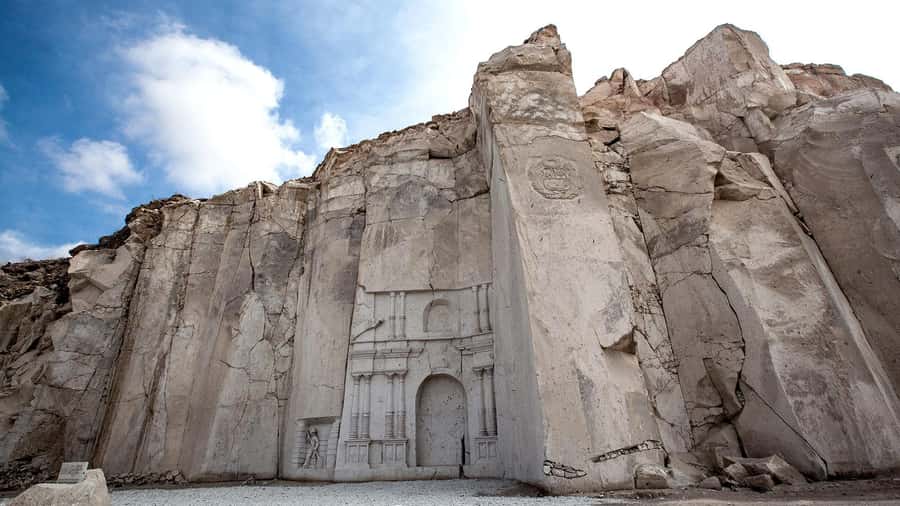
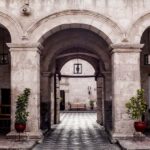
Arequipa gets its nickname for a reason. Much of the city’s look comes from sillar, a pale volcanic stone (ashlar stone in the context of cutting and building) that was quarried locally and used to construct everything from homes to major public buildings. Seeing the stone where it comes from changes the whole way you “read” the city, because the buildings stop looking like just pretty facades and start looking like the end result of real labor, tools, and know-how.
There’s also a cultural weight here. The craft connected to this stonework has been declared Intangible Cultural Heritage of the Nation, so the route isn’t only sightseeing. It’s a guided look at a living tradition that helped shape the region’s architecture.
What I like most is that the tour doesn’t treat the quarry like a museum display. Instead, you’re shown how the material is extracted and carved, so you get a practical understanding of why Arequipa looks the way it does.
You can also read our reviews of more tours and experiences in Arequipa.

Morning pickup and the volcano viewpoint that sets your bearings
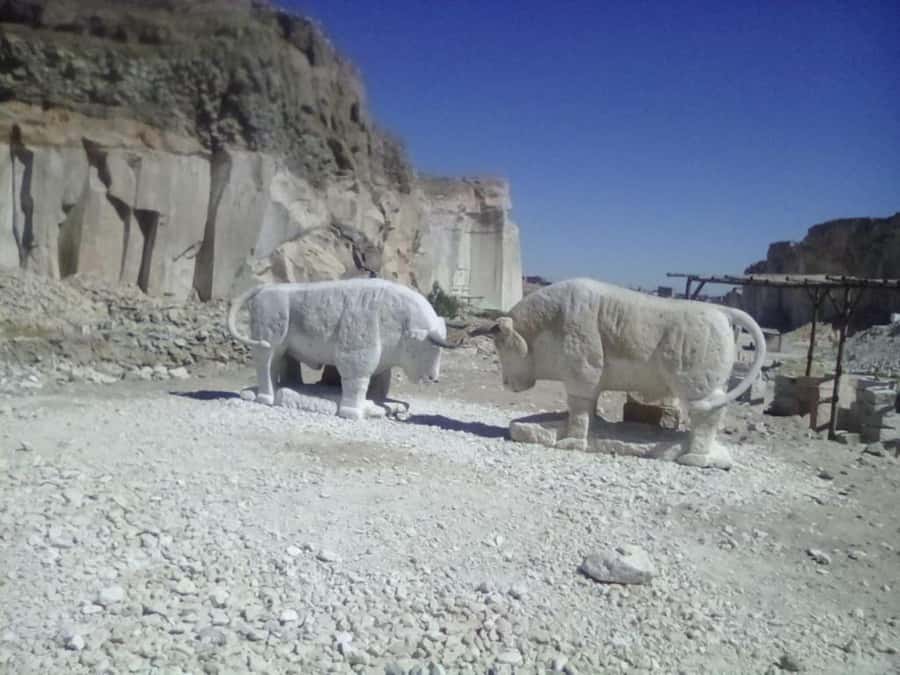
The day starts with pickup from your hotel near the main square in Arequipa at 8:50 a.m. From there, you head toward the Ruta del Sillar, described as one of Peru’s most historic roads tied to the stone.
Before you even reach the quarry, you’ll arrive at a viewpoint where you can take in the volcanoes surrounding Arequipa. This is more than a photo stop. The altitude and the big mountain backdrop help you understand why stone extraction here mattered—this is a city built in a harsh-but-beautiful environment, and local materials had to travel smartly and efficiently.
Bring your camera, but also bring your eyes. I’d rather you take a few thoughtful shots (volcanoes plus city tones) than spray the shutter at every stop. Once you’ve got the setting in your mind, the rest of the route clicks into place.
Añashuayco Quarry: watching masons work with ashlar stone
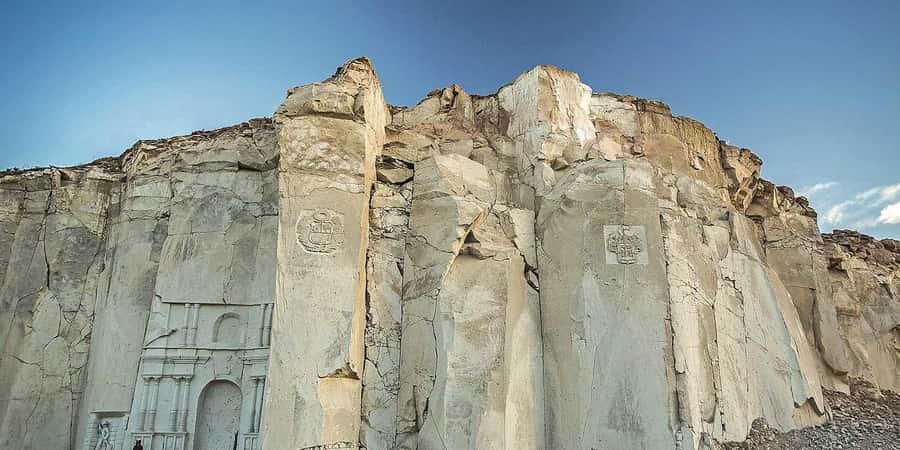
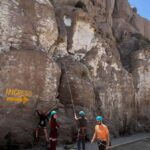
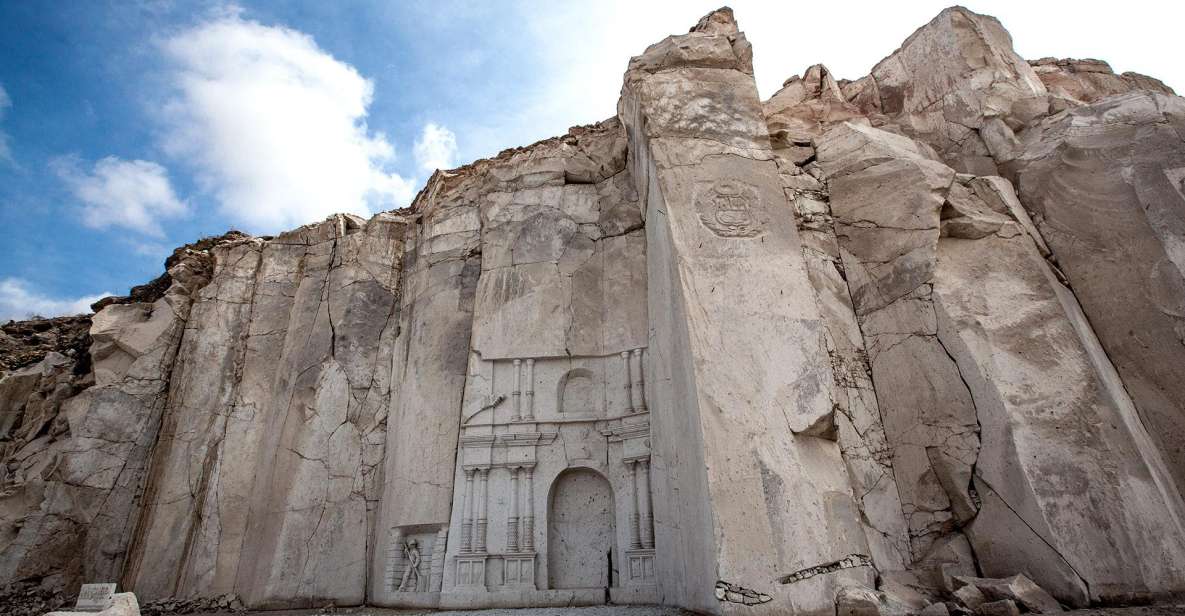
The first major working stop is Añashuayco Quarry. This is where you can see how local masons work the stone, including the carving process. You’re not just looking at rough rock. You’re seeing the step-by-step relationship between extraction and ashlar production—the kind of know-how that makes sillar useful for construction.
A highlight here is the scale. You’ll also admire the immense cliff canyon created by the extraction of the material for forming ashlar. It’s the kind of view that makes you pause, because you can see the result of long-term work, not a one-off project.
Practical note: wear shoes you’re happy to walk in. Quarry areas can be uneven, and you’ll be moving enough to get your bearings on the ground. If you’re carrying camera gear, keep it close and don’t plan on walking around with loose items.
The Ruta del Sillar connection: how “history” becomes real logistics
The route is called Ruta del Sillar, and part of the value is that it links the stone to the road that moved it. Even if you only know Arequipa as the White City from photos, this part helps explain how the stone traveled and why these sites became connected.
This is where a good guide makes a difference. A professional guide isn’t there just to point. The better guides tie the geology, the craft, and the architecture into one story you can follow in a single half-day.
If you end up with a guide like Tony (English and Spanish, with humor), you’ll likely appreciate how the explanations stay clear even if your Spanish is close to zero. That bilingual support matters here because the craft details are the point—you don’t want to miss the “how” behind the “what.”
Cañón de Culebrillas: a water canyon walk with tall walls
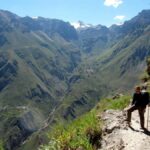
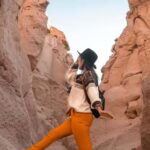
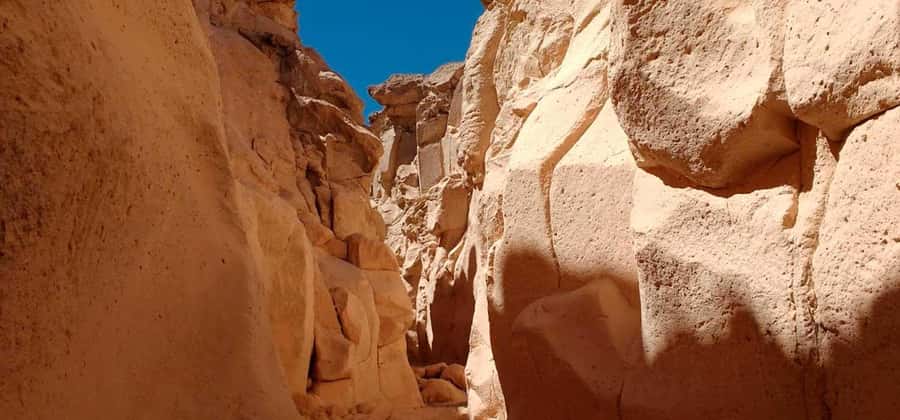
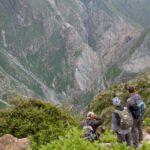
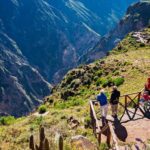
Next comes Quebrada de Culebrillas, a water canyon about 30 minutes from the quarry. The canyon walls can rise up to 20 meters high, and the water adds a different texture to the views than you get from the viewpoint above town.
You’ll enter the canyon for a walk of about 20 minutes. That’s long enough to feel the place and short enough to keep the outing manageable. I like this balance because it gives you a stretch-your-legs moment without turning the tour into a long hike.
What to expect in practice: the canyon walk is the most “active” part of the itinerary, so treat it like that. Keep a steady pace, watch your footing, and plan your photos without stopping in spots where you block the path.
Also, this is where insect repellent becomes a serious recommendation. One small gap in preparation can lead to an unnecessary purchase on the ground, and the canyon is exactly the sort of place where mosquitoes may show up.

Petroglyphs at the canyon: carved stone with meanings still unknown
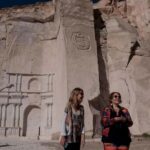
The final stop on the route is for petroglyphs carved into the canyon stone. These are figures worked directly into rock, and the meaning is unknown, which adds a particular kind of mystery to the experience.
What makes this stop satisfying is the contrast. You just spent time seeing a modern tradition of stone cutting for building (and watching masons work). Then you shift to ancient carving—also stone work—but with unknown intent and no single confirmed interpretation.
I recommend taking a moment to slow down here. Don’t just snap and move. Look for patterns, notice how the figures sit in the canyon space, and then let your guide’s explanation frame what you’re seeing, even if the full story can’t be nailed down.
Price and value: $25 plus entrance tickets you should plan for
The advertised price is $25 per person, and what you get for that is the important part: pickup from your accommodation, tourist transport, and a professional guide. That alone is often where “value” lives on short tours—you’re buying convenience plus interpretation.
But entrance tickets are not included. You’ll need to budget:
- Ruta del Sillar: $5 per person
- Cañón de Culebrillas: $5 per person
So your realistic total is closer to $35 per person, before any snacks or extras. For a half-day tour with guided access to multiple sites plus transport, that’s a pretty fair deal, especially if you’re starting from Arequipa and don’t want to piece together driving, parking, and entry times.
If you’re traveling on a tight budget, the key question is simple: do you want a guide’s explanations and a smooth route? If yes, the price makes sense. If you’d rather go fully independent and only pay for entrances yourself, you could potentially cut costs, but you’ll lose the craft-and-context storytelling that makes this tour worthwhile.
How long is this really? Timing from pickup to return
The tour lists a duration of 390 minutes, which equals about 6.5 hours. Yet the day plan indicates pickup at 8:50 a.m. and return by 1:00 p.m. That’s roughly 4 hours and 10 minutes of on-paper itinerary, plus travel and small buffers.
What I’d do as a practical traveler: treat this as a morning-focused excursion. Keep your afternoon flexible in case of traffic or extra time at one of the stops. The tour is described as half day, and in feel it matches that—good for people who want to stay fresh for other Arequipa plans.
Also, the timing seems designed to give you enough time at each location. The quarry and canyon are the core moments; everything else is built around setting the scene and keeping your morning moving.
What to bring for a smooth canyon-and-quarry morning
You’ll want to pack smart because the tour mixes viewpoints, walking, and stone sites.
Bring:
- Passport or ID card
- Camera
- Cash (useful for entrance tickets and small purchases)
- Personal medication
Not allowed:
- Weapons or sharp objects
- Alcohol and drugs
My extra practical tip: add insect repellent to your kit even if it’s not always emphasized. If you forget it, you might end up buying it later, which can feel expensive for something you can buy back home for less.
And if you wear contact lenses or have sensitive skin, bring what you normally need for outdoor sun and dry air. Arequipa mornings can feel brisk at elevation, but you’ll still be outside long enough to notice.
Guide style and language: English and Spanish that actually helps
This tour includes a professional guide, and language options are English and Spanish. That matters because the details here are specific: stone extraction, ashlar carving, canyon features, and petroglyph interpretation.
If you’re not fully confident in Spanish, this type of bilingual support is a big quality-of-life upgrade. You’re not trying to translate technical craft words while you’re also moving through a quarry and listening over outdoor noise.
One guide name you may hear is Tony, who has been noted for humor and clear explanations in both English and Spanish. Even when the tour content is serious—like heritage recognition and ancient petroglyphs—the delivery can stay relaxed, which makes the information easier to hold onto.
Who should book this Sillar Route excursion
This is a great match if you:
- Want a short Arequipa outing that connects stone, architecture, and place
- Like tours where you can see “how it’s made” instead of only reading plaques
- Prefer a walk that’s short (about 20 minutes) and not a full-day hike
- Are traveling with limited time but want more than a quick photo run
It may be less ideal if you have mobility concerns, since the canyon walk is part of the plan and the quarry area can be uneven. The good news is that the active portion isn’t long, so you can plan around it.
If you’re the type who likes details—tools, technique, and the relationship between environment and buildings—this route will feel satisfying.
Should you book this tour?
Yes, I think you should book it if you want a meaningful Arequipa experience in a half-day window. The value isn’t just the sites—it’s the way the tour connects sillar stone craft to what you see around the city, then adds volcano views and a canyon walk for variety.
Book it especially if you’ll spend time in Arequipa afterward. Once you understand how the stone is cut and quarried, your next walk through town will feel more informed and more grounded.
Skip it only if you’re set on doing everything independently and you don’t care about guided explanations. With a guide, the route turns from scenery into understanding.
FAQ
What time is pickup in Arequipa?
Pickup starts at 8:50 a.m. from your accommodation area near the main square.
Where does pickup happen?
The pickup is from your hotel near the main square.
How long is the Sillar Route excursion?
The duration is listed as 390 minutes.
What’s included in the $25 price?
It includes hotel pickup, tourist transport, and a professional guide.
Are entrance tickets included?
No. Entrance tickets cost $5 per person for Ruta del Sillar and $5 per person for Cañón de Culebrillas.
Does the guide speak English?
Yes. The live tour guide offers English and Spanish.
What should I bring?
Bring your passport or ID card, a camera, cash, and any personal medication you need.
What items are not allowed on the tour?
Weapons or sharp objects, plus alcohol and drugs, are not allowed.