REVIEW · AREQUIPA
Arequipa: Catarata de Pillones and Bosque de Piedras Tour
Book on GetYourGuide →Operated by GONDOLA TOURS SAC · Bookable on GetYourGuide
Stone animals and a roaring waterfall await. This one-day Arequipa tour strings together Catarata de Pillones and the Bosque de Piedras formations, then adds vicuñas with the Misti Volcano in the background. I love how physical and real it feels, from a careful rocky descent to a long photo window at the falls—no sitting still for hours. I also like the mix of geology and local culture moments, including time to learn traditions with your guide and a warm-up stop in the high Andes. The main consideration: it’s cold at altitude (around 4,000 meters), so if you run hot/cold easily, pack real layers and comfy shoes with grip.
You’ll start early, around 6:00 AM, with pickup near the historic center (or at the office on Jerusalén Street 515). Then the day keeps a steady pace: waterfall first, stone forest next, lunch in between, and you’re back near Plaza de Armas by about 4:00 PM.
In This Review
- Key things to know before you go
- Why Catarata de Pillones + Bosque de Piedras makes sense in one day
- Meeting up by Arequipa’s main Cathedral (and what to watch for)
- The morning warm-up: Pampa de Arrieros and high-Andes acclimatizing
- Pampa Cañahuas: vicuñas and Misti views without rushing
- Catarata de Pillones: the 20-minute descent and why slow footing matters
- Bosque de Piedras de Puruña/Imata: how to “read” the stone forest
- Lunch at a local restaurant: budget for it, and enjoy the break
- Price and value: is $32 fair for this 1-day private tour?
- Who should book this (and who should skip it)
- Getting the best photos and comfort at 4,000 meters
- Should you book the Arequipa Catarata de Pillones and Bosque de Piedras tour?
- FAQ
- What time does the tour start?
- Where do I meet the guide?
- What language is the guide?
- How long is the tour?
- Is transportation included?
- What is included in the price?
- What is not included?
- Do I need to bring anything?
- What about age limits and suitability?
- Are there any rules during the tour?
Key things to know before you go
- Catarata de Pillones gives you two ways to enjoy it: from above and on foot for closer views
- You’ll get about 45 minutes at the waterfall for photos and time to breathe
- Pampa Cañahuas is timed for wildlife viewing, with vicuñas and Misti Volcano views
- A 20-minute descent means you should wear shoes that handle uneven, rocky ground
- The Bosque de Piedras area (Puruña/Imata) is all about stone shapes that look animal-like, thanks to water-eroded rock
Why Catarata de Pillones + Bosque de Piedras makes sense in one day
This tour works because it hits two very different kinds of wonder without wasting time. First you get drama: Catarata de Pillones, a big waterfall tucked inside an area of rocks carved and shaped by water and time. Then you shift to a quieter kind of awe: the Bosque de Piedras zone, where natural stone columns and “petrified” shapes can look like prehistoric animals.
What you’ll appreciate most is the rhythm. It’s not just a drive-and-hope-for-the-best day. You actually walk parts of the experience—especially on the way down to Catarata de Pillones—so you’re not only looking at nature, you’re moving through it. And the guide adds context along the way, tying what you see to how the landscape formed and how local communities live with the high-altitude environment.
Yes, it’s a full day. But the payoff feels earned: the falls are your big visual moment, then the stone formations keep the sense of mystery going while you’re still in the Arequipa highlands. For a one-day trip, that’s a strong trade.
You can also read our reviews of more tours and experiences in Arequipa.
Meeting up by Arequipa’s main Cathedral (and what to watch for)
Your morning starts with a clear meeting plan. The reference point is the main entrance of the Cathedral in Arequipa. If you’re staying in the historic center, your pickup may be arranged directly from your hotel. If you’re meeting at the fixed point, look for your guide using the company uniform, and be ready to coordinate by phone if needed.
This matters because the day starts early—around 6:00 AM—and you don’t want to spend that time hunting down the group. If you’re staying outside the historic center, double-check the pickup approach when you book, since the tour mentions pickup from hotels in the historic area.
Also note the tour language: your guide provides live commentary in English and Spanish. If you want the geology and culture pieces explained clearly, that bilingual setup is a practical bonus. Even if you’re rusty in Spanish (or English), the guide will keep moving the story forward so you don’t get lost in silence.
The morning warm-up: Pampa de Arrieros and high-Andes acclimatizing
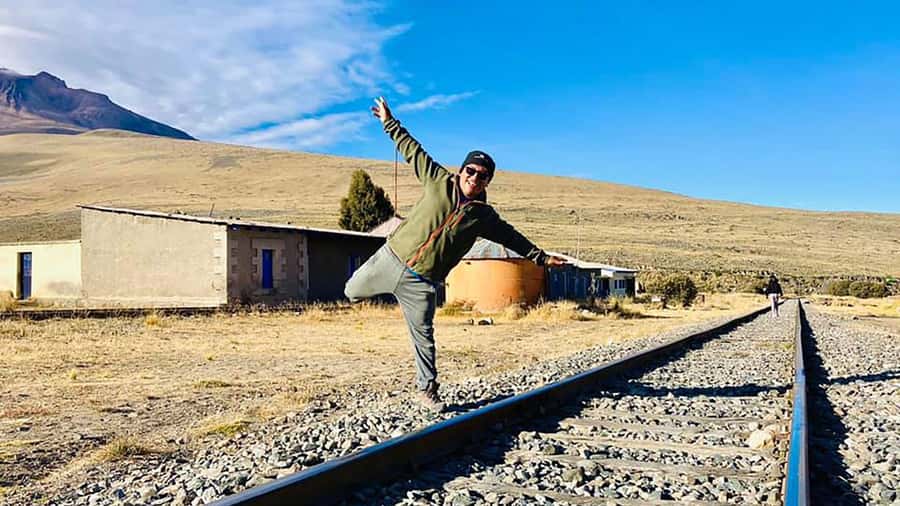
After you set off, you’ll make a stop at Pampa de Arrieros. This is more than a photo break. It’s described as an important station for travelers who arrived by train to Arequipa, the White City. Even if you’ve only read about that era, it helps to see the area with a guide who can frame it in a human way: people, movement, routes, and why this part of Arequipa mattered.
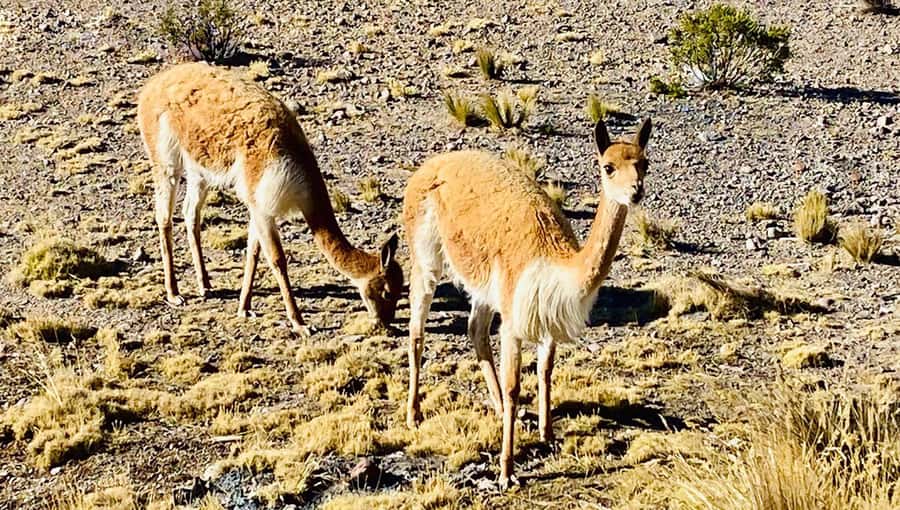
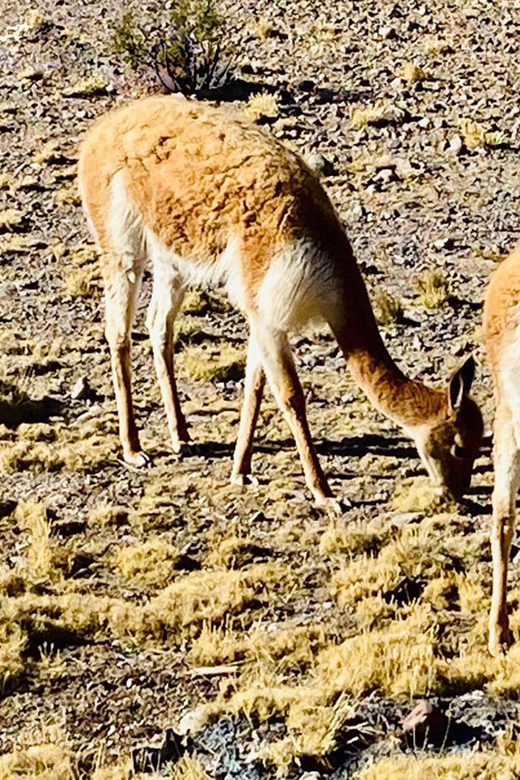
Next comes Pampa Cañahuas (National Reserve), where you pause for wildlife viewing. The big draw here is seeing vicuñas with the Misti Volcano in the background. Even if wildlife is hit-or-miss on any given day, the tour schedules this stop as a dedicated moment, not something you’re expected to catch while the bus is idling.
Then you reach Patahuasi, which is your altitude buffer. You’ll have a chance for Andean teas and breakfast or local snacks. The point isn’t just food—it’s comfort. At around 4,000 meters, mornings can feel sharp, and warming up helps your body handle the day’s walking better. This is also why warm layers and water matter later, when you’re descending toward the falls.
Pampa Cañahuas: vicuñas and Misti views without rushing
If you want to understand why this stop is worth the early start, it’s the combination. You’re in an area set up for clear viewing, with the Misti Volcano acting like a dramatic backdrop and the vicuñas adding living detail to the scene.
The tour structure supports that: it’s a guided visit with a photo stop, not a quick stop where everyone jumps out, snaps shots, and gets back on the road. You also get to settle into the altitude before the main hike action.
A practical tip: treat this as your “eyes and camera” moment. You’ll be moving later—down toward Catarata de Pillones and on the stone formations—so take the time here to set your settings, wipe your lens if needed, and decide where you want your best photos (especially with Misti lined up behind).
If you’re the type who loves animals in the wild, this is one of the more satisfying segments of the day. And if you’re not, the views still do the job. Either way, it’s a strong hinge between travel and the day’s main natural sights.
Catarata de Pillones: the 20-minute descent and why slow footing matters
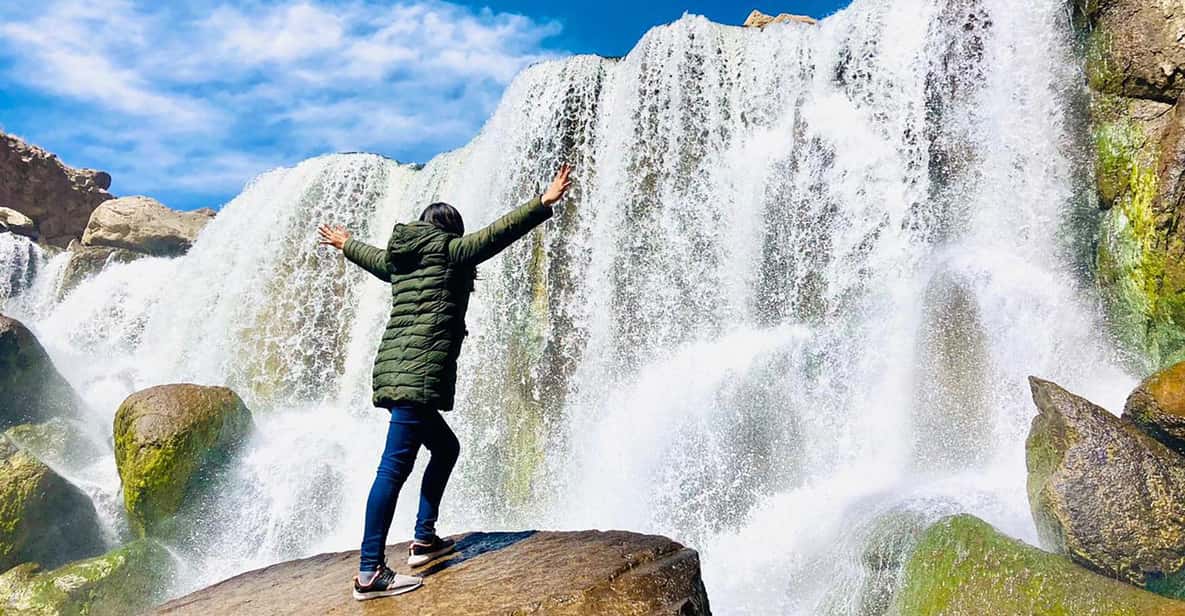
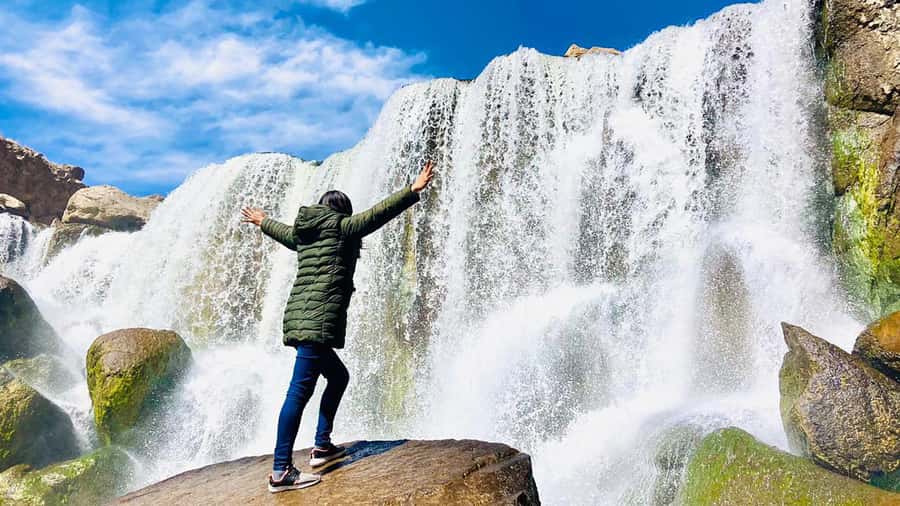
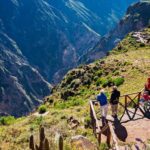
This is the tour’s centerpiece: Catarata de Pillones (also described as Catarata de Pillone–Pauza). The falls sit in a dramatic area where dozens of rocks shaped by erosion surround the water.
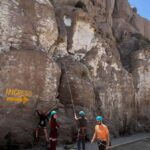
Here’s how the experience is paced. You’ll start with a 20-minute descent to reach the waterfall area, though the falls can also be viewed from above. That’s a nice option if you don’t feel like going all the way down to the closest point. But if you do go down, plan for real footing: the route involves a rocky slope and a walk along a river.
That’s not a small detail. If you wear shoes that are even slightly slippery, you’ll notice it fast. This is exactly where comfortable shoes isn’t just advice—it’s your comfort and safety margin. Go slow on the descent, keep your balance, and you’ll enjoy the payoff.
You get about 45 minutes at the waterfall. That’s enough time to do what you came for: watch the water, take photos, and not feel trapped by constant movement. Bring your camera, and also consider taking a few photos that don’t look like photos—stand still, let your eyes adjust, and capture the rock-water combination without trying to frame everything perfectly.
If you want a travel tip with personality: the falls are loud and impressive, so your brain will want to sprint. Don’t. Enjoy the quiet moments too, when the rush fades and you can actually see the erosion shapes up close.
Bosque de Piedras de Puruña/Imata: how to “read” the stone forest
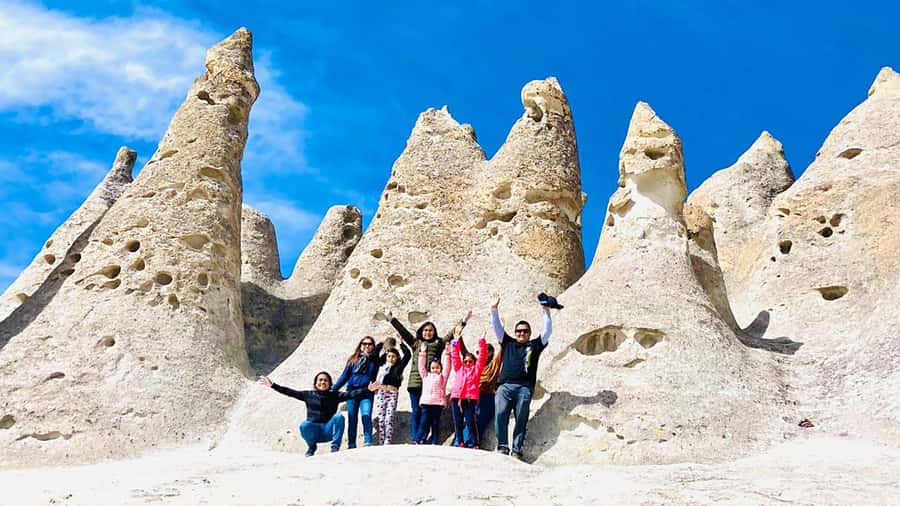
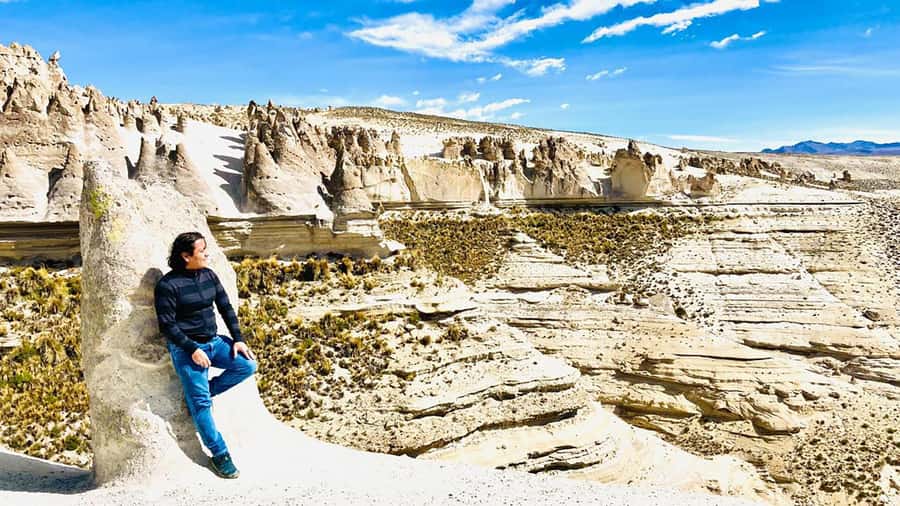
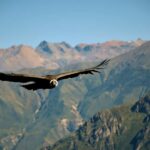
After lunch time approaches later, the tour still saves its other-worldy feature: the Bosque de Piedras area. The description calls it an enchanted and petrified forest, and the visual logic is easy to understand once you’re there.
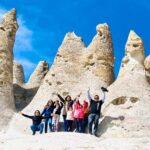
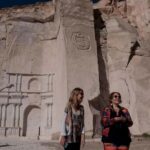
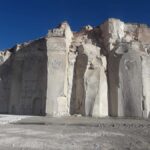
Water erosion over time created natural rock columns and formations that can resemble prehistoric animals. Your guide’s job here is helpful: when you’re looking at something that’s supposed to be mysterious, you need a little pointing, a little interpretation, and a little structure so you don’t just walk past and say, yep, rocks.
So aim to look from multiple angles. Stone formations often “change” when you step a few meters—silhouettes look different, and shadows make certain shapes more obvious. Your best strategy is to treat it like a scavenger hunt, not a single viewpoint stop.
You’ll have a guided photo stop and visit here as well. It’s not just scenic walking; it’s a guided look at how the shapes formed and what local people think and say about places like this. That culture thread is part of why the stone forest doesn’t feel like a postcard stop. You’re learning how to connect the visual experience with local interpretation of the environment.
Lunch at a local restaurant: budget for it, and enjoy the break
By around 12:30 PM, you’ll have time for lunch at a local restaurant. The tour data is clear that lunch is not included, so plan for it in your day budget.
This stop is practical in two ways. First, it gives your body a break after a lot of movement at altitude. Second, it gives you a chance to eat something that matches the region. I like lunch stops on day trips because they help you reset. You’ll come back with more energy for the final stretch back toward Arequipa.
If you’re thinking about cost control: the tour price covers the guided experience and transport, not food. So treat lunch as your personal choice—if you want something simple, go for it. If you want to try a local specialty, this is your time.
Price and value: is $32 fair for this 1-day private tour?
At $32 per person, this tour sits in a budget-friendly zone for a full-day, high-altitude nature circuit. Here’s what you’re paying for that makes the math work:
- Professional guide (live commentary in English/Spanish)
- Hotel pickup when you’re in the historic center area, plus air-conditioned transportation
- A private tour setup with group size limits (up to 19 with prior coordination)
- Multiple guided stops: history/photo moments, wildlife reserve viewing, waterfall time, and stone forest walking
What’s not included is also important for value. Food and drinks are not included, and lunch is listed as not included as well. Entrance tickets are also not included. So your total spending depends on what you choose to eat and whether any specific entrance fees apply at sites during the day.
Still, for a one-day itinerary that covers both a major waterfall and a stone “forest,” the guide + transport value is strong. You’re not paying extra for a second day trip, and you’re not stuck trying to coordinate rural transport on your own. You’re also getting the timing right: early morning for wildlife and better light, and planned time windows so you’re not rushed at the waterfall.
If you want to keep it simple financially, budget a bit more for lunch and any drinks. Then you’ll know you’re set.
Who should book this (and who should skip it)
This tour is best for people who can handle cold, walking, and uneven ground. The age range listed is 8–50 years, and there are clear “not suitable” categories:
- Not suitable for children under 8
- Not suitable for pregnant women
- Not suitable for people with mobility impairments
You’ll also want to be comfortable with the idea of a rocky descent and a river-side walk on the way to Catarata de Pillones. If that sounds stressful, consider the option to view the falls from above, since the tour notes you can see it that way.
On the plus side, it’s a great fit if you:
- Want a guided day without planning transport between remote sites
- Like geology and the story behind how places form
- Want wildlife viewing with a dramatic volcano backdrop
- Prefer a full day with purposeful stops rather than a long bus ride with little to see
Getting the best photos and comfort at 4,000 meters
Altitude makes small things matter. Pack for cold even if Arequipa feels mild in the morning. The tour explicitly says to bring warm clothing, plus comfortable shoes, water, and snacks.
For photos:
- The waterfall stop is your longest focused moment (about 45 minutes), so plan your best angles there.
- In Pampa Cañahuas, you’ll want shots with the Misti Volcano behind the vicuñas, so be patient and don’t rush your composition.
- In the Bosque de Piedras area, move slowly between angles. Stone shapes are often more obvious with a slight shift in viewpoint.
Also, there’s a simple rule: no smoking. That’s standard for a guided nature day, and it helps keep the experience pleasant for everyone.
Finally, wear “sport” style clothing as suggested. Think layers you can adjust, not outfits you’d only wear in perfect weather.
Should you book the Arequipa Catarata de Pillones and Bosque de Piedras tour?
Yes, if you want a one-day Arequipa trip that gives you two kinds of nature wow—waterfall power and stone-formation mystery—plus a wildlife reserve moment with vicuñas and Misti views. The early 6:00 AM start is a real commitment, but it’s tied to the best chance for an enjoyable day and better light for photos.
I’d say skip it if cold and altitude make you miserable, or if you can’t manage uneven ground. The walking element is part of what makes this tour feel worth it.
If you book, do yourself a favor: bring warm layers, wear grippy shoes for the descent, and treat Pampa Cañahuas as more than a quick snapshot stop. That’s where the day sets the tone.
FAQ
What time does the tour start?
The tour starts at 6:00 AM.
Where do I meet the guide?
The reference meeting point is the main entrance of the Cathedral in Arequipa. Pickup may also be available from your hotel if you’re located in the historic center. You can also meet at the office on Jerusalén Street 515.
What language is the guide?
The live tour guide is available in English and Spanish.
How long is the tour?
The duration is 1 day.
Is transportation included?
Yes. The tour includes air-conditioned transportation and hotel pick-up.
What is included in the price?
The price includes a professional guide, hotel pick-up, a private tour, and the special activities connected to the day.
What is not included?
Food and drinks, lunch, and entrance tickets are not included.
Do I need to bring anything?
You should bring comfortable shoes, warm clothing, a camera, snacks, and water.
What about age limits and suitability?
The age range is 8 to 50 years. It is not suitable for children under 8, pregnant women, or people with mobility impairments.
Are there any rules during the tour?
Smoking is not allowed.