REVIEW · BUENOS AIRES
Caminito, La Boca: vibrant neighborhood
Book on GetYourGuide →Operated by Swell Experiences · Bookable on GetYourGuide
La Boca’s colors hit before you turn. This 2-hour walk is interesting because you’ll connect the neighborhood’s port roots and Genoese influences to real-life culture like tango and soccer, while also getting a guided look at Caminito’s painted alleyways along the Riachuelo. I like that the tour is led by two locals who help you read the place instead of just passing through it, and I like how the art by Quinquela Martín isn’t treated like wallpaper—it’s the story. The one drawback to plan around: the live guide is in Spanish, and there’s a recommended $10 minimum tip since it’s a free walking-tour style experience.
You’ll start at the entrance of Fundación PROA, wearing blue shirts and carrying black umbrellas. It’s a private-group format, and it ends right back where you began, which makes the whole thing feel tidy and easy to fit into a day. Expect a guided walk with visits to five points, plus a skip-the-ticket-line benefit at the ticketed stop(s).
You’re paying $13 per person for the guided experience, but you should budget the tip on top. Also, bus and food aren’t included, and Boca Juniors stadium tickets aren’t included—so think of this as the neighborhood tour, not stadium access.
In This Review
- Key highlights I’d mark on your plan
- Why La Boca’s art starts with Quinquela Martín
- The exact flow: 2 hours, private group, and 5 guided stops
- Getting oriented at Fundación PROA
- Caminito: what to notice beyond the painted facades
- Benito Quinquela Martín Museum: the artist’s influence in context
- Vuelta de Rocha: the viewpoints and the port-side mood
- Bombonera area and the volunteer fire brigade headquarters
- Price and value: $13 plus a real tip expectation
- What to pack and when to go (so the 2 hours feel good)
- Who this tour suits best
- Should you book this La Boca walking tour?
- FAQ
- Where does the tour start?
- How long is the tour?
- Is the tour guided in English?
- Is there a ticket line skip?
- Is food or bus transport included?
- Do I need to tip?
Key highlights I’d mark on your plan
- Fundación PROA start point: a smart launchpad before you hit La Boca’s most famous sights
- Two local guides: you get city context as you walk, not a lecture at a single stop
- Caminito by Quinquela Martín: learn what you’re looking at, from the street art to the setting by the Riachuelo
- Benito Quinquela Martín Museum: see how one artist’s work shaped the way La Boca gets remembered
- Bombonera area + volunteer fire brigade headquarters: soccer energy with a dose of local civic pride
- 5 guided stops in 2 hours: quick pacing that works if you’re short on time
Why La Boca’s art starts with Quinquela Martín
La Boca has a way of grabbing your attention fast. But on this tour, you don’t just see the colorful walls—you understand why they’re there. Caminito is the headline, with its bright passage along the Riachuelo that Quinquela Martín helped turn into a kind of living canvas. When you learn the “why,” the photos feel less like souvenir hunting and more like proof you actually got the point.
One reason I like this approach is that it links art to place. La Boca’s social fabric was shaped by Genoese immigration, and that port-world mix is part of what makes the neighborhood feel distinct from the rest of Buenos Aires. Add tango’s roots here and the pull of Boca Juniors and River Plate, and you get a neighborhood that’s not only pretty—it’s emotional.
If you’re worried about language, keep it in mind: the guide is Spanish. If your Spanish is limited, you’ll still likely enjoy the visuals, but you’ll lose some of the smaller explanations.
You can also read our reviews of more tours and experiences in Buenos Aires.

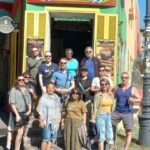

The exact flow: 2 hours, private group, and 5 guided stops
This is built as a tight walking experience. You’ll have 2 hours total, and the tour includes guided visits to each of the five points. Because it’s a private group, the pace tends to feel more controlled than big public tours—good if you want questions answered without feeling rushed.
You start at Fundación PROA (entrance), and you’ll be able to spot the group because the guides wear blue shirts and carry black umbrellas. That sounds small, but meeting points can make or break a walking tour day. Coming back to the same spot at the end keeps the logistics simple, especially if you have dinner plans nearby.
One practical note: bus and food aren’t included. Since you’re walking, wear shoes you trust for uneven city sidewalks, and plan to eat after if hunger hits.
Getting oriented at Fundación PROA
Fundación PROA is more than a convenient starting line. It’s tied to the art-forward identity of this part of Buenos Aires, so it’s a good way to get your bearings fast before the neighborhood’s most famous imagery starts flying at you.
From here, the tour’s focus becomes easier to follow. You’re walking into La Boca’s world where immigration stories, port life, and street art all interact. Starting with an arts institution helps you shift your brain into the right mode: look at what you see, then ask what it’s saying.
Also, since Caminito is one of the world’s most photographed spots on Google Maps, you’ll appreciate having context before you reach the camera magnets. The guide helps you slow down just enough to notice the details that don’t make it into every tourist photo.
Caminito: what to notice beyond the painted facades
Caminito is the famous alley of color along the Riachuelo. The key here isn’t just the brightness—it’s that it’s linked to Quinquela Martín, who transformed the area into a public artistic statement. On this tour, you’ll get the “how” and “why,” which makes it easier to look past the obvious.
Here’s what you can watch for as you go:
- How the street art works like a neighborhood memory system, tied to the port and the people who lived it
- How the Riachuelo setting shapes the feel of the place
- How the guided explanation turns the alley into a narrative, not a backdrop
One drawback to plan around: Caminito is famous. That usually means lots of people and lots of cameras. If you’re the type who likes quiet corners, arrive with patience and let the guide steer you toward the parts where the story is clearest.
Benito Quinquela Martín Museum: the artist’s influence in context
After Caminito, the tour brings you to the Benito Quinquela Martín Museum. This is where the art stops being just street-level spectacle and becomes easier to understand as a broader cultural force.
Even if you’re not an art encyclopedia, a museum stop helps because it gives you a larger frame. Quinquela Martín isn’t presented like a random name—you’re shown how one artist’s vision helped define how La Boca is viewed. That matters because La Boca’s identity is tied to how people remember the neighborhood, not only how it looks today.
This stop also includes a skip-the-ticket-line benefit, which is handy in places where lines can swallow your time. In a 2-hour tour, every minute counts.



Vuelta de Rocha: the viewpoints and the port-side mood
Vuelta de Rocha is one of those stops that helps you “read” the neighborhood. It’s not only about what’s immediately in front of you; it’s about seeing how the streets and corners relate to the bigger La Boca story.
As you move through the area, listen for the connections the guide makes between:
- La Boca’s port origins
- the immigration influences
- and how the neighborhood’s culture grew from ordinary life, not just staged performances
This is also where you’ll appreciate the walking format. La Boca’s meaning isn’t locked in one photo spot. It’s spread out across streets and angles, which you only really get when you’re moving through it with a guide.
If you want a smooth photo route, ask the guide to point out the best angles as you go. The group’s pace is designed for learning, but you can still capture great pictures without losing the thread.
Bombonera area and the volunteer fire brigade headquarters
Soccer is a huge part of La Boca’s identity, and you get a look at the Bombonera stadium area during the walk. Even if you’re not buying stadium tickets, the neighborhood connection is the point. Boca Juniors and River Plate get mentioned because this is where people feel it—on the street, in the conversations, in the energy of the place.
One of the most memorable parts of this tour is that it also includes the volunteer fire brigade headquarters. It adds a civic layer to the visit. That’s important: La Boca isn’t only fandom and famous murals. It’s also community pride and the kinds of institutions that keep daily life running.
Just be aware of scope: tickets to the Boca Juniors stadium aren’t included. So if your dream is sitting inside Bombonera, you’ll need a separate ticket plan. This tour is about the neighborhood feel and the landmarks around it.
Price and value: $13 plus a real tip expectation
The price is $13 per person, and for a 2-hour guided walking experience with local input, five guided stops, and a skip-the-line benefit at a ticketed stop, that’s solid value—especially when you compare it to the cost of doing everything as separate museum entries and paid guides.
But don’t ignore the free walking tour style element. The guide format is built around recommended tipping, with a minimum tip of $10 suggested. In practical terms, your total spend will usually land closer to about $20–$30 per person depending on how you tip.
Is it still worth it? In my view, yes—if you care about context. The tour’s value is not in collecting stamps. It’s in understanding why Caminito, Quinquela Martín, and La Boca’s immigrant-port background connect to tango and soccer as living culture.
What to pack and when to go (so the 2 hours feel good)
This is a short tour, so details matter:
- Bring a light layer in case it’s breezy or rainy. The guides carry black umbrellas at the meeting point, which is a hint to expect weather changes.
- Wear comfortable walking shoes. It’s a neighborhood on foot, and you’ll want your legs to feel fresh for the full route.
- If you’re sensitive to crowds, plan your day carefully. Caminito’s photo reputation means it can feel busy at peak hours.
Timing tip: pick a time when your energy matches the pace. Two hours goes quickly in the best way, but it’s not a slow stroll. You’ll be moving, learning, and stopping often enough to stay engaged.
Who this tour suits best
This tour is a great fit if you:
- Want a focused La Boca introduction in a limited time window
- Like walking tours that explain what you’re seeing (art, soccer, and local identity)
- Prefer a guided structure instead of getting lost while chasing photos
It’s less ideal if:
- You need an English-only experience. The live tour guide is Spanish.
- You specifically want to enter Boca Juniors stadium. Tickets aren’t included.
- You’re expecting food or bus transport. Those aren’t part of the package.
If you’re the kind of traveler who enjoys meeting local guides and letting the neighborhood explain itself, this one should land well.
Should you book this La Boca walking tour?
Book it if you want the quickest path to understanding why La Boca looks the way it does—and how art, immigration, tango, and soccer fit together. The combination of Caminito, the Quinquela Martín stops, and landmark context like the Bombonera area makes it more than a photo hunt.
Skip it (or plan something else alongside it) if you’re only interested in stadium access or you need English. Also, if you don’t want to tip after a free-walking-tour style recommendation, adjust your expectations before you go.
If you’re ready for color, street-level stories, and a well-paced 2 hours, this is an easy yes.
FAQ
Where does the tour start?
The meeting point is at the entrance of Fundación PROA. The guides are wearing blue shirts and carrying black umbrellas.
How long is the tour?
The tour duration is 2 hours.
Is the tour guided in English?
No. The live tour guide language listed is Spanish.
Is there a ticket line skip?
Yes. The activity includes a skip-the-ticket-line benefit.
Is food or bus transport included?
No. Bus and foods are not included.
Do I need to tip?
The tour is described as a free walking tour, and it recommends a minimum tip of $10.