REVIEW · CUSCO
Excursion + Sillar and Culebrillas Route in Arequipa
Book on GetYourGuide →Operated by Inspires Viagens · Bookable on GetYourGuide
Arequipa’s stone has a story you can touch. This 4-hour excursion threads together Sillar origins in an active quarry and a canyon walk with ancient petroglyphs. I like that the day mixes practical explanations with hands-on stone work, and I also like the overall pacing that keeps you moving through real places rather than just viewpoints. The main drawback to consider: like many small-group tours, timing can slip a bit if the group waits to depart, and one bus run isn’t guaranteed to have air conditioning.
You start in the morning with a strategic stop built for quick orientation—volcano views and the Chilina Valley help you understand where everything sits. Then you head to Añashuayco Quarry, where sillar extraction is happening now, not in a museum. You end back in central Arequipa near Plaza de Armas, with just enough time to keep the rest of your day flexible.
If you’re the type who likes your tours to be equal parts walking and learning (and you don’t mind a few minutes of traveling between stops), this one fits. Just plan for the fact that entrance tickets at the sites cost extra.
In This Review
- Key things I’d circle on your itinerary
- Where the Sillar Route starts: volcano views and Chilina Valley orientation
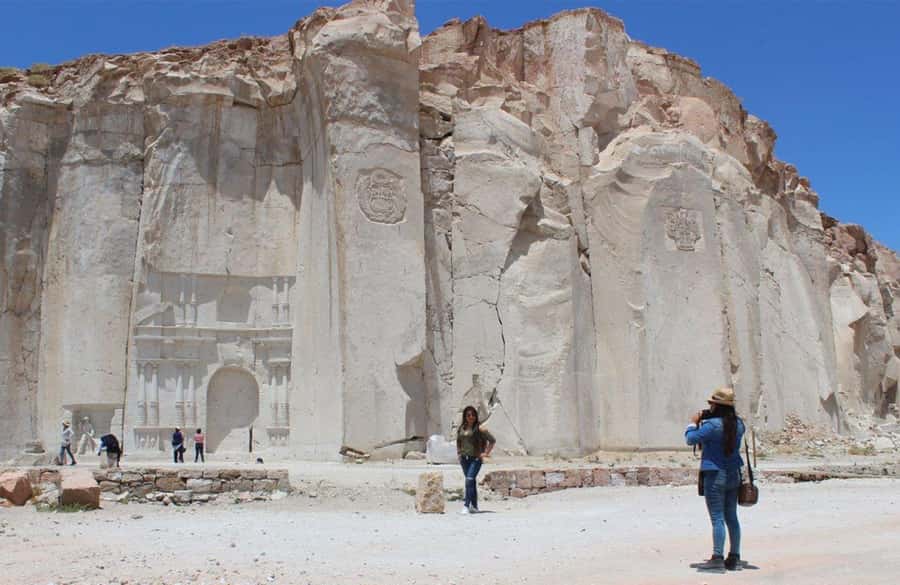
- Añashuayco Quarry: active sillar extraction and a giant church carving
- The best part: meet the quarry worker and try cutting
- A consideration
- Culebrillas canyon walk: water-carved walls and Wari petroglyphs
- Apachetas before you head back: gratitude stones and good-luck energy
- Timing, drop-off, and the bus reality
- Price and value: what $14 covers, and what costs extra
- Who this excursion fits best
- Should you book the Sillar and Culebrillas route?
- FAQ
- How long is the excursion?
- What time does the tour start?
- What do I get for the $14 price?
- Are entrance tickets included?
- Where do you walk during the Culebrillas part?
- What can I see at Añashuayco Quarry?
- Can I try stone cutting during the tour?
- Will the tour include petroglyphs and Apachetas?
Key things I’d circle on your itinerary
- Añashuayco is an active quarry where quarrymen work early, so you see how sillar extraction really happens
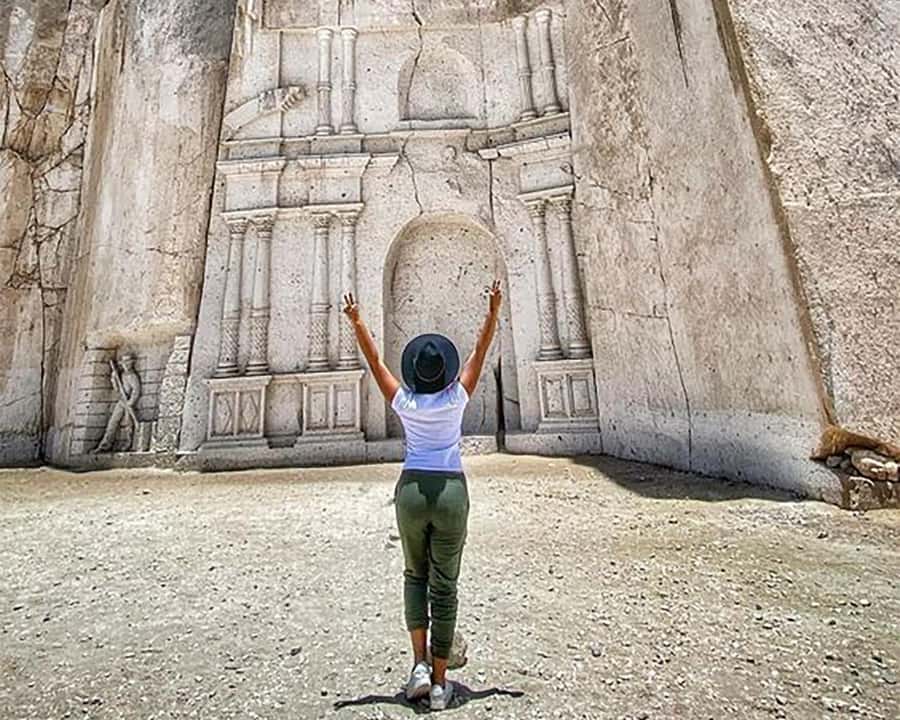
- A mega carving of the Church of the Society of Jesus, made by stonemasons themselves
- Hands-on stone block cutting with a quarry worker (yes, you can try)
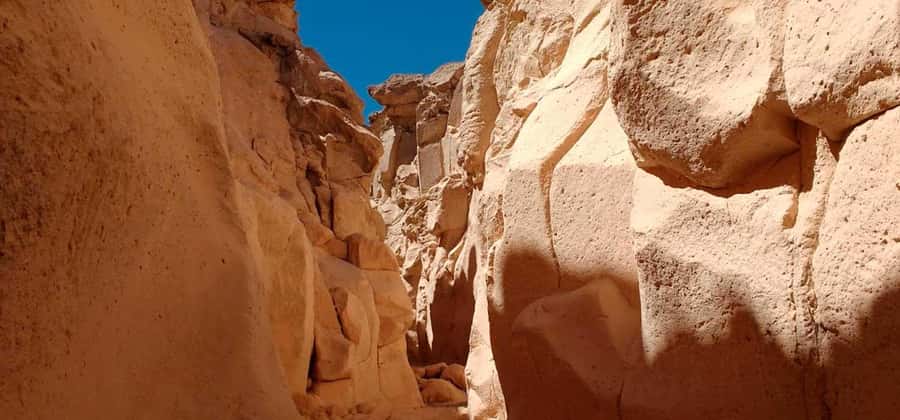
- Culebrillas canyon walk through 15–20 meter walls, about 20 minutes long
- Wari petroglyphs at the end of the canyon walk, described as more than a thousand years old
- Apachetas: stacked stone symbols linked to gratitude and good luck
Where the Sillar Route starts: volcano views and Chilina Valley orientation
The tour kicks off at 9:15 am (and there’s also a 2:00 pm shift). The first stretch is about getting your bearings fast: you’re taken toward the Sillar Route, with a brief stop at an emblematic viewpoint.
This stop matters more than it sounds. Arequipa’s dramatic setting can be hard to read on your own, especially when you’re hopping between quarries and canyons. Seeing the volcanoes and the Chilina Valley from a strategic point gives you a mental map of why the geology here became such a big deal for local building stone.
Depending on the time of year, the guide may swap in another traditional viewpoint at the beginning. Either way, you’re basically doing a quick “place check” before you start talking about sillar.
What I like: this early viewpoint keeps the day grounded in real geography, not just scenic photos.
One thing to plan for: mornings in Arequipa can still feel cool early on, while later spots can be warmer—bring a layer you can manage.
You can also read our reviews of more tours and experiences in Cusco.

Añashuayco Quarry: active sillar extraction and a giant church carving
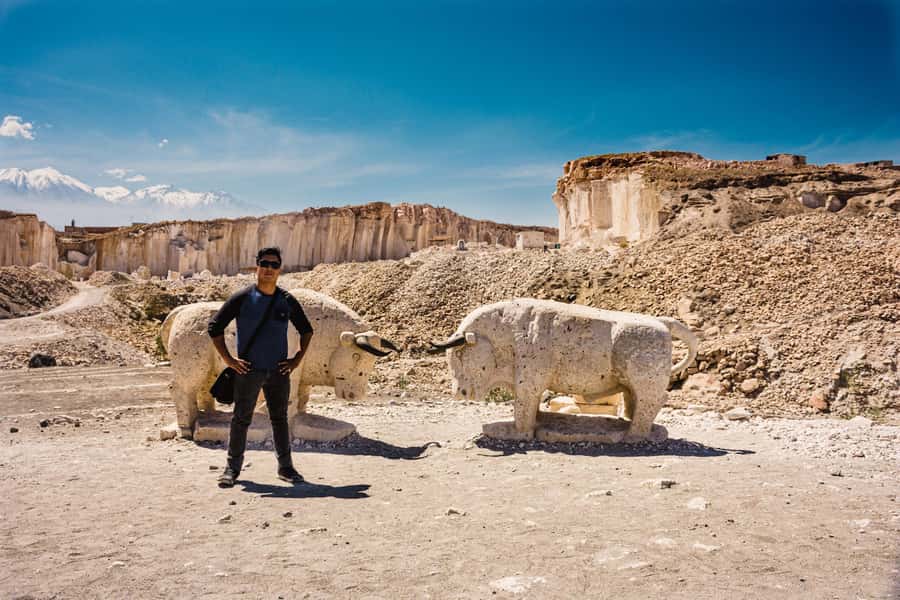
About 45 minutes into the drive, you reach Añashuayco Quarry (a key stop on the Sillar Route). This quarry is in operation, and you’ll see quarrymen working very early. That early working rhythm changes the feel of the visit: you’re not watching a reenactment. You’re observing a living craft and a working site.
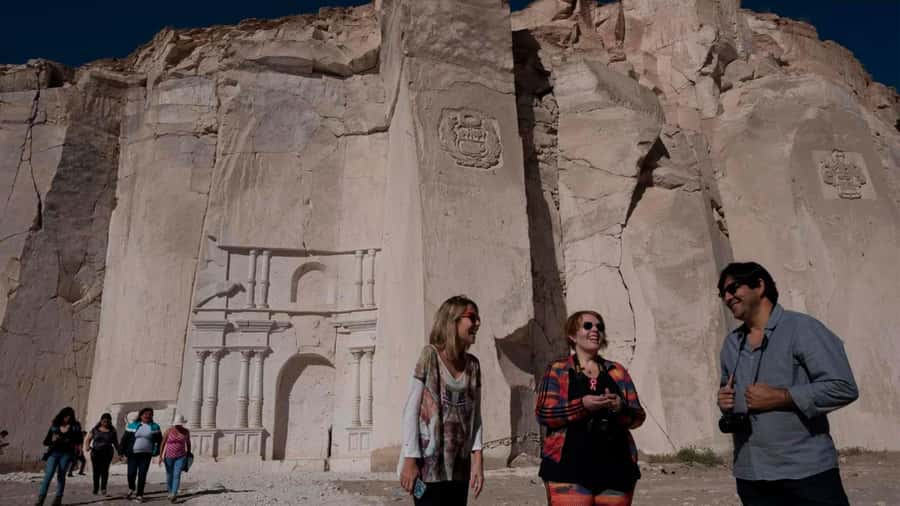
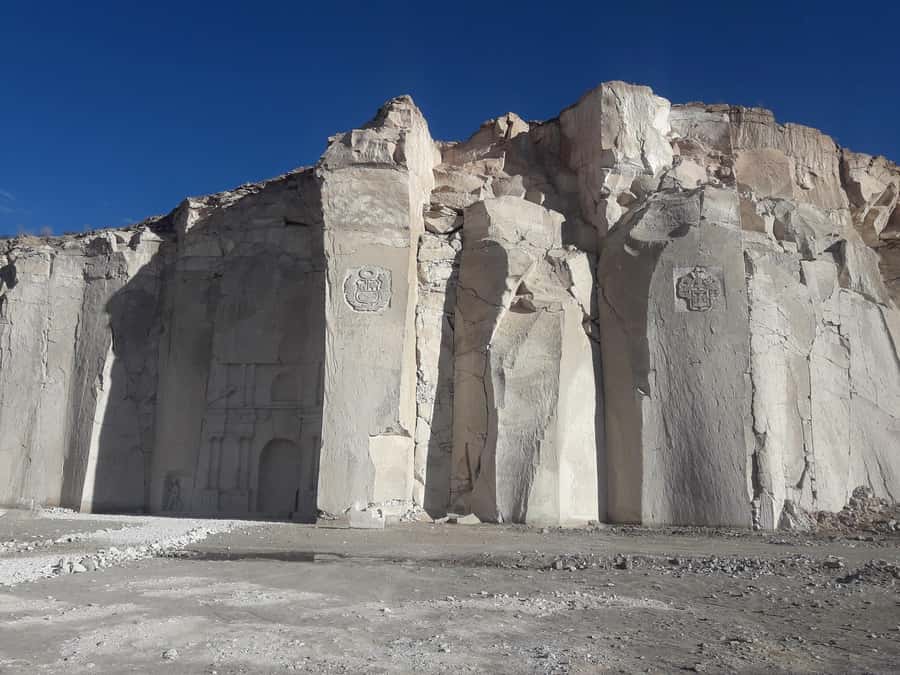
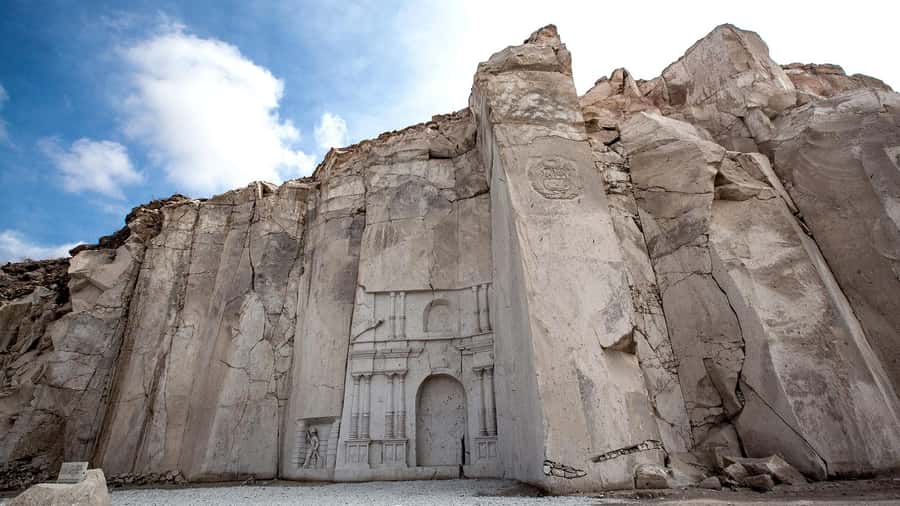
Here’s what you should expect when you arrive: an immense canyon of extraction walls—described as ignimbrite walls several meters high—shaped by the removal of stone for the production of sillar. Your guide explains the history of sillar, how it was produced, and how it has been used over time. Even if you already know Arequipa is famous for its stone, the “where it comes from” part is what makes this stop click.
Then comes a highlight that’s hard to forget: you can see a Mega carving of the Church of the Society of Jesus made by stonemasons themselves. It’s not just a random decorative feature; it shows how the craft isn’t limited to extraction—it also includes large-scale artwork created by local workers.
The best part: meet the quarry worker and try cutting
Inside the quarry experience, you may visit one of the quarrymen so they can walk you through their daily work. And the most memorable moment for many people: you can experience cutting one of the stone blocks yourself.
That hands-on element is what turns a “look at stone” outing into a real learning moment. You start to understand why sillar is valued—how it behaves, what it takes to shape it, and why quarry work needs skill and patience.
Practical tip: if you’re offered the hands-on cutting, listen closely first. That short instruction from the quarry worker is what makes the difference between a quick try and a satisfying one.
A consideration
Quarries are not set up like a gentle, polished attraction. Expect uneven ground and an environment where you’re moving around active work areas. You’ll want to follow your guide’s directions about where to stand and how to keep distance.
Culebrillas canyon walk: water-carved walls and Wari petroglyphs
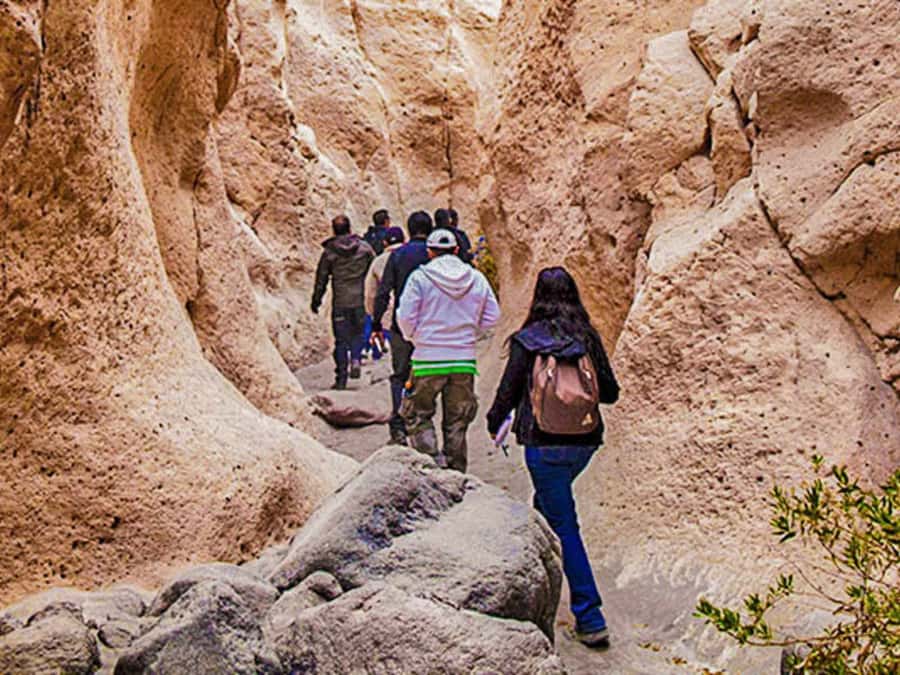
After the quarry, you head to the Quebrada de Culebrillas, about 30 minutes away. Upon arriving, you take a walk of roughly 20 minutes into the small canyon formed by the passage of water.
The canyon walls are described as 15 to 20 meters tall, and as you go deeper, the walls increase in height. That gradual “getting shut in” effect does something subtle: it changes your attention from scenery to details—stone, texture, and marks you might miss if you stayed at the entrance.
Then, at the end of the walk, you reach the payoff: you can see petroglyphs attributed to the Wari culture, described as more than a thousand years old.
This is one of those places where you’ll get more out of the visit if you slow down. Instead of rushing for photos, stand still for a moment and let your guide point out how the rock markings are positioned within the canyon setting.
What makes it valuable: it’s not just “ancient art.” You’re learning it in the physical context where it was made and where it still sits today.
Possible drawback: a 20-minute walk doesn’t sound long, but canyon walking can feel more tiring than expected because you’re moving along uneven terrain and staying focused on the path.

Apachetas before you head back: gratitude stones and good-luck energy
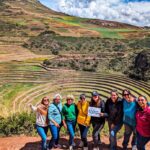
Before returning to Arequipa, you’ll observe the Apachetas—stone formations stacked one on top of the other. In the tour framing, they’re symbols of gratitude toward nature and also linked with good luck, creating a mystical sensation.
This part of the day is brief, but it adds meaning. After quarry walls and ancient petroglyphs, the apachetas bring the story back to living tradition: people interact with these symbols in a way that still feels personal and intentional.
My take: the apachetas work well as a mental reset before you head back into traffic and city life. You get one last “why this matters” moment before the tour ends.
Timing, drop-off, and the bus reality
The tour runs about 4 hours total. You begin at 9:15 am, head out to the quarry and canyon, and return so you can arrive around 1:30 pm, with drop-off near Plaza de Armas.
There’s also that 2:00 pm shift, which is helpful if you want a later start and still want to pack other activities into the morning.
One thing to keep in mind from real-world operation: small delays can happen if the group waits for members. And while the tour includes tourist transport, comfort isn’t uniform—one past experience noted a bus without air conditioning. That matters in Arequipa because temperatures can shift during the day.
Practical advice for you: bring water, wear sun protection (hat or sunscreen), and if you tend to run hot, plan for warm transport conditions. You’ll enjoy the stops more when you’re not distracted by discomfort.
Price and value: what $14 covers, and what costs extra
The price is listed as $14 per person, for tourist transport plus a professional guide. The only listed extra is entrance tickets to the places for 10 soles.
That setup is usually a good value because you’re paying for more than a drive. You’re getting:
- guided explanations tied to the sillar sites
- access to an active quarry experience
- a canyon walk that leads to petroglyphs
- a hands-on stone cutting opportunity (when offered)
If you compare this to hiring a private guide plus transport, the cost is the big win. Even with the extra 10 soles, you’re still buying a structured, time-efficient day.
How to budget: plan to add the 10 soles entrance cost on top of the $14 so you’re not scrambling at the last minute.
Who this excursion fits best
This is a strong pick if you:
- want a geology + culture day in Arequipa Region without spending all day
- like active places (a quarry, a canyon), not just fenced overlooks
- enjoy hands-on moments—seeing craft work and trying a cutting task
- want ancient history that isn’t locked behind glass (Wari petroglyphs in a real canyon)
It’s also a good match if you’re staying near the center. The drop-off near Plaza de Armas makes it easy to continue your day with minimal fuss.
If you’re mainly looking for a purely relaxing nature stroll with no working-site vibe, you might find the quarry section a bit more industrial than you expected. But if you’re curious about how the stone is made and shaped, that quarry stop is the heart of the experience.
Should you book the Sillar and Culebrillas route?
I think it’s worth booking if you want an authentic Arequipa geology story with real places and guided context. The combination of active quarry access, a giant carved church by stonemasons, a short canyon walk, and Wari petroglyphs is a solid package for the time and price.
Book it now if your schedule matches either the 9:15 am or 2:00 pm shift and you’re okay with the practical side of tours—possible group wait time and a bus that may not be perfectly cool.
Skip or reconsider only if you strongly prefer fully controlled comfort, or if you don’t want any part of the day to feel like you’re visiting a working extraction area.
FAQ
How long is the excursion?
It’s about 4 hours.
What time does the tour start?
The main departure is 9:15 am, and there is also a 2:00 pm shift.
What do I get for the $14 price?
You get tourist transport and a professional guide.
Are entrance tickets included?
No. Entrance tickets are listed as 10 soles.
Where do you walk during the Culebrillas part?
You take a walk of about 20 minutes inside the canyon.
What can I see at Añashuayco Quarry?
You’ll see the sillar extraction canyon and a mega carving of the Church of the Society of Jesus made by stonemasons, plus you may meet a quarry worker.
Can I try stone cutting during the tour?
Yes—at Añashuayco, you can experience cutting a stone block with the quarry worker.
Will the tour include petroglyphs and Apachetas?
Yes. You’ll see Wari petroglyphs at the end of the canyon walk and observe Apachetas before returning to the city.