REVIEW · CUSCO
Cusco: Tandem Paragliding in The Sacred Valley of The Incas
Book on GetYourGuide →Operated by Flying expedition · Bookable on GetYourGuide
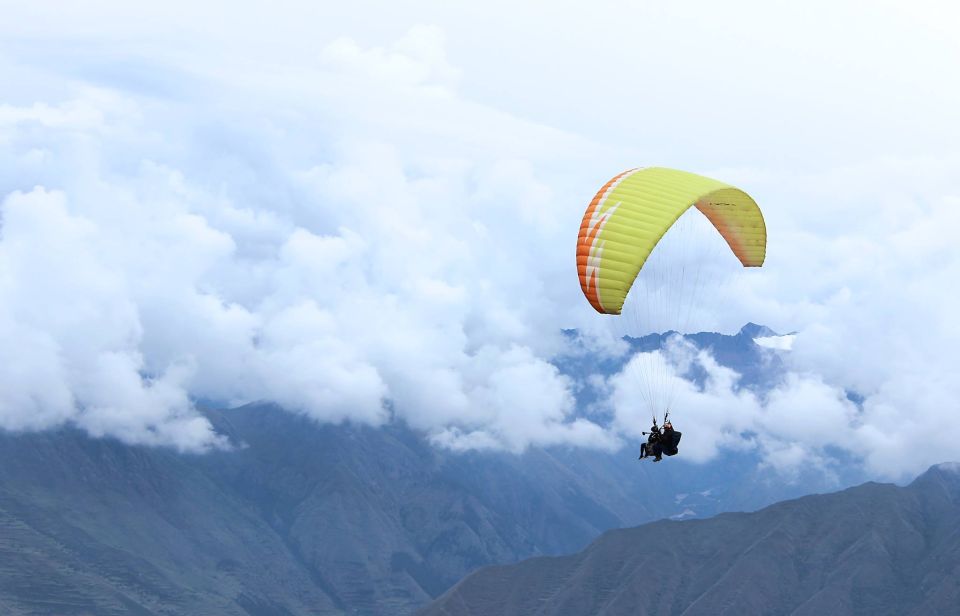
Flying over the Sacred Valley is surreal. You strap into a tandem paraglider with a professional instructor and soar above Cerro Sacro for photos, video, and a front-row view of the Incas’ landscape. Two things I really like: the safety coaching before takeoff, and the way your flight is set up so you come down with real media to share, not just shaky memories.
The one drawback to plan for is practical, not scary: conditions can change. You may wait for the right wind, and it can be cold at altitude near 3,880 meters, even on a sunny day.
In This Review
- Key Paragliding Highlights You’ll Care About
- Why Cerro Sacro Is the Sacred Valley Paragliding Sweet Spot
- Meeting Point, Pickup, and Getting Kitted Up
- The Briefing: What Your Instructor Really Covers Before Takeoff
- The Flight Experience: Sacred Valley Views and That G-Force Moment
- Timing, Weather, and the Real Reason You’re Out 6–7 Hours
- Price and What You’re Actually Paying For (Plus What’s Not Included)
- Photo and Video Tips That Help You Walk Away Happy
- Who This Tandem Flight Fits Best (and Who Might Skip It)
- Should You Book Tandem Paragliding in the Sacred Valley?
- FAQ
- How long is the paragliding flight?
- What’s the total duration of the tour?
- Where does the flight take place?
- Is video included?
- Is hotel pickup included?
- What languages are available for the instructor?
- What should I bring?
- Is food included?
- What if the weather isn’t safe for flying?
- Are there weight and age limits?
Key Paragliding Highlights You’ll Care About
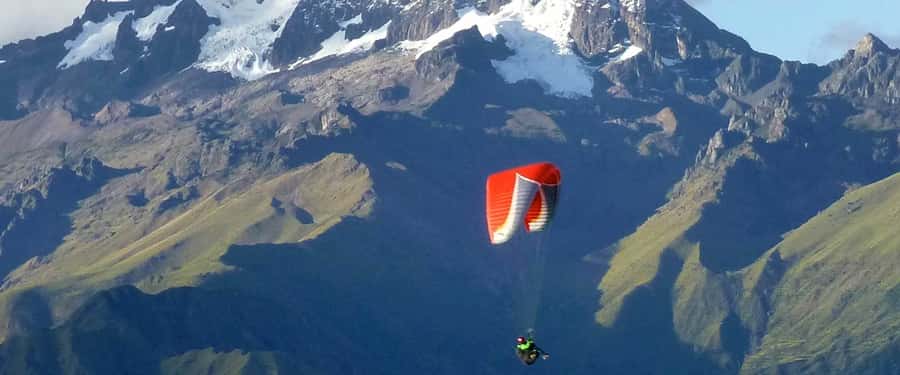
- Cerro Sacro timing and altitude: launch around 3,880 meters with a steep, dramatic drop (about 600 meters vertical).
- Small groups (up to 6): more personal attention during harnessing and briefing.
- Video included: you get a flight video so the experience lasts after the landing.
- Instructors with serious track records: guides mentioned like Leo and pilots such as Simon and José show up often in reviews.
- Weather decides the plan: waiting is normal; cancellation can happen for safety.
Why Cerro Sacro Is the Sacred Valley Paragliding Sweet Spot
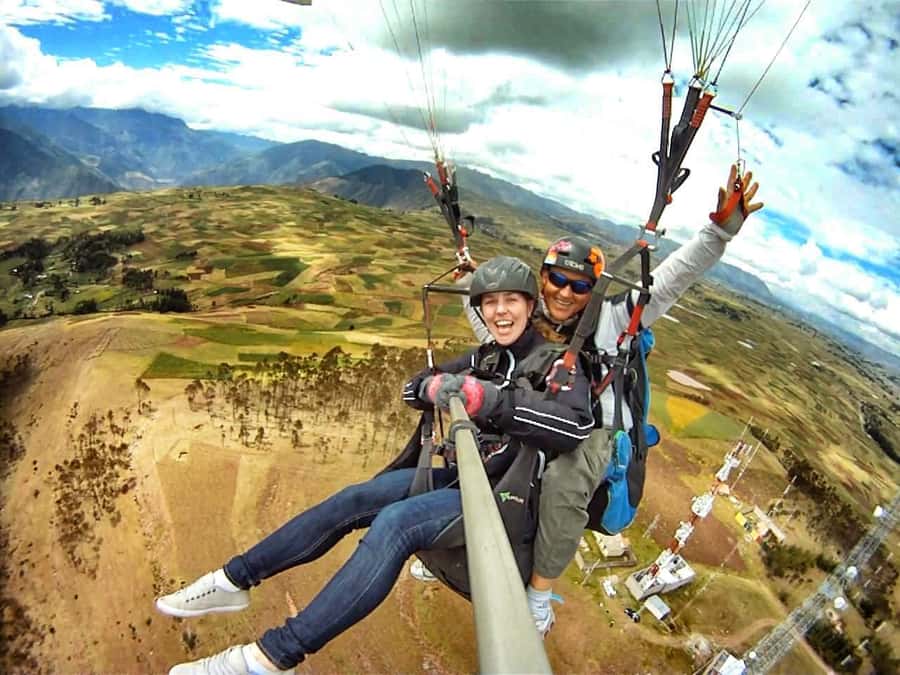
Cerro Sacro sits northeast of Cusco and is one of the big reasons this flight feels special. You’re not just “going for a ride.” You launch from a mountain environment designed for paragliding, with a steep slope reported at 70 degrees or more and a vertical drop around 600 meters. That steep relief is part of what makes the glide feel like it has shape and purpose instead of drifting.
There’s also a practical comfort here: it’s considered one of the safer options in its type of terrain. That matters because tandem paragliding is all about trust in the air and the plan on the ground. Your instructor isn’t improvising; they’re guiding you through a takeoff and landing that fit the local site.
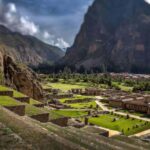
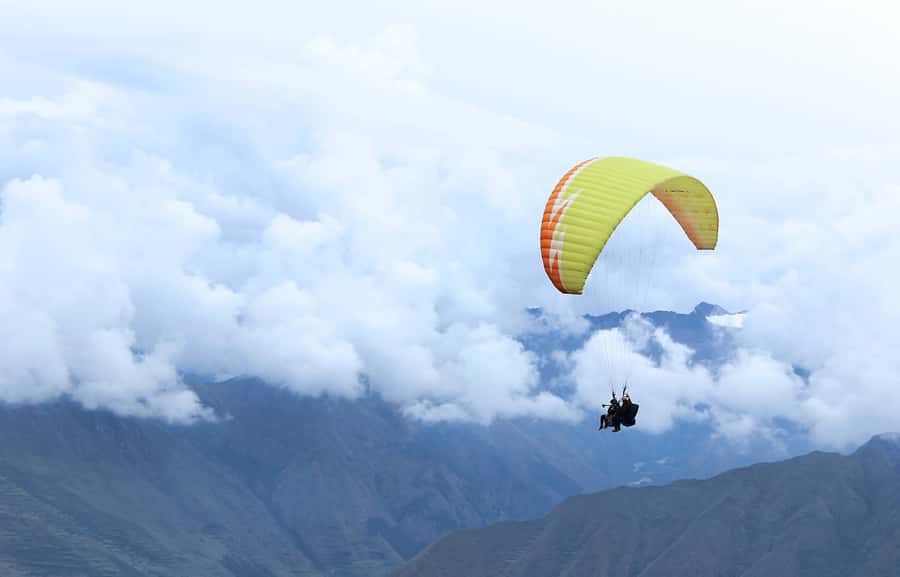
And then there’s the view. The Sacred Valley isn’t one flat postcard. From above you see patches of settlement, hillsides, and the geometry of valleys carved over time. Add glacial peaks on the horizon on clear days, and it becomes the kind of scene you’ll want to film even if you normally hate stopping to take videos.
You can also read our reviews of more tours and experiences in Cusco.

Meeting Point, Pickup, and Getting Kitted Up
Your day starts with hotel pickup, either from Cusco’s Historic Center or from hotels in the Sacred Valley, depending on what you select. Many operators can move efficiently from Cusco to the staging area, but narrow streets sometimes mean they can’t reach your exact door. In that case, you’ll meet at the closest accessible point, and a local partner will route you there.
Once you’re with the group, you’ll head to the flight area where the team is waiting to pass along instructions. Reviews also describe a drive sequence that can feel part of the adventure: transfer to a landing area, then a steeper ascent to the launch zone using a 4WD. Even if the exact route varies, the pattern is usually the same—Cusco altitude, then higher ground, then the final setup at the launch point.
When it’s time, you’ll get your harness and helmet. This is where tandem paragliding becomes real. Everything should feel snug and controlled. Your instructor will also show you how the takeoff works so you know what you’re doing with your body when the wing starts doing its job.
The Briefing: What Your Instructor Really Covers Before Takeoff
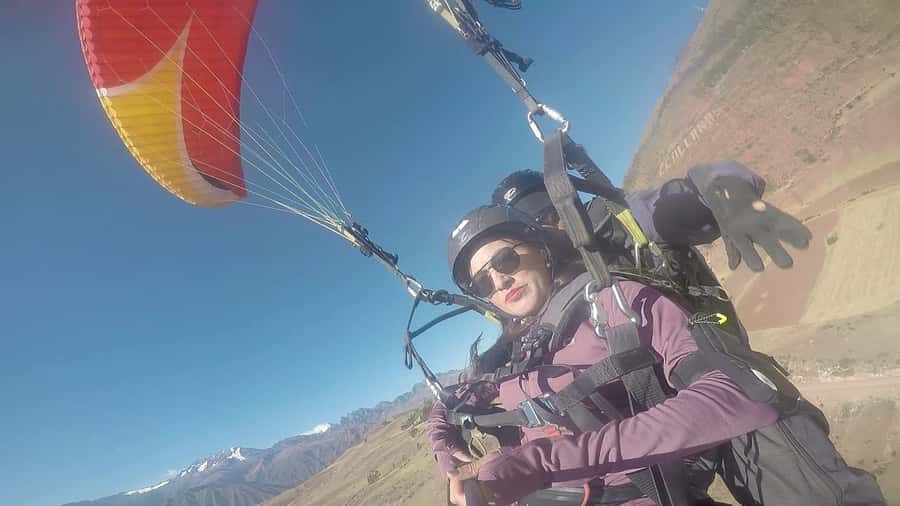
Before you run, the instructor will deliver safety instructions and explain the takeoff procedure. This is not filler. It’s the difference between feeling like you’re along for the ride and knowing how the flight transitions.
In reviews, many people highlight calm, patient coaching—especially first-timers. Names you’ll see repeatedly include Leo (often cited as the point of contact), along with pilots like Simon, José, and Andy. What matters isn’t the name on a shirt; it’s the vibe and competence people report: clear explanations, patience, and a steady hand when you’re deciding whether your brain believes your body.
One thing that comes up in feedback is that you might not expect how your body feels in flight. Even though tandem paragliding is gentle in motion, you can experience rollercoaster-like sensations when the wing finds air and when you change angles. A good instructor sets you up for that, so the feeling reads as excitement instead of panic.
Also, plan for language support. English and Spanish are available, which helps a lot if you want to ask practical questions about what you’ll do during takeoff, landing, and in-air positioning.
The Flight Experience: Sacred Valley Views and That G-Force Moment
The flight itself is reported as 10–15 minutes, with some descriptions of it reaching around 15–20 minutes depending on wind conditions. And yes, sometimes you might get more time if the air cooperates.
From takeoff, you’ll see how quickly the Sacred Valley opens up. If the day is clear and wind lines up, you may catch rising air (thermals). Reviews describe moments where gliders gained height and shifted course, which often creates the best feeling: not just flying over a place, but flying with it.
You should also expect wildlife in the mix when conditions are right. One review mentions birds of prey soaring alongside during the flights. Whether you catch that exact moment or not, it’s a reminder: the area is alive, and your flight can feel like you’re part of the environment rather than hovering over it.
About those sensations: several first-timers note the g-force feeling during the more active parts of the flight, plus an exciting landing. Landing may be on your feet, but some people mention a softer spiral touchdown that ends on your butt. If that doesn’t sound appealing, remember: it’s part of how harnessed tandem landings work. The point is control, and a good crew will guide the final approach.
And you’ll have media. A video is included from your flight, and some pilots are described as delivering a GoPro-style clip. That’s huge value. A 10–15 minute flight is easy to forget detail after you land, but video lets you replay the angle, the views, and that first-second shock of realizing you’re actually airborne.
Timing, Weather, and the Real Reason You’re Out 6–7 Hours
This is a half-day tour, listed at 6–7 hours total, even though your flight time is closer to 10–15 minutes. That gap isn’t waste. It’s mostly about weather, wind, and matching the wing to safe conditions.
You might wait for takeoff while the team watches for stable air. If conditions become unstable—high winds, turbulence, or rain—the pilot can wait or cancel to protect passenger safety. If there’s a cancellation due to weather, you’ll be notified, and you may need to cover transport costs in that scenario.
So what should you do during the wait? Dress like you’re going to be standing around. Several reviews warn that it can be cold up on the mountain. That makes sense: you’re in high altitude air, and clouds or shade can drop the temperature quickly. Bring a warm layer and keep your gloves handy. You don’t want your hands freezing while the crew checks wind direction and timing.
Also, expect this day to be a little flexible. If your schedule is packed with trains and museum entries, you’ll enjoy the experience more if you treat the rest of the day gently. Think of it as a set flight window plus buffer, not a precise clock event.
Price and What You’re Actually Paying For (Plus What’s Not Included)
At $120 per person, this doesn’t look like a cheap “activity.” But it includes the parts that usually cost real money in adventure experiences: hotel pickup, licensed safety equipment (harness and helmet), a professional instructor, and a flight video.
For a first-time paraglider, that bundle matters. You’re not renting gear and figuring out logistics. You’re being moved to a site, briefed for safety, equipped, flown, and sent back—then given footage to share.
Food and drinks are not included, so plan accordingly. Some people eat before pickup; others bring simple snacks if they tend to get hungry at altitude. Either way, don’t assume the tour provides a meal.
If you’re deciding between this and another Cusco activity, treat the comparison like this: paragliding is short in the air but long on the experience value—views, sensations, and video. If you want something you can talk about for years, the cost can feel more reasonable than it first appears.
Photo and Video Tips That Help You Walk Away Happy
Even with video included, you’ll probably want your own photos too. For better results, treat the first minutes like a photo sprint, then settle in.
Bring what the day suggests:
- Hat
- Sunscreen
- Jacket
- Gloves
Altitude sun is real, and wind can dry you out. A hat and sunscreen help your face and scalp. Gloves matter because even if you’re not freezing, cool air tends to creep into your hands fast while you’re standing at the launch area and during check-in.
For your own footage, your best move is to keep shots stable and avoid constant swiping. Watch the horizon and let the camera do slower tracking. The Sacred Valley doesn’t need rapid movement to look dramatic; it looks better when you slow down and frame it.
Finally, don’t underestimate the value of the included video. One review notes a GoPro video that turned out perfect for sharing. When you don’t have to worry about capturing everything, you can enjoy the flight without turning it into a tech project.
Who This Tandem Flight Fits Best (and Who Might Skip It)
This experience is not for everyone, and the restrictions are clear.
It’s not suitable for:
- People with mobility impairments
- People over 200 lbs (91 kg)
- People under 88 lbs (40 kg)
Children are allowed only if they weigh over 40 kilograms (88 pounds) and fly with their parents or guardian’s permission.
If you’re within the limits and you’re comfortable with cold and with waiting for wind, this is a great first adventure. Reviews repeatedly mention first-timers feeling safe because of patient, calm guidance. If you’re nervous, pick an operator and instructor approach that emphasizes communication and calm. The best flights seem to happen when your guide explains what to expect so your body can relax.
If you hate waiting, this might feel like too much idle time. But if you can handle a slower schedule for the sake of safe air, you’ll likely love it.
Should You Book Tandem Paragliding in the Sacred Valley?
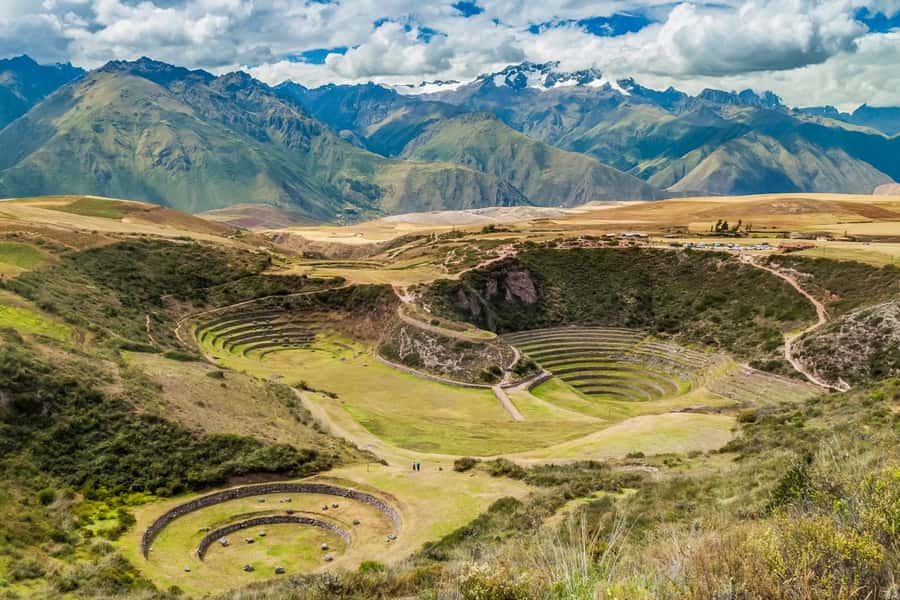
Book it if you want a high-impact Cusco-region experience with real safety structure, strong instruction, and a payoff that lasts after the landing through a included video. This is especially worth it when you care about the visuals: Sacred Valley views from above are the whole point, and the steep Cerro Sacro site adds drama.
Skip it (or choose another activity) if your schedule is ultra rigid, you run cold easily and don’t have a warm jacket, or if you fall outside the weight and mobility limits. Also, if the idea of being outside waiting for wind makes you miserable, keep looking.
If your goal is one memorable jump that mixes adrenaline with breathtaking views, this is one of the better ways to spend a half-day in Peru’s Sacred Valley zone.
FAQ
How long is the paragliding flight?
The flight time is listed as 10–15 minutes, and it could be longer depending on wind conditions.
What’s the total duration of the tour?
The experience is scheduled for 6–7 hours total, which includes travel time and waiting for the right conditions.
Where does the flight take place?
The flight departs from Cerro Sacro in the Sacred Valley of the Incas.
Is video included?
Yes. You receive a video from your flight.
Is hotel pickup included?
Yes. Pickup is included from the Cusco Historic Center or from Sacred Valley hotels, depending on the option you choose.
What languages are available for the instructor?
The instructor speaks English and Spanish.
What should I bring?
Bring a hat, sunscreen, jacket, and gloves.
Is food included?
No. Food and drinks are not included.
What if the weather isn’t safe for flying?
If weather becomes unstable (like high winds, turbulence, or rain), the pilot may wait for better conditions or cancel the flight to keep passengers safe. You’ll be notified, and you may need to pay transport costs if the flight is canceled.
Are there weight and age limits?
Yes. Children must weigh over 40 kilograms (88 pounds) with permission. Flights are not suitable for people over 200 lbs (91 kg) or under 88 lbs (40 kg).