REVIEW · BOGOTA
Bogota Walking Tour Teusaquillo a different part of the city
Book on GetYourGuide →Operated by Condor Tours · Bookable on GetYourGuide
If you like cities with personality, Teusaquillo delivers. This Bogotá walking tour takes you past galleries, cafés, pubs, and street art while telling the story of how the country got shaped—by independence, conflict, and the peace deal that came much later.
I especially like the way the tour connects architecture and politics to what you’re seeing on the street, and I also like that you get small, fun tastings instead of only sightseeing. One thing to consider: some stops are quick photo-and-walk moments, so if you want long hangs in every place, this route keeps a steady pace.
In This Review
- Key highlights you’ll care about
- Why Teusaquillo feels like the Bogotá you wanted
- The route begins at Museo Nacional (and what to watch for)
- Bavaria Central Park: short stop, strong mood
- Casa Celo and Nunciatura Apostólica: architecture that explains the past
- A quick pause at Público Park: the photo break you’ll want
- Jorge Eliécer Gaitán Museum: where modern history has a face
- Casa de Betty La Fea: pop culture as a neighborhood marker
- El Parche Ropa y Accesorios: shop while you learn
- Visaje Graffiti: photo moment plus a workshop
- Prosa del mundo Librería: a bookstore stop that feels like a break
- ParkWay: photo stop, more walking, and the finish line vibe
- Lubianka Pub: coffee or craft beer you can actually taste
- The value of $19 for a 3-hour neighborhood story
- Who this tour suits best
- A note on guides and what to do if something goes wrong
- Should you book the Teusaquillo walking tour?
- FAQ
- Where does the Bogota Walking Tour Teusaquillo start?
- How long is the tour?
- What’s included in the tastings?
- Does the tour include entry to indoor places?
- What languages are available for the guide?
- What is the cancellation policy?
Key highlights you’ll care about
- A real neighborhood feel in Teusaquillo, not just the postcard sights
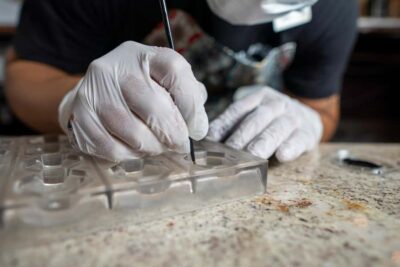
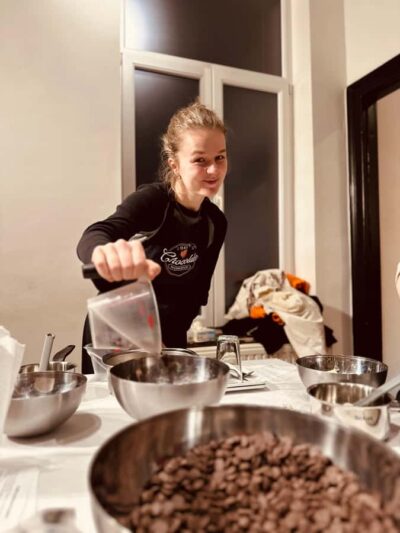
- Coffee or craft beer plus chocolate tasting along the way
- Gallery and cultural house entry included, so you’re not just looking from outside
- Visaje Graffiti with a photo stop and workshop time
- A guided story thread that connects buildings to Colombia’s political timeline (1819 to 2016)
- Multilingual guide options (English, Portuguese, Spanish) with a private group size
Why Teusaquillo feels like the Bogotá you wanted
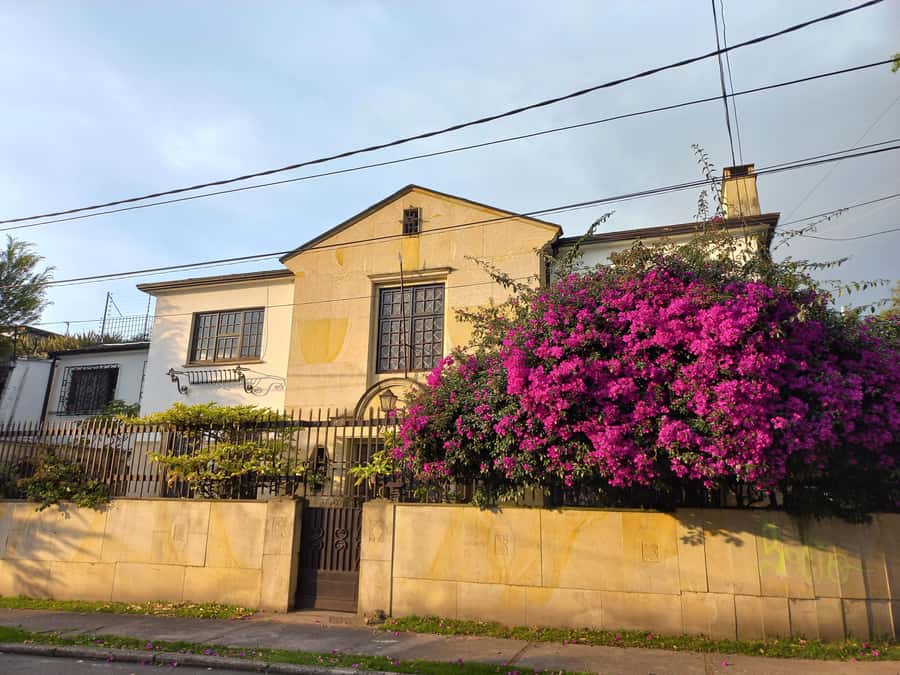
Teusaquillo is the kind of Bogotá district that helps you get your bearings fast. Instead of orbiting the same few famous landmarks, you move through streets where locals actually drop by: small parks, independent cultural spots, and storefronts that feel more like daily life than performance.
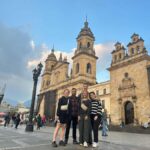
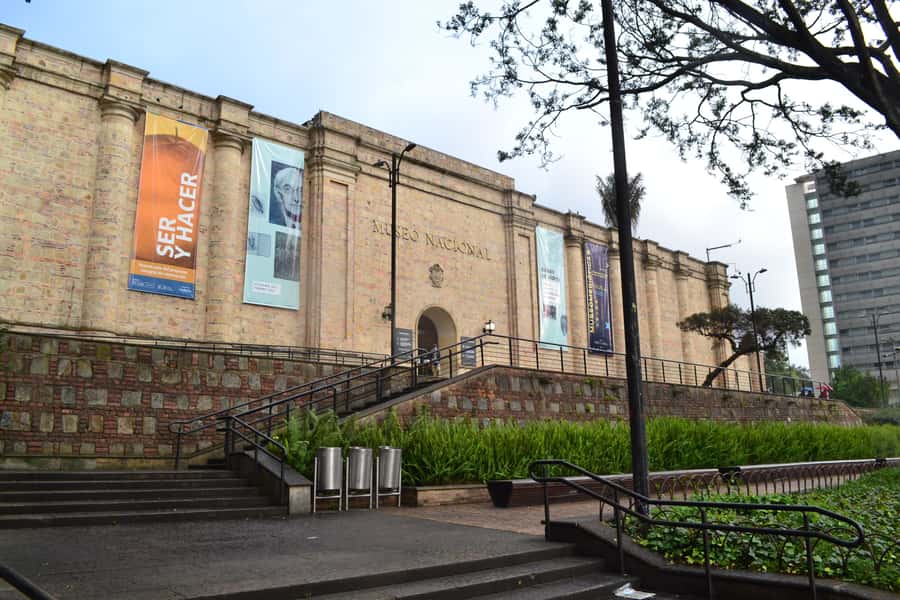
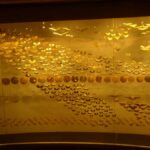
The tour starts at the Museo Nacional de Colombia, which is a smart choice. Even if you’re not going inside the museum building, you’re beginning from a place that anchors you in the city’s broader story. From there, the guide threads everything together so you’re not walking blind—you’re learning why the neighborhood looks the way it does.
You’ll also notice the emphasis on modern life: cafés, pubs, galleries, and street art. That’s the point. This isn’t a museum-only day. It’s Bogotá as a living city.
Possible drawback: because the route is designed for a three-hour walk, you won’t get hours in any single gallery or café. You’ll cover a lot, and the trade-off is speed at certain stops.
You can also read our reviews of more walking tours in Bogota
The route begins at Museo Nacional (and what to watch for)
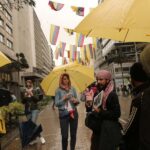
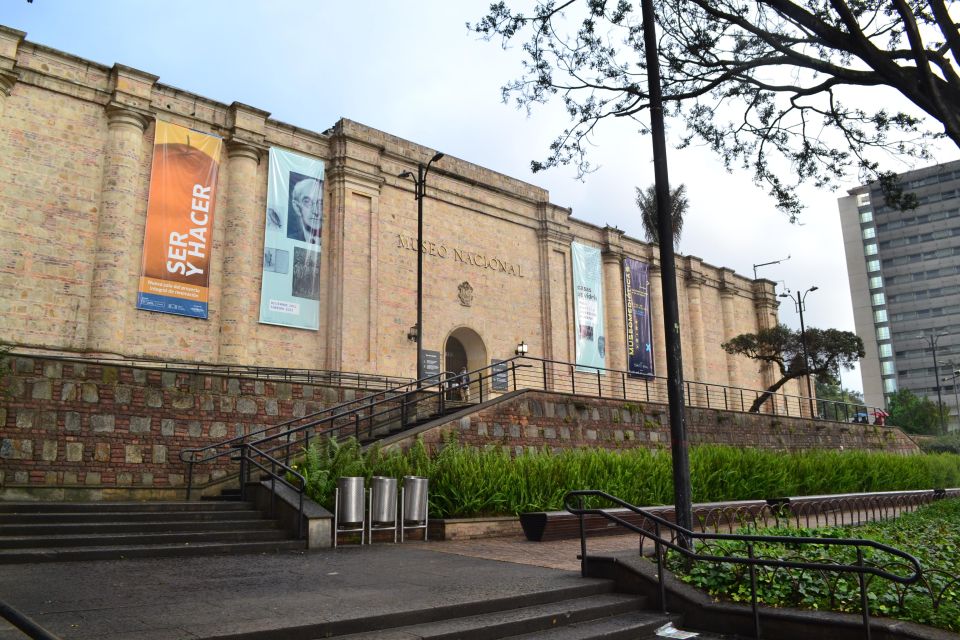
You meet in front of the entrance of the Museo Nacional de Colombia. The guide is easy to spot: a red hat and a red umbrella with the tour logo.
That matters, because in Bogotá you want a clean start. Teusaquillo is far enough from the museum that you don’t want to waste time trying to locate your group once you’re on the move. Arriving 10 minutes early is a good habit here—then you can settle in without rushing.
From the first moments, the guide sets the tone: stories, quick context, and a focus on local projects rather than only major national institutions.
Bavaria Central Park: short stop, strong mood
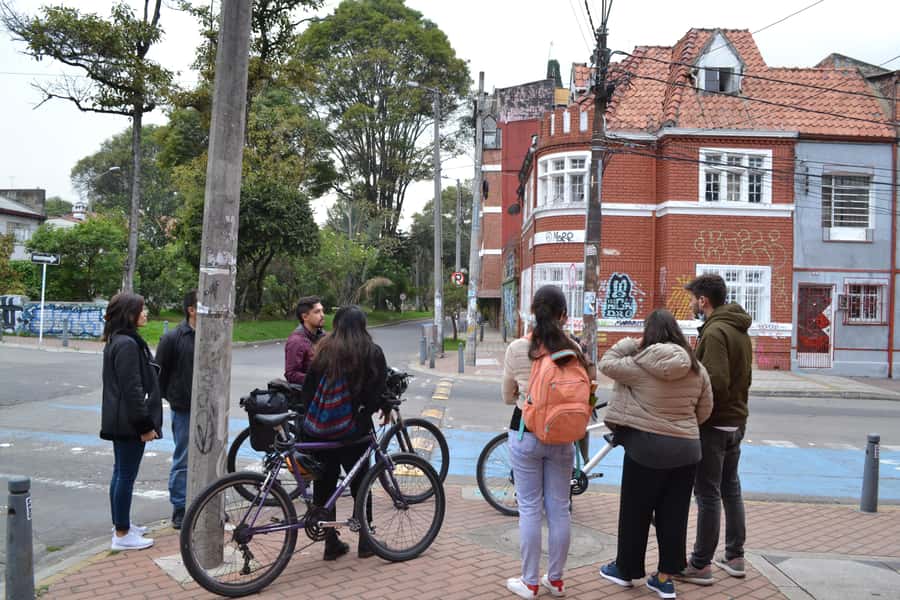
The tour’s first neighborhood moment is Bavaria Central Park. You get a brief guided introduction, then a photo-and-sightseeing pause.
Even though this stop is short, it works as a warm-up. You’re looking at the neighborhood through the lens of people who live here—public space, daily movement, and the feeling of place. It’s the kind of spot where you can quickly understand how Teusaquillo balances green, streets, and street-level culture.
Tip: Use the photo stop to orient yourself. If you know where the park sits relative to the next stops, you’ll feel less like you’re sprinting through an itinerary and more like you’re following a route.
Casa Celo and Nunciatura Apostólica: architecture that explains the past
Next you move to Casa Celo and then Nunciatura Apostólica. These are guided stops with sightseeing and walking time, plus quick pass-by moments.
This is where the tour’s storytelling becomes practical. You’re not just admiring buildings. You’re getting explanations that connect Colombia’s political formation to what’s around you. The tour frames a timeline that stretches from independence in 1819 to the peace agreement in 2016—and you’re meant to see how those historical forces show up in real structures.
In my view, this is one of the tour’s best uses of time. You’ll remember the information more easily because it’s tied to physical places you can point to.
Possible drawback: if you love very detailed museum-style lectures, the building explanations are likely more of a guided overview than a deep seminar.
A quick pause at Público Park: the photo break you’ll want
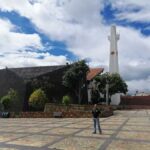
You’ll hit Público Park with a photo stop and a short visit. This is one of those moments that keeps the walk from feeling like pure transit.
Use it to reset. Ask questions if you’re curious about what you’re seeing or what’s coming next. The best way to get value from a three-hour walking tour is to stay curious during the short breaks rather than saving all your questions for the end.
You can also read our reviews of more city tours in Bogota
Jorge Eliécer Gaitán Museum: where modern history has a face
You pass by the Jorge Eliécer Gaitán Museum with guided orientation, sightseeing, and a short pass-by.
Gaitán is tied to Colombia’s modern political storyline, and this stop fits the tour’s bigger promise: understanding the country’s modern history through places that matter. Even if you don’t spend lots of time inside during this walk, you’re still getting the context that helps the neighborhood feel connected to real national events.
If you prefer to read signage and understand places at street level, this stop will click with you. If you’re short on patience for context, lean into the visual parts and let the guide’s explanation be your anchor.
Casa de Betty La Fea: pop culture as a neighborhood marker
Then comes Casa de Betty La Fea, visited for sightseeing.
This is the fun pivot—history and politics in one column, pop culture in the other. Even if you don’t know the show, the point is that Bogotá layers identity through media, art, and everyday places. You’re seeing how a neighborhood can carry national recognition and local character at the same time.
I like stops like this because they give you something memorable that isn’t only about dates and institutions. Your brain grabs onto culture easier than it remembers timelines.
El Parche Ropa y Accesorios: shop while you learn
Next you visit El Parche Ropa y Accesorios. This is a stop for visiting and shopping, with an arts-and-crafts market feel.
This is where your walking tour stops being only educational. You get to interact with local makers and the kind of informal commerce that’s part of everyday Bogotá. Even if you don’t buy anything, looking closely teaches you a lot about the neighborhood’s taste and creative energy.
Value tip: set a small budget before you go in. Markets like this can tempt you because the items are the real thing, not mass-produced souvenirs. That’s great for authenticity, but it helps to shop with control.
Visaje Graffiti: photo moment plus a workshop
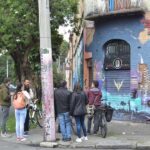
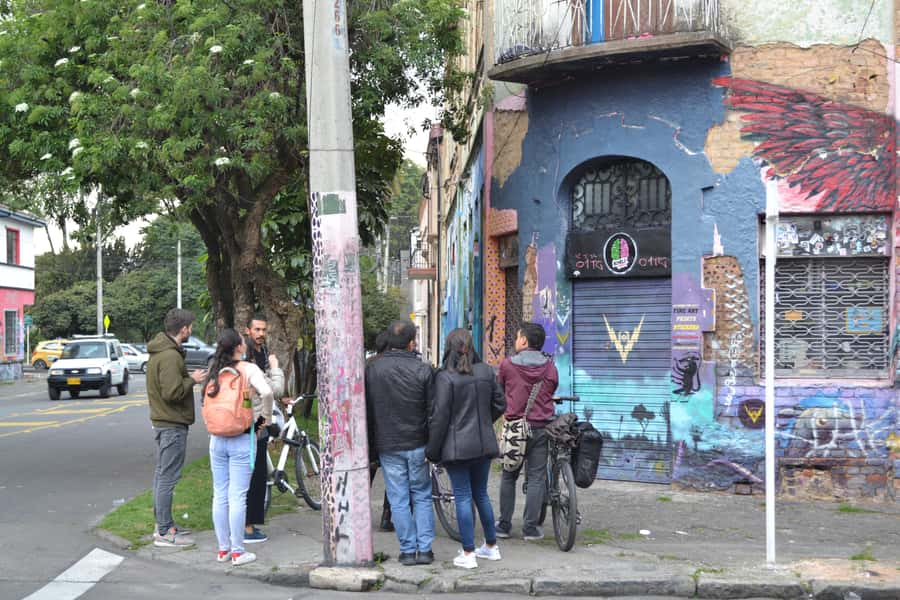
You reach Visaje Graffiti, which includes a photo stop, guided touring, arts-and-crafts market time, and a workshop segment (around 20 minutes).
Street art is one of the fastest ways to understand how a city thinks. Graffiti often works as a public conversation—sometimes political, sometimes personal, often both. The tour’s framing—coffee-related street-art ideas are mentioned—adds another layer: you’re not just looking at paint. You’re learning how everyday culture shows up in art form.
This is also the best stop for hands-on engagement. The workshop time means you’re not only watching; you’re participating at least briefly, which helps the whole tour stick in your memory.
If you hate crowds or hands-on activities, you can still enjoy this as a photo-and-observation stop. Just tell your guide what kind of pace you prefer.
Prosa del mundo Librería: a bookstore stop that feels like a break
Next is Prosa del mundo Librería. You’ll visit and get a guided tour, with time to shop and pass by other nearby parts of the area.
Bookstores in Latin America can be more than retail. They’re community rooms. Here, it also connects to the tour theme: culture as a daily habit, not a special event.
Use this stop to slow down for a moment. A good time to buy a small book or postcard is when you’re standing in the place that makes the neighborhood feel real.
ParkWay: photo stop, more walking, and the finish line vibe
You return to ParkWay for a photo stop, then sightseeing and walking time.
Think of ParkWay as the neighborhood’s “flow” point—the place where your route starts to feel more like walking in a real area rather than moving between specific attractions. You’re already close to the end, and it’s a good moment to check in mentally: Do you still want to take more photos? Ask one more question? Grab water?
Then the tour moves into the most relaxing segment.
Lubianka Pub: coffee or craft beer you can actually taste
At Lubianka Pub, you spend about 30 minutes with a beer stop.
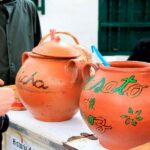
This is one of the tour’s included highlights: you get coffee or craft beer tasting as part of the experience, plus chocolate tasting earlier in the route. The pub timing matters because it’s a mid-to-late break, not a random stop at the start.
What you’ll like here: it turns the tour into something more social. You’re not just listening to history while standing on a sidewalk. You’re sitting, tasting, and letting the stories land.
One practical point: keep your pace easy after drinks. You’ll still walk a bit to the finish, and Bogotá streets can be uneven in spots.
The value of $19 for a 3-hour neighborhood story
At $19 per person for around 3 hours, the price feels fair because you’re not paying only for walking. You’re paying for guided storytelling, included chocolate tasting, included coffee or craft beer, and access to galleries and cultural houses.
Many tours charge extra for entry fees and food stops. Here, part of that is bundled. That makes a difference if you’re the type who likes to try local flavors and also step inside places instead of only photographing them from outside.
For me, the best way to decide is simple: if you want a guided route through local culture with tastings and actual cultural entries, this is good value. If you mostly want iconic viewpoints and long stays at major sites, you might feel underwhelmed.
Who this tour suits best
This is a great fit if you:
- want local Teusaquillo life instead of only main-tourist Bogotá
- like street art, independent cultural stops, and neighborhood markets
- enjoy understanding how history shows up in daily settings
- prefer a private group pace with a guide who speaks English, Portuguese, or Spanish
It’s less ideal if you:
- want hours inside museums rather than short guided passes
- hate brisk walking or quick photo stops
- are expecting a strict “food crawl” where everything is a tasting (the included items are coffee/beer and chocolate, plus food culture is part of the stories)
A note on guides and what to do if something goes wrong
The tour is run by Condor Tours, and guides can include leaders such as Luis Bonilla, who’s been praised for combining local knowledge with Bogotá history. There’s also an extra local touch people have mentioned: a friendly dog named Appa that sometimes joins the walking experience.
That’s all charming—one more reason to go with a guide instead of DIYing it. But I’ll add a practical caution: one booking report flagged a case where no guide showed up and the tour wasn’t canceled. If you book, take a screenshot of your confirmation and keep your confirmation email handy. It’s not paranoia. It’s just smart trip hygiene.
Should you book the Teusaquillo walking tour?
I’d book it if you want Bogotá through the lens of neighborhood culture: parks, independent galleries, street art, and a guide who connects what you see to Colombia’s political timeline from 1819 to 2016. The tastings help, and the included entry gives you more than just sidewalk sightseeing.
I wouldn’t book it if your ideal day is slow, museum-heavy, and centered on the most famous viewpoints only. This one is built for motion and meaning, with quick stops that add up to a clear picture of Teusaquillo.
FAQ
Where does the Bogota Walking Tour Teusaquillo start?
You meet in front of the entrance of the Museo Nacional de Colombia.
How long is the tour?
The tour lasts about 3 hours.
What’s included in the tastings?
You get a coffee or craft beer tasting and a chocolate tasting.
Does the tour include entry to indoor places?
Yes. Entrance to the galleries and cultural houses is included.
What languages are available for the guide?
The live guide offers English, Portuguese, and Spanish.
What is the cancellation policy?
You can cancel up to 24 hours in advance for a full refund.