REVIEW · SANTIAGO CHILE
Discover Santiago, where modernity merges with history
Book on GetYourGuide →Operated by Best Trip Chile · Bookable on GetYourGuide
Santiago works fast. In just 4 hours, you get the city’s main threads—old church stones, presidential politics, and the glassy skyline. What makes this tour practical is how the route balances quick photo stops with a couple of real moments to look around and understand what you’re seeing. Guides such as Carlos and Rodrigo are known for tailoring the pace and making the story connect to your interests.
I like two things a lot: the small-group feel (so you can ask questions) and the fact that the route covers both the historic center and modern “Sanhattan” so you don’t leave with only one side of Santiago. The other plus is the hotel pickup and air-conditioned minivan, which matters in a city where distances add up.
One possible drawback: most of the tour is driving/brief stops, so if you want long museum time or slow wandering, you’ll probably need extra time after this.
In This Review
- Key things that make this tour worth your time
- 4 hours in Santiago: the pace that helps you decide what’s next
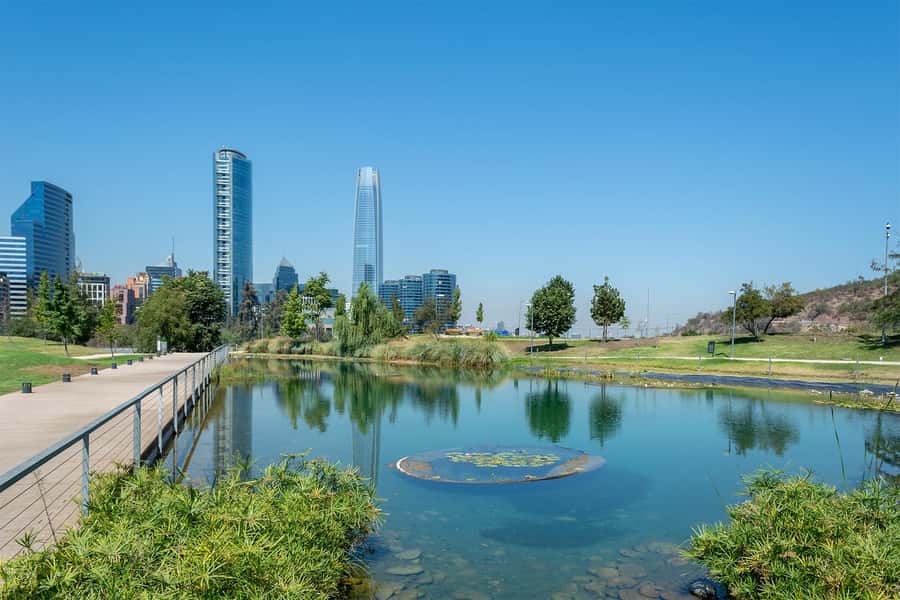
- Bicentenario Park: independence, views, and a gentle start
- Costanera Center and Sanhattan: modern Santiago in one skyline glance
- Bellavista and the museum-and-nightlife vibe
- Forestal Park and the art museum connection
- San Francisco Church and the real earthquake resilience story
- National Library: Chile’s literature center, seen from the street
- Santa Lucía Hill: the one longer stop with a view payoff
- Lastarria: museum-district streets and an easy place to eat later
- Ex National Congress and the story of political geography
- Metropolitan Cathedral and Plaza de Armas: where Santiago’s old center shows its bones
- Santiago’s financial heart: Stock Exchange and everyday commerce
- La Moneda and Plaza de la Constitución: politics in the flesh
- Guides who set the tone: tailored stories, not just facts
- Price and value: is $60 for 4 hours a good deal?
- When this tour works best for you
- Should you book this Santiago city tour?
- FAQ
- How long is the Santiago city tour?
- What is included in the price?
- Does the tour visit La Moneda?
- What languages is the live guide available in?
- Is there any walking involved?
- Is the tour wheelchair accessible?
Key things that make this tour worth your time
- Small-group, personalized pacing so questions don’t get rushed into silence
- Hotel pickup and drop-off in central areas, saving you metro-navigation stress
- A built-in mix of viewpoints: city parks, hills, and landmark architecture
- English/Spanish/Portuguese live guide, so the history actually lands
- Top-of-city skyline pass near the tallest building in South America
- Santa Lucía Hill is on foot and can be closed for maintenance on some days
4 hours in Santiago: the pace that helps you decide what’s next
Santiago can feel like two different cities that share the same air. This tour is designed to show you both early, so you can decide what you want more of later—church architecture, neighborhood atmosphere, or modern city planning. The 4-hour duration is a sweet spot: enough time to build context and orientation, but short enough that you still keep your afternoon for a second plan.
The format is simple. You ride in an air-conditioned minivan, stop briefly at major sights, and spend a bit more time in key viewing areas. The result is not “see everything.” It’s see the right things and understand why they matter. That’s especially helpful when you’re new to Santiago and want to get your bearings fast.
Group size is small. From what you’ll experience on the day, this tends to mean you can actually talk to the guide instead of asking questions only in your head. And if your group is tiny, it can feel almost like a private tour, with room to take extra minutes when something catches your eye.
You can also read our reviews of more tours and experiences in Santiago Chile.


Bicentenario Park: independence, views, and a gentle start
Your tour begins at Bicentenario Park, a location that sets the tone immediately. The park is tied to Chile’s independence anniversary, and it’s built as a celebration space—good landscaping, local plant life, and open viewpoints over the city.
This stop works well for two reasons. First, it gives you elevation and a sense of the city’s layout without making you do a full-on hike right away. Second, it’s an early reminder that Santiago’s identity is tied to major national milestones, not just to modern streets and traffic.
You’ll also get a first look at how Santiago sits in a valley with mountains in the background. Even when you’ve only seen postcards, this is where it becomes real. It’s easier to understand the rest of the route once you’ve seen the geography.
Costanera Center and Sanhattan: modern Santiago in one skyline glance
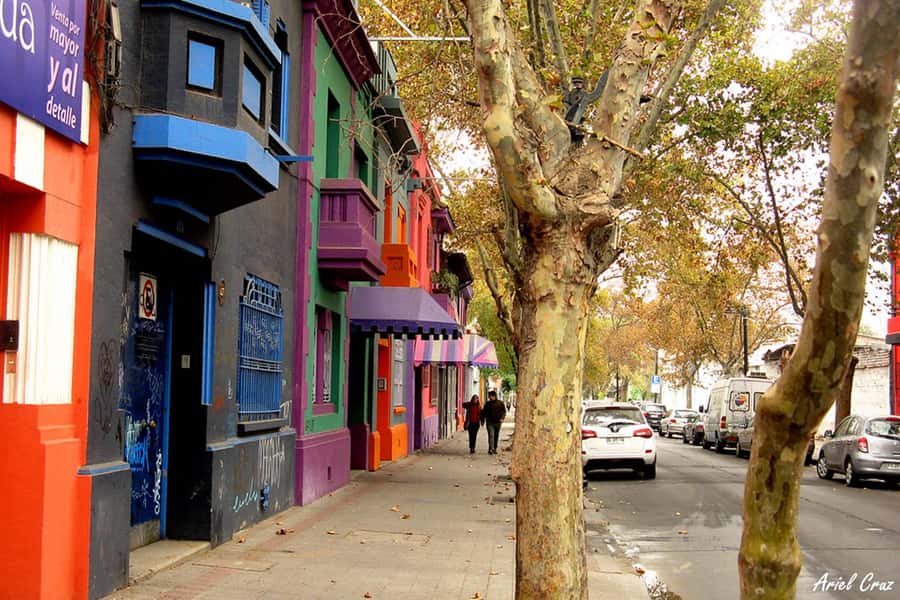
Next you pass Costanera Center, in the financial district often nicknamed Sanhattan. If you look up for a moment, this is the kind of sight that makes the city feel current. The centerpiece is the tallest building in South America, and it’s a very clear indicator that Santiago isn’t stuck in the past.
Why this pass matters: it calibrates your expectations. Many first-time visitors only look for colonial-looking streets. Here, you see how the city grows vertically and how business life concentrates around certain districts. It’s a useful mental map for later days—especially if you plan to shop, eat in upscale areas, or just want modern architecture photos.
The stop itself is quick, so don’t expect a long building visit. But a skyline view from the street is often the fastest way to get the big picture.
Bellavista and the museum-and-nightlife vibe
You’ll drive through Bellavista, one of those neighborhoods people associate with creativity, dining, and nightlife. The guide may point out La Chascona, Pablo Neruda’s house museum, which is a strong anchor for the area.
What I like about including Bellavista as a pass rather than a long stop is efficiency. You get a sense of the neighborhood’s character without losing too much tour time. And because you’re not forced into a formal museum schedule, you can decide later if Neruda’s world deserves a deeper visit.
Bellavista is also a good “taste test” neighborhood. If you enjoy lively evenings and artistic energy, you’ll likely come back here. If you’re more into quiet streets and viewpoints, you’ll know to focus your later time elsewhere.
Forestal Park and the art museum connection
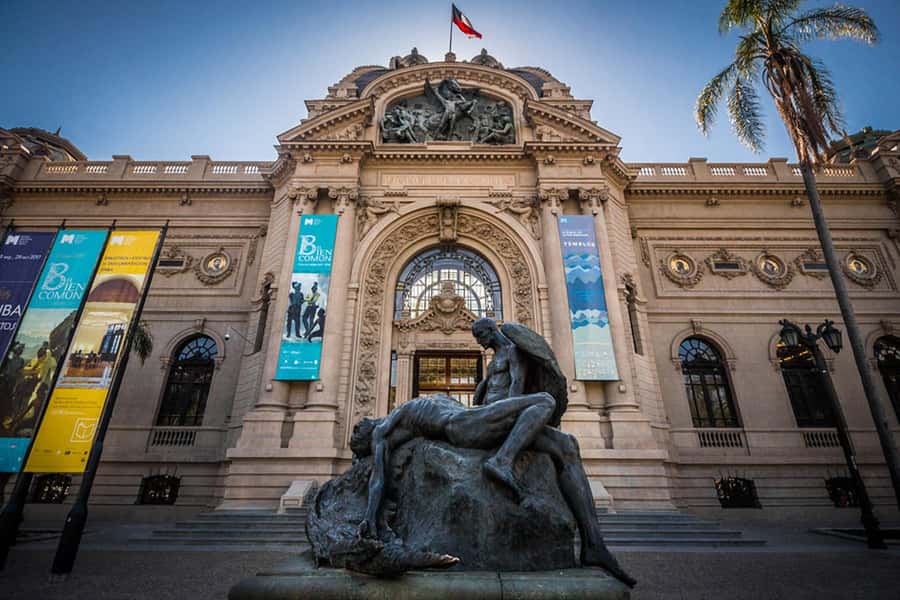
As you head toward Forestal Park, you’ll get a different feel—more park space, more leisurely walking zones, and a French-style park layout. This matters because Santiago’s best views aren’t only on hills. Some of the city’s most pleasant breaks happen in green belts.
Forestal Park is also connected to the idea of fine arts, including mention of Latin America’s first fine art museum. Even if you don’t go inside, the park setting helps you understand how the city plans cultural spaces next to everyday life.
If you’re traveling with limited time, these “in-between” cultural landscapes are a smart inclusion. They prevent the tour from being all concrete and quick church photos.


San Francisco Church and the real earthquake resilience story
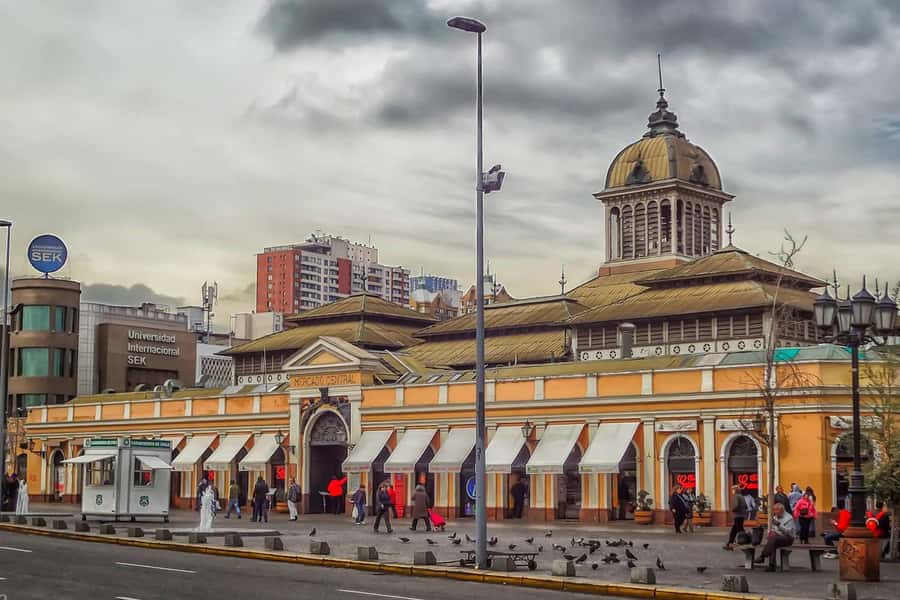
You’ll pass San Francisco Church, described as the oldest building in Santiago and one that has withstood many earthquakes over centuries. That single detail changes how you look at the façade.
Earthquake resilience isn’t a vague history lesson here. It’s a practical, visible reality shaping construction choices and preservation. When a guide points this out, it helps you understand why Santiago’s architecture can look both old and remarkably enduring.
This kind of stop is ideal if you like history that has consequences. It’s not only about dates. It’s about how people built to survive.
National Library: Chile’s literature center, seen from the street
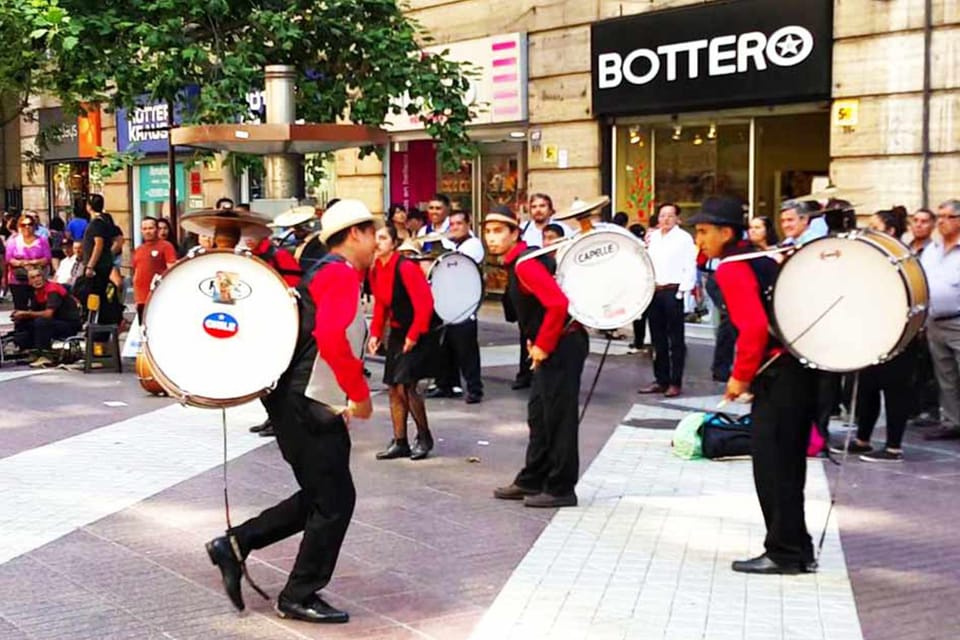
Another key pass is the National Library, highlighted as Chile’s main bibliographic center. Even without going inside, it’s valuable to see this kind of institution in the context of the city.
Why it’s worth including: libraries often feel like “quiet places” only locals use. Here you learn Santiago treats literature and national identity as part of the public landscape—just like parks and monuments.
If you’re the type who enjoys learning about the intellectual side of a place, this stop will land better than you’d expect.
Santa Lucía Hill: the one longer stop with a view payoff
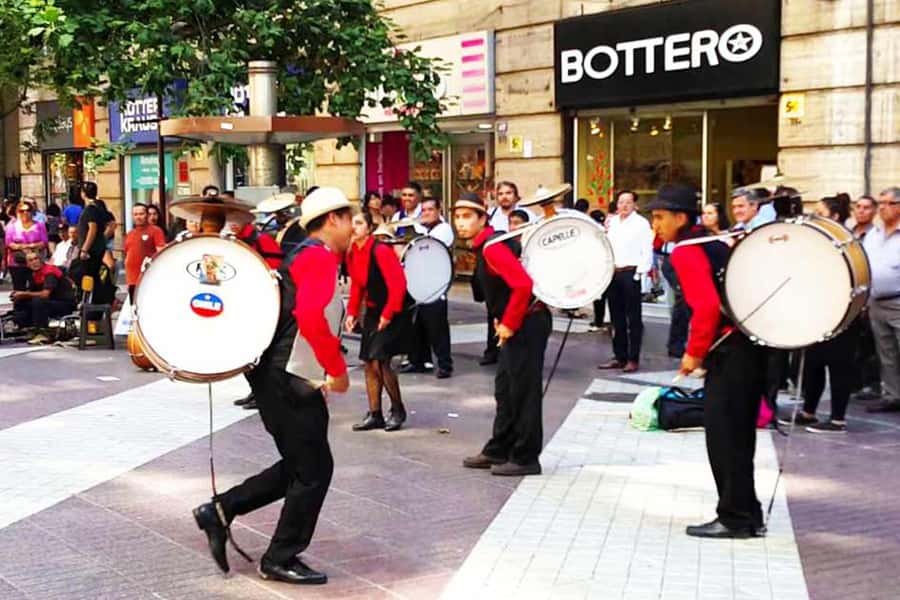
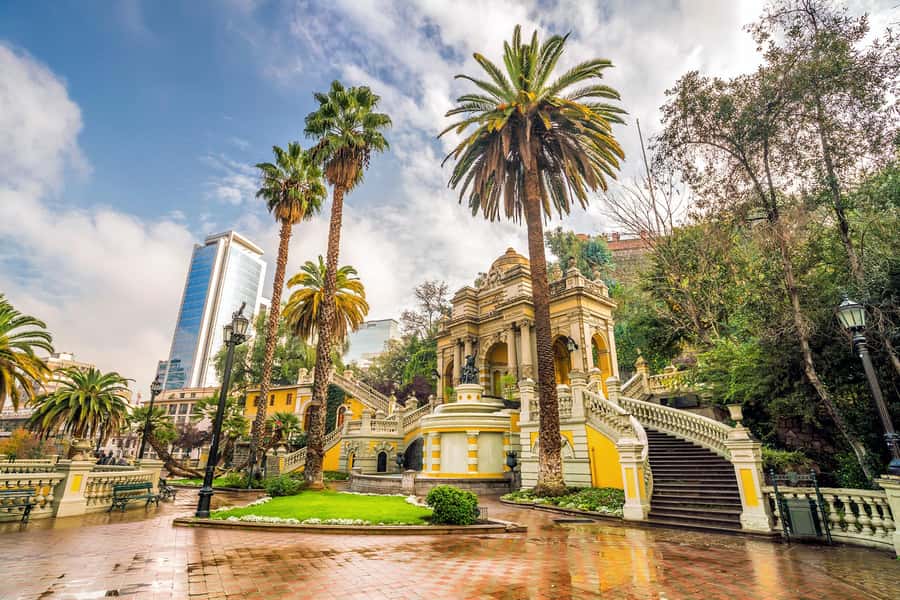
Santa Lucía Hill is a real moment in the schedule, with about 30 minutes allotted. This is the part of the tour where you trade vehicle time for walking and views.
The hill offers panoramic scenery, and the experience is tied to its history. You’re also getting the city’s “bigger picture” from a vantage point that feels like a viewpoint rather than a street corner.
Two things to keep in mind:
- The climb is on foot, so comfortable shoes help.
- Some days it may be closed for maintenance, so you may need to roll with an alternate arrangement if that happens.
If your goal is to get at least one iconic view during your first day, this is the best place to count on it.
Lastarria: museum-district streets and an easy place to eat later
After the hill, you pass Lastarria, known as a museum district. It’s also described as a great spot for dining and evening entertainment.
This stop is subtle but useful. It’s not always the top tourist box on a first visit, yet it’s exactly the sort of area where you can extend the day without overplanning. If you want to grab dinner near museums, stroll a bit, and keep the evening flexible, Lastarria is the kind of neighborhood that supports that.
Even as a pass-through, you’ll likely come away with enough orientation to choose a next stop without guessing.
Ex National Congress and the story of political geography
You’ll also see the former National Congress building, noted because it moved to Valparaíso. That’s a small detail that explains a lot: power isn’t static, and cities in Chile have different roles over time.
This kind of stop works for people who like political history but don’t want a lecture. A quick view plus a couple of clear explanations is often the right balance in a 4-hour tour.
Metropolitan Cathedral and Plaza de Armas: where Santiago’s old center shows its bones
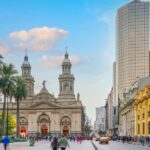
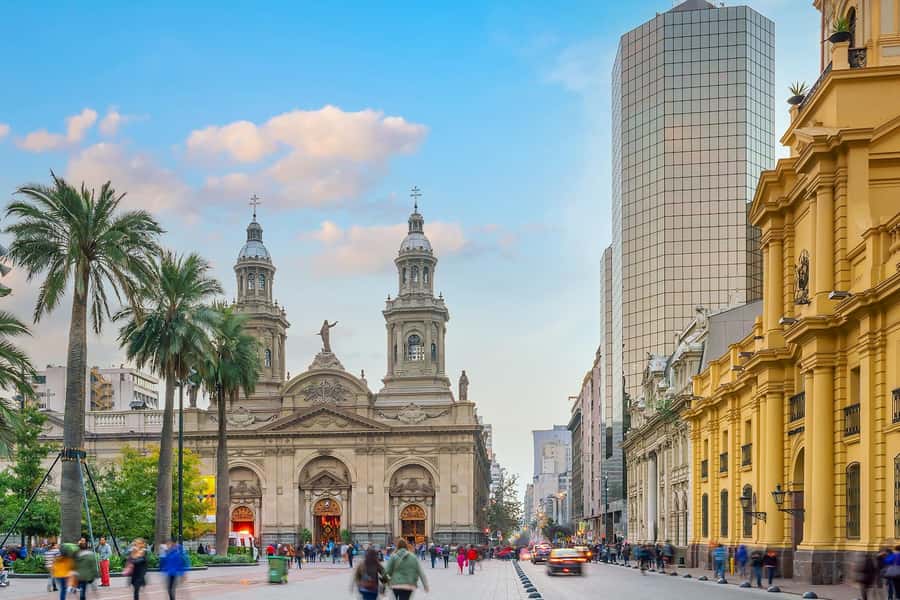
You’ll visit or spend time around two major historic anchors: the Metropolitan Cathedral and Plaza de Armas.
The cathedral is Chile’s main Catholic cathedral, recognized for its architecture and its central role. Plaza de Armas, meanwhile, is Santiago’s historic center and sits in the orbit of other colonial-era buildings.
Why these stops are valuable:
- They give you a sense of the city’s original “stage,” the kind of place where important public life happened.
- They help you connect neighborhoods to time periods. You start seeing what looks colonial isn’t random; it’s a pattern.
Also, the tour includes a careful schedule that doesn’t throw you from one major spot to another without context. It’s paced so you can actually process what you’re seeing instead of collecting names like souvenirs.
Santiago’s financial heart: Stock Exchange and everyday commerce
A short stop at the Santiago Stock Exchange gives you a snapshot of the city’s financial sector. It’s brief by design, but it’s still useful because it shows the modern functions happening side-by-side with older institutions.
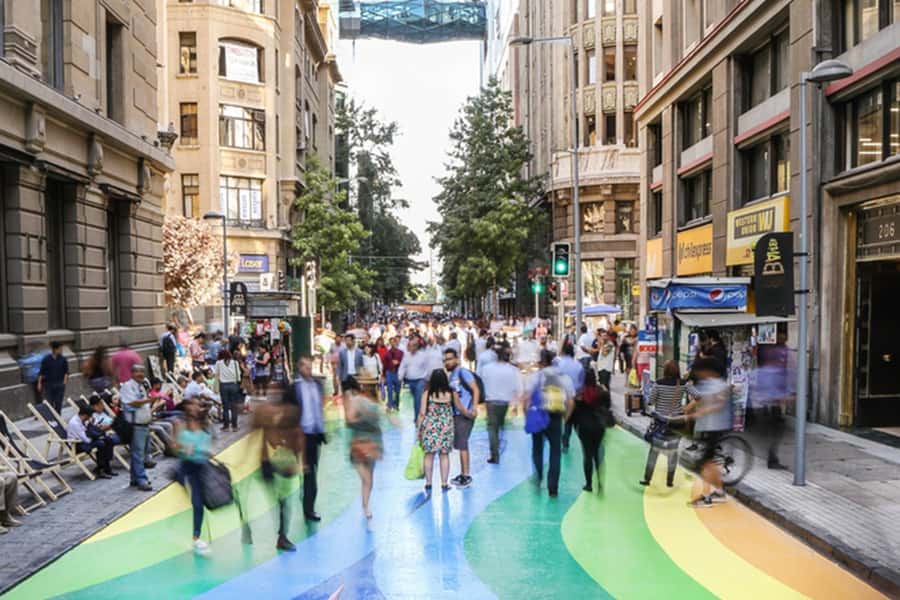
Then you walk along Paseo Ahumada, the main pedestrian street. You’ll get a feel for daily life and commerce—how Santiago moves when people aren’t posing for photos.
This mix—symbolic institutions and street-level reality—is one of the reasons the tour is good value. You don’t just look at landmarks; you experience how the city actually operates.
La Moneda and Plaza de la Constitución: politics in the flesh
The tour’s final set of stops centers on La Moneda, Chile’s presidential palace, and Plaza de la Constitución.
La Moneda is connected to the 1973 coup and the start of the military dictatorship. That is heavy history, and the guide’s job is to handle it with care and clarity. You’re there long enough to understand the importance of the place without turning it into an endless storyline.
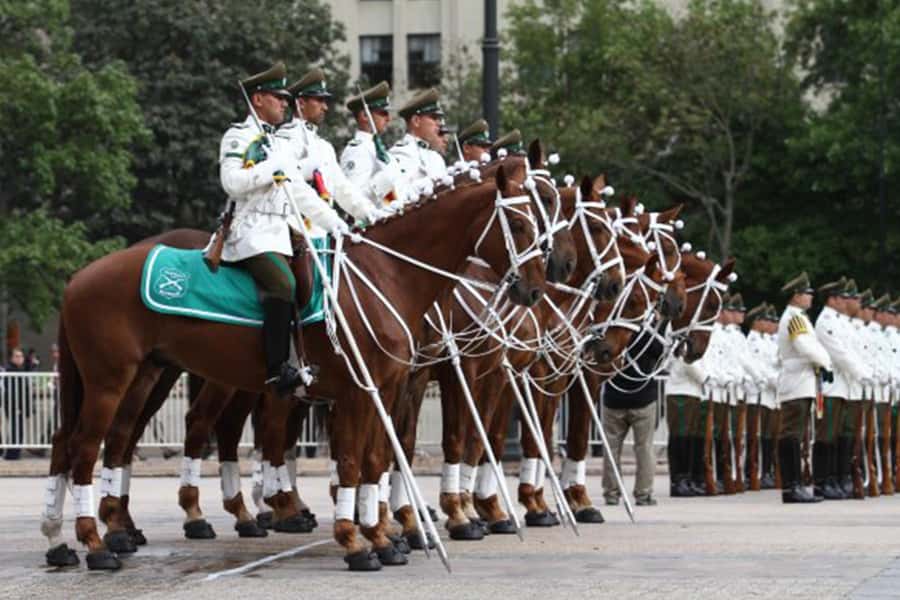
Then you witness the ceremonial changing of the guard at Plaza de la Constitución. That combination is powerful: one part is history you can’t ignore, the other is a ritual that shows how the state performs order and continuity in public.
If you want a day that feels like more than sightseeing, this is the part that gives the tour meaning.
Guides who set the tone: tailored stories, not just facts
A big part of the tour’s strength is the human element. The guides aren’t interchangeable background voices; they actively guide the day.
Carlos stands out for being thoughtful about interests—one example given is how he took into account football interests in the group. Rodrigo is noted for being flexible and helping make extra activities happen, including arranging a connection to Teleférico. Juan is highlighted for professionalism and friendliness, and also for keeping the pace comfortable when the group was just family (so it felt almost private). Daniel is described with enthusiasm for photography, which can be great if you like capturing details and not just wide shots.
Even when you’re not going deep into any one museum or attraction, these guide skills matter because they help you leave with stories you can repeat—and with an understanding of how districts connect.
Price and value: is $60 for 4 hours a good deal?
At $60 per person for about 4 hours, this is the kind of tour that tends to be worth it when you value time and context. You’re paying for:
- a local guide who can explain what you’re seeing
- hotel pickup and drop-off (huge in a city where getting to the right starting point can cost time)
- air-conditioned transportation via minivan
- visits/passes to a lot of high-recognition landmarks in one connected route
It’s not a luxury spend. It’s more like a well-structured orientation session with real stops. The fact that lunch isn’t included also signals the tour isn’t trying to force a full-day plan on you. You’ll have room to choose your own meal and keep control of your day.
If you have only one afternoon to “get Santiago,” this is the price bracket where you want efficiency plus a guide. If you already know the city well and want a slower pace, you might prefer a longer, more focused day on fewer neighborhoods.
When this tour works best for you
This tour is a smart pick if:
- you’re visiting Santiago for the first time and want fast orientation
- you want both modern and historic Santiago in one go
- you like asking questions and hearing city context
- your schedule is tight and you need pickup plus transport handled
It may not fit if:
- you hate walking steps (the Santa Lucía climb is on foot)
- you want long time inside churches/museums
- you’re planning to pack in multiple attractions and hate any driving time
Should you book this Santiago city tour?
Yes, if you want an efficient first pass that doesn’t skip the big identity pieces of Santiago: independence-era green space, the skyline, historic religious buildings, the old central plaza, and the political heart around La Moneda.
Book it especially if you like the idea of learning while you move, not staring at a map for hours. The small-group setup, the guided explanations in English, Spanish, or Portuguese, and the mix of viewpoints and historic context make it a solid way to start a Chile trip.
If Santa Lucía Hill is a must-have for you, remember it can be closed for maintenance. But even with that, the tour still offers a strong framework for understanding the city.
FAQ
How long is the Santiago city tour?
The tour lasts 4 hours, with a mix of short stops and a couple of longer viewing moments, including time at Santa Lucía Hill.
What is included in the price?
The experience includes a local guide, hotel pickup and drop-off, and transport by air-conditioned minivan, plus stops at main cultural and historical points of Santiago. Lunch is not included.
Does the tour visit La Moneda?
Yes. The route includes a stop at La Moneda (presidential palace) and then Plaza de la Constitución, where you can see the ceremonial changing of the guard.
What languages is the live guide available in?
The live tour guide is available in English, Spanish, and Portuguese.
Is there any walking involved?
Yes. The climb to Santa Lucía Hill is on foot, and comfortable shoes help. The hill may also be closed on some days for maintenance.
Is the tour wheelchair accessible?
Yes, the tour is listed as wheelchair accessible.