REVIEW · BOGOTA
Biking in Full Color: Urban Art Bike Tour
Book on GetYourGuide →Operated by Capital Graffiti Tours · Bookable on GetYourGuide
Street art hits different when you’re rolling through it. This urban art bike tour is a fast, fun way to connect the dots between Bogotá’s murals, its neighborhoods, and the country’s post-conflict story. I especially like how the ride turns big wall art into something you can actually read—slow down, look closer, and get the meaning in context.
Two things I really like: you cover 13 km on bike trails instead of doing the usual stop-and-go walking scramble, and you focus on art made by and for real communities. One possible drawback to plan for: this is a rain-or-shine ride, so if you hate weather, bring layers and expect to get wet.
In This Review
- Key Things I’d Highlight Before You Go
- Bogotá Street Art, But With Wheels: What This Tour Feels Like
- The Route: 13 km Across Four Neighborhoods
- La Candelaria: The Launch Pad
- Centro: The Street Art You Can Feel
- Teusaquillo: A Different Mood, Same Conversation
- Santa Fe: History Meets Public Space
- La Macarena: Giant Murals and Big Statements
- The Stops That Add Meaning: Coffee Factory and Giant Murals
- Coffee Factory Stop
- Giant Murals Stops
- Guide Power: Why Storytelling Makes the Art Stick
- Biking in Bogotá: Comfort, Route Options, and Real-World Expectations
- What to bring
- What not to bring
- Price and Value: Why $62 Can Make Sense
- Who This Tour Is Best For
- Quick Logistics: Meeting Point and What You’ll Do
- Should You Book This Bogotá Urban Art Bike Tour?
- FAQ
- FAQ
- How long is the Urban Art Bike Tour?
- Where is the meeting point?
- How much does it cost?
- What neighborhoods does the tour cover?
- What should I bring?
- Are backpacks or valuables allowed?
- Is the tour available in multiple languages?
- Is it a private or small-group option?
Key Things I’d Highlight Before You Go
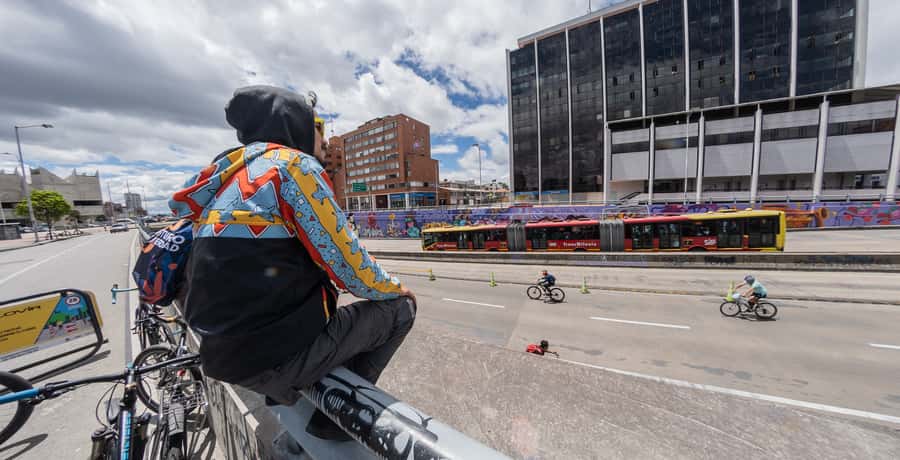
- Biking as the main transport so you move between neighborhoods without losing the thread
- Women artists on the walls, so you’re not only seeing the usual male-dominated street art story
- A peace and post-conflict mural that gives the art extra emotional weight
- Four distinct neighborhoods: Centro, Teusaquillo, Santa Fe, and La Macarena
- Stops that mix street art with local culture, including a coffee factory and giant murals
- A guide who can bring the artwork to life, including examples like Diego, who explains art plus history
Bogotá Street Art, But With Wheels: What This Tour Feels Like
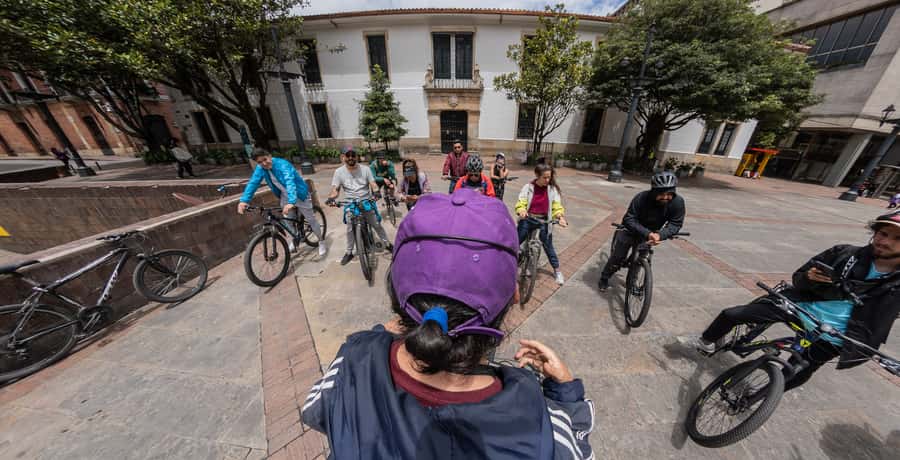
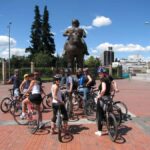
This tour is built around a simple idea: Bogotá’s graffiti and murals make more sense when you see them in motion. Starting in La Candelaria, you pedal through four neighborhoods—each with its own look, pace, and visual language—so the street art doesn’t feel like random decoration. It feels like a living conversation across the city.
And because you’re riding bike lanes (and potentially special routes during Ciclovía Sundays), you spend less time stuck on sidewalks and more time focused on what you came for: the walls. You also get a guide story with context—why the art exists, what it’s reacting to, and how it connects to Colombia’s broader social changes.
The best part for me is the balance. You’re not just hunting for pretty murals. You’re learning to recognize the street art movement in Bogotá and understanding why some murals carry political or peace-building messages.
You can also read our reviews of more cycling tours in Bogota
The Route: 13 km Across Four Neighborhoods
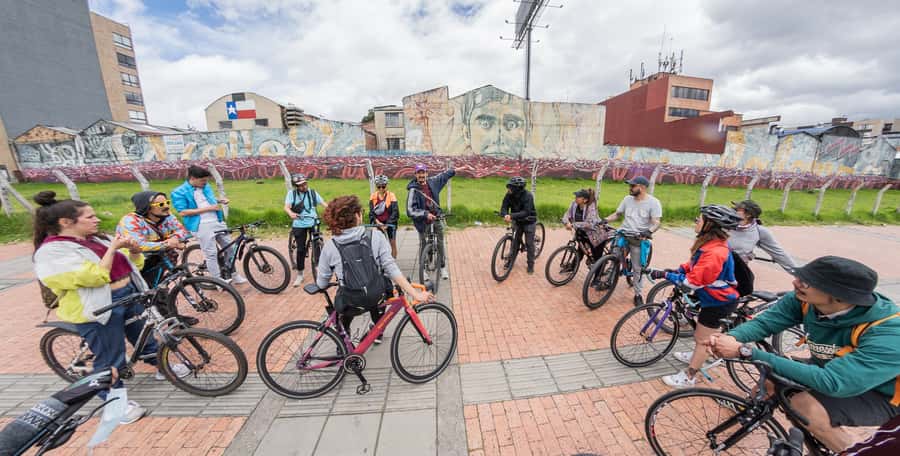
You’ll cover 13 km during a 3-hour ride, built around four neighborhoods: Centro, Teusaquillo, Santa Fe, and La Macarena. That structure matters. Bogotá’s street art scene changes from area to area, and even if you only have a short time in town, this gives you a real cross-section.
Here’s how the neighborhoods feel within the experience, and what you should watch for:
La Candelaria: The Launch Pad
Your tour starts in front of the big red wall at Carrera 3 #12–52 (La Candelaria). This is where you get your bearings fast. You’ll roll out with the guide’s framing of what you’re about to see—how to spot styles, how to read symbols, and what to listen for in the stories behind the work.
Why this matters: La Candelaria is the kind of place where tourists arrive with cameras but without context. Starting here helps you learn the language of the murals before the city gets bigger and louder.
Watch for: your guide in a purple hoodie, cap, or umbrella so you don’t waste time orbiting the meeting point.
Centro: The Street Art You Can Feel
Centro is where the city’s energy shows up fast. Expect politically charged murals and graffiti that respond to current realities. This is where the movement becomes more than aesthetic. The walls can be commentary, memory, and protest, all at once.
Possible drawback: if you’re sensitive to intense themes, this part may feel heavier than you expect, because some artworks deal with conflict, power, and social struggle.
Teusaquillo: A Different Mood, Same Conversation
Teusaquillo is a contrast neighborhood. The art here can feel more “composed,” and the vibe changes as you pedal. You’ll notice that street art isn’t one single style—it’s many voices using public space differently.
What I like about this stop: it breaks the ride’s rhythm so it doesn’t become wall after wall without breathing room.

Santa Fe: History Meets Public Space
In Santa Fe, the art often feels like a visual map of how people see themselves and their city. You’ll also be in the zone where the tour’s storytelling starts to click: techniques, symbols, and meaning stop being abstract and become readable.
Tip for you: stay off your phone during this stretch. The details are the point—letters, faces, small iconography, and the way the mural is placed in relation to the street.
La Macarena: Giant Murals and Big Statements
La Macarena is where scale often takes over. The tour includes stops for giant murals, and this neighborhood tends to deliver that “look up” feeling. You’re not just seeing art at eye level; you’re dealing with large-scale works that demand attention.
This is also where the tour highlights a mural symbolizing peace and post-conflict—a strong reminder that some street art is designed to help a society process what happened and imagine what comes next.
The Stops That Add Meaning: Coffee Factory and Giant Murals
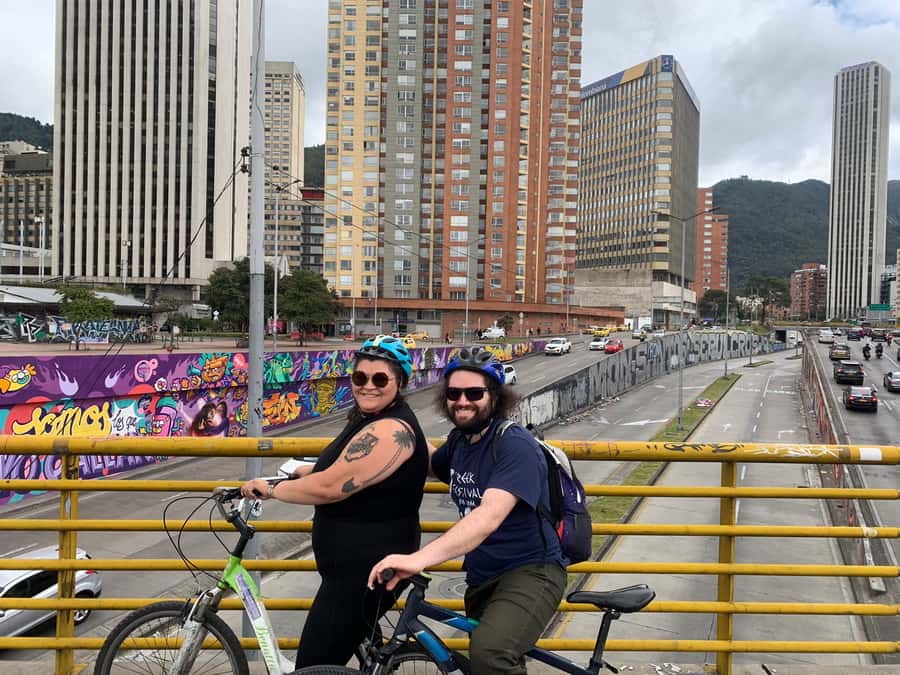
Bike tours can be efficient, but they can also feel like you’re only passing by things. This one adds structure with cultural stops.
Coffee Factory Stop
You’ll make a stop at a coffee factory. It’s a break from pure street art visuals, and it helps you reset your eyes and thoughts before you get back on the bike for more murals.
Why it’s valuable: coffee is part of Colombia’s daily life, and taking a short pause here turns the city from “just images” into an actual lived-in place.
Giant Murals Stops
Along the route, you’ll spend time with some of Bogotá’s largest and most striking murals. The guide connects what you’re seeing—symbols, color choices, and technique—to what it represents socially or politically.
How to get more out of it: look for repetition. When the guide points out a theme that reappears across neighborhoods, you’ll start noticing the street art movement as a network, not isolated murals.
Guide Power: Why Storytelling Makes the Art Stick
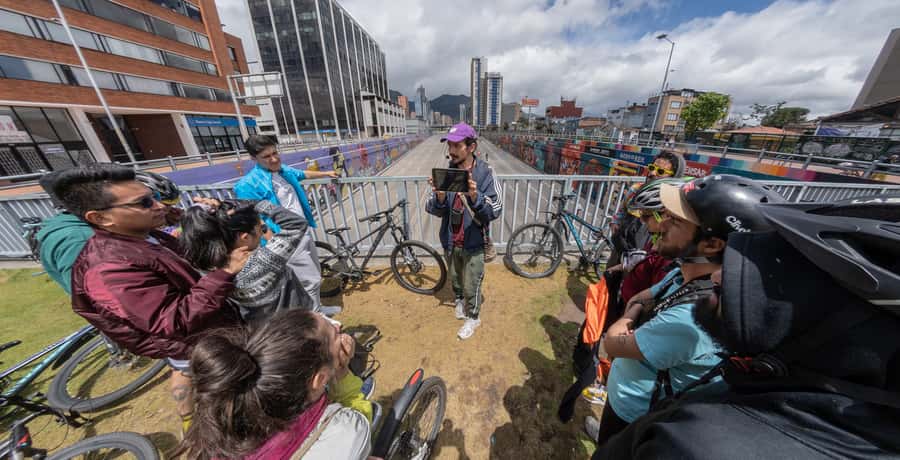
The tour’s quality hinges on the guide. This is one of the most praised parts, and it makes sense. A strong street art guide doesn’t just describe what’s painted; they explain why it exists and how the community uses the wall.
One example: Diego (mentioned in a verified booking) is described as highly engaged with the local community and able to explain art, graffiti, and history across multiple neighborhoods. That combination is exactly what you want, especially if you don’t speak the visual language yet.
Here’s the practical takeaway for you: if you want to understand Bogotá beyond photos, choose a tour where the guide treats the murals like documents—something you can interpret.
Biking in Bogotá: Comfort, Route Options, and Real-World Expectations
This tour uses city bike lanes, and on Ciclovía Sundays you may ride under that special Sunday-morning setup with more routes and cultural activities. That’s a big deal. It can mean less traffic pressure and smoother cycling.
You’ll also cover decent distance for a short outing—13 km in 3 hours. That’s not extreme, but you’ll want to be comfortable on a bike for stretches of city riding.
What to bring
- Sports shoes (you’ll be on streets and might hop off)
- A rain plan: the tour happens rain or shine, and you’ll be offered a rain poncho
What not to bring
- Backpacks
- Valuables
If you’re traveling light, great. If you’re used to carrying everything on your back, this is your nudge to rethink that habit.
Price and Value: Why $62 Can Make Sense
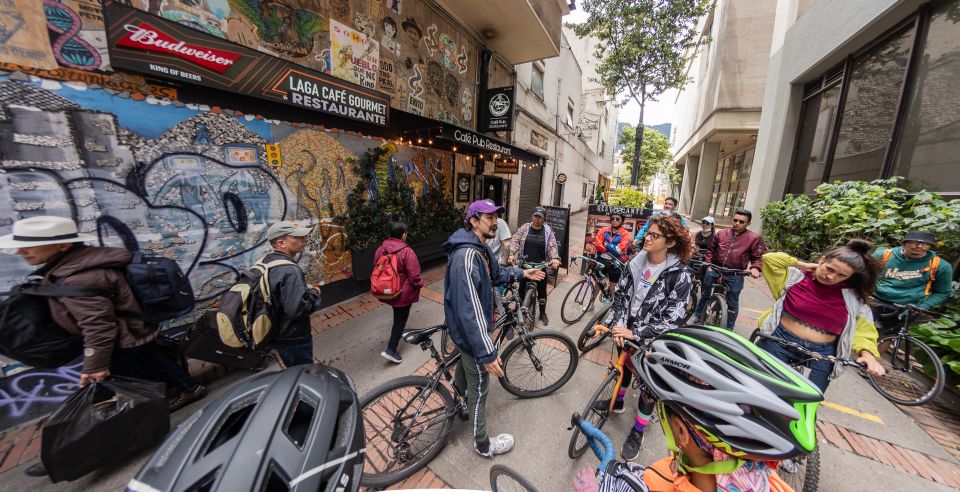
At $62 per person for 3 hours and 13 km with guided storytelling, the value is strongest if you care about more than just “seeing murals.” You’re paying for:
- A curated run across four neighborhoods
- Explanations that connect art to meaning (including political and peace-related themes)
- Bike lanes that reduce friction versus walking long distances
If your goal is strictly to take photos, you could DIY parts of the experience. But if your goal is to understand why Bogotá’s street art hits the way it does—recognizing the movement and reading the messages—this price is reasonable. You’re buying time, context, and an easy way to cover ground without getting lost.
Who This Tour Is Best For
This bike tour is a smart pick if you:
- Like street art but want the story behind it
- Want to cover more than one neighborhood without hiring separate transport
- Enjoy guided experiences that mix culture with city visuals
- Feel comfortable riding a city bike for about 3 hours
It’s also a solid option for first-timers in Bogotá who want a quick route to the city’s urban art identity—especially starting from La Candelaria.
Quick Logistics: Meeting Point and What You’ll Do
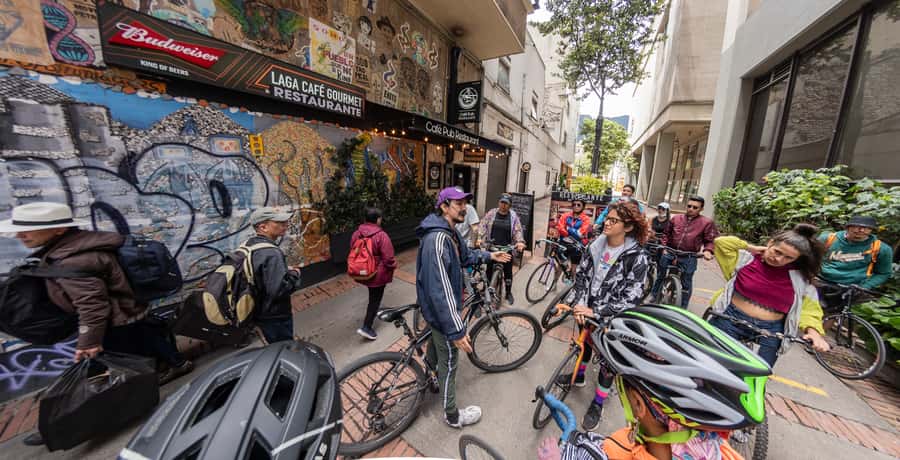
You’ll meet at Carrera 3 #12–52 in La Candelaria, in front of the big red wall. Your guide will be easy to spot in a purple hoodie, cap, or umbrella.
The tour runs for 3 hours and includes the guided cycling through the neighborhoods, with stops for a coffee factory and giant murals.
Should You Book This Bogotá Urban Art Bike Tour?
I’d book it if you want Bogotá’s street art scene with context, not just snapshots. The combination of bike-lane riding, four neighborhoods, and story-driven mural interpretation makes this a high-efficiency way to understand how urban art works as social commentary and community memory—especially with the peace/post-conflict mural theme.
Skip it only if you’re uncomfortable cycling in rain, you hate city biking logistics, or you’re hoping for a slow museum-style pace. This is active, outdoor, and meant to move.
FAQ
FAQ
How long is the Urban Art Bike Tour?
The tour lasts 3 hours.
Where is the meeting point?
You meet in front of the big red wall at Carrera 3#12-52, La Candelaria.
How much does it cost?
The price is $62 per person.
What neighborhoods does the tour cover?
It covers four neighborhoods: Centro, Teusaquillo, Santa Fe, and La Macarena.
What should I bring?
Bring sports shoes. You’ll also be offered a rain poncho since the tour runs rain or shine.
Are backpacks or valuables allowed?
No. Backpacks and valuables are not allowed.
Is the tour available in multiple languages?
Yes. The live guide is available in English, Spanish, French, German, and Italian.
Is it a private or small-group option?
Yes. Private or small groups are available.