REVIEW · GUATEMALA CITY
Combo Tour: Colonial Antigua & Guatemala City Explorer Tour
Book on GetYourGuide →Operated by Gray Line Guatemala · Bookable on GetYourGuide
Old stones in the morning, big-city monuments after. This combo tour strings together UNESCO Antigua and Guatemala City into one smooth 10-hour day, and I really like the way it gives you both the colonial details and the modern civic picture. I’m also a fan of the Agua Volcano views from Antigua Guatemala—short, real, and worth the effort. The one drawback to keep in mind: it’s not built for mobility issues, and some past bookings reported pickup problems, so you’ll want to stay on top of your confirmation and meeting point.
You’ll get a hotel pickup in Guatemala City, then head to Antigua to meet your bilingual guide and walk for about 3 hours. After lunch time (not included), you’ll roll into Guatemala City for an organized sightseeing loop that hits plazas, avenues, churches, and markets, then drops you back at your hotel.
In This Review
- Key highlights I’d circle on your itinerary
- Hotel pickup to Antigua walking: how the day starts in the right gear
- La Merced Church: baroque power and a founder in the stone
- Santa Catalina Arch: an architectural shortcut with a history
- Central Park in Antigua: the colonial grid and a fountain with teeth
- La Unión tank (historic laundry): the city’s practical side
- Lunch time in Antigua (not included): plan for energy, not a quick bite
- Antigua to Guatemala City: shifting from colonial corners to modern avenues
- Las Américas Avenue and Berlin Plaza: monuments you can map fast
- La Reforma Avenue and Yurrita Church: European influence with local devotion
- Civic Center and Major Plaza: where power meets the public
- Central Market area: shop for crafts, not just souvenirs
- Pace, group size, and the real value of $65
- Who this tour fits (and who should pick something else)
- What the guide experience can feel like (based on past mentions)
- Should you book the Colonial Antigua and Guatemala City Combo Tour?
- FAQ
- How long is the Colonial Antigua & Guatemala City Explorer combo tour?
- What’s included in the price?
- Is lunch included?
- How big is the group?
- What should I bring for the day?
- Is the tour suitable for people with mobility impairments?
- What language options are available for the guide?
Key highlights I’d circle on your itinerary
- UNESCO Antigua on foot: ~3 hours of guided walking focused on key colonial sights
- La Merced Church + Santa Catalina Arch: baroque religious art and the story behind the arch’s purpose
- Central Park grid + Las Sirenas fountain legend: colonial urban planning with a dramatic folk tale
- La Unión historic public laundry: why this place mattered to ordinary families
- Berlin Wall pieces in Berlin Plaza: a surprising global link tucked inside Guatemala City
- Major Plaza of the Constitution + Central Market: monuments up top, crafts below in the market area
Hotel pickup to Antigua walking: how the day starts in the right gear
The tour kicks off with round-trip hotel transfers from most Guatemala City hotels. That matters more than it sounds. Antigua is only a bit outside the capital, but timing, traffic, and finding meeting points can eat your energy fast. Here, you start with someone handling the logistics, and you can focus on walking smart and seeing more.
Once you reach Antigua, you meet your local bilingual guide and begin a soft walking circuit of about 3 hours. This isn’t a marathon across cobblestones, but it is still real walking—so comfortable shoes are non-negotiable. You’ll get the kind of stop-and-go pacing that lets you actually understand what you’re looking at instead of just snapping photos and running.
A good way to think about this opening section: Antigua isn’t only about pretty buildings. It’s about why those buildings were built, how they were changed by disasters, and how daily life worked inside the colonial system.
You can also read our reviews of more city tours in Guatemala City


La Merced Church: baroque power and a founder in the stone
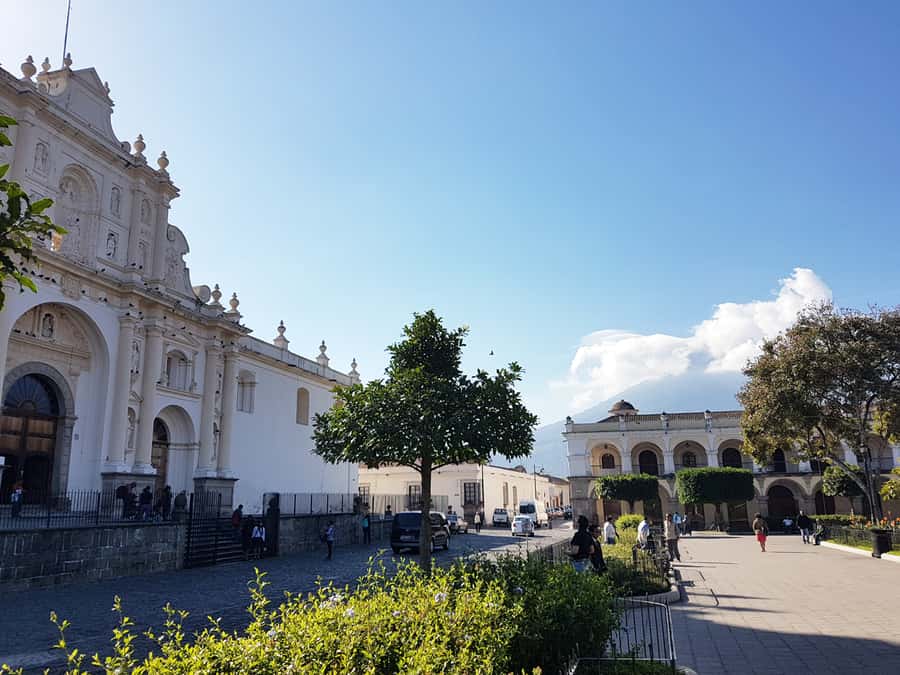
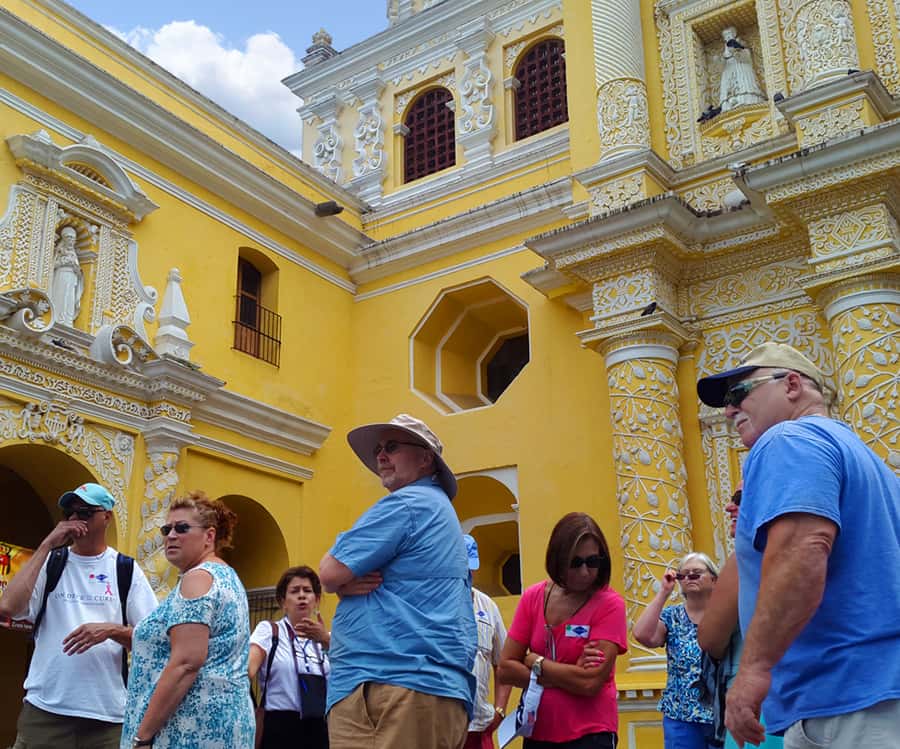
One of the first stops is La Merced Church, known for its Guatemalan ultrabaroque style. You’ll notice the dramatic look that comes with that style—two bell towers and a facade packed with symbolism.
The detail I’d pay attention to is the upper facade sculpture of San Pedro Nolasco, the founder of the Mercedarian Order. That matters because it tells you Antigua’s colonial architecture wasn’t just decoration. It was a message. Churches were public statements of faith, authority, and community identity, all built into the city’s daily rhythm.
If you like architecture that has a backstory, this is your kind of stop. If you’re more into open-air views and less into churches, you’ll still find it useful because it sets the tone for the rest of the colonial sightseeing.
Santa Catalina Arch: an architectural shortcut with a history
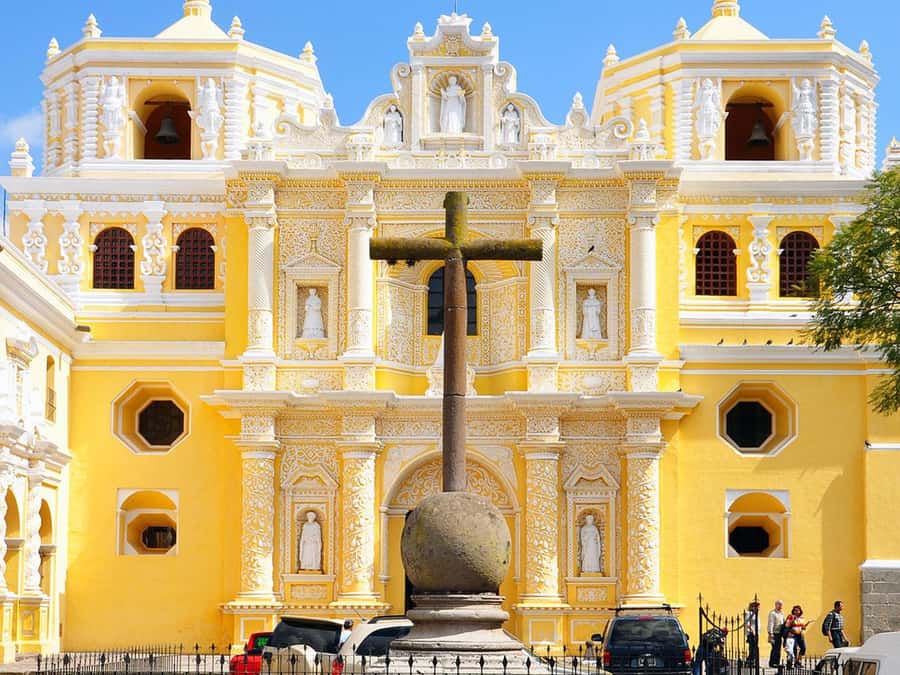
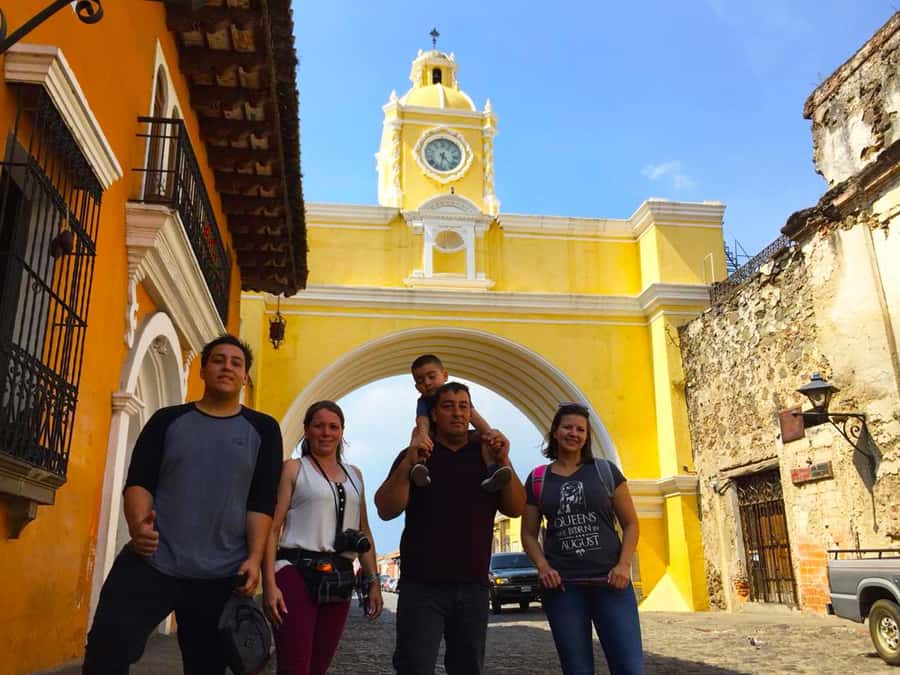
Next comes Santa Catalina Arch, a passage built to connect nuns between cloisters so they wouldn’t be seen while following their religious restrictions. That simple function is part of why the arch feels so grounded—this isn’t a monument that ignores daily life.
After the 1773 earthquakes, the arch became even more important due to alterations, including the addition of a turret and a French-origin clock (the name given is Lamy Amp Lacroix). In other words, you’re looking at a structure that survived a major turning point and was adapted afterward.
This is a great moment to slow down. Antigua can feel like a postcard, but stops like this show you it’s a lived-in city layered with change.
Central Park in Antigua: the colonial grid and a fountain with teeth
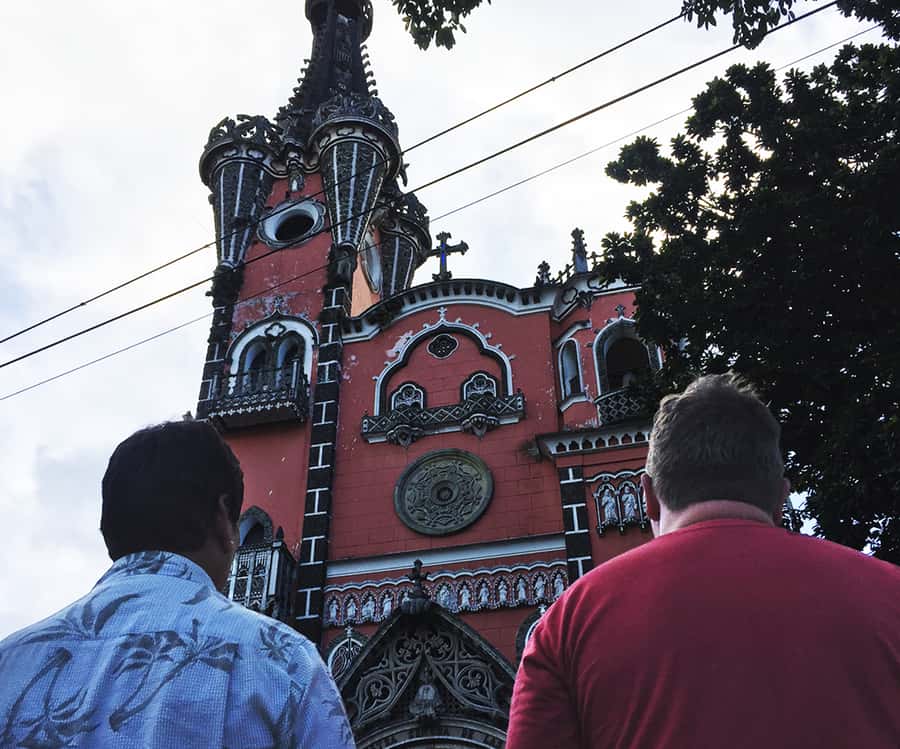
Antigua’s Central Park is laid out in the traditional grid pattern used across Spanish colonial urban planning. It’s surrounded by major landmarks: the Palace of the General Captains, Town Hall, the Cathedral of San Jose, and the Trade Portal. Even if you don’t go inside every building, the park gives you the map logic of the city.
Near the park you’ll also see Las Sirenas fountain. The story tied to it is dark and unforgettable: the Count of La Gomera ordered the fountain be built in memory of his daughters, who were tied in the center of a waterhole and died from thirst and hunger.
Now, I’m not saying you need to get emotional about a fountain story. But I do think it helps you understand why plazas matter. These spaces weren’t only for commerce and ceremonies; they also held folk memory and cultural warning tales.
La Unión tank (historic laundry): the city’s practical side
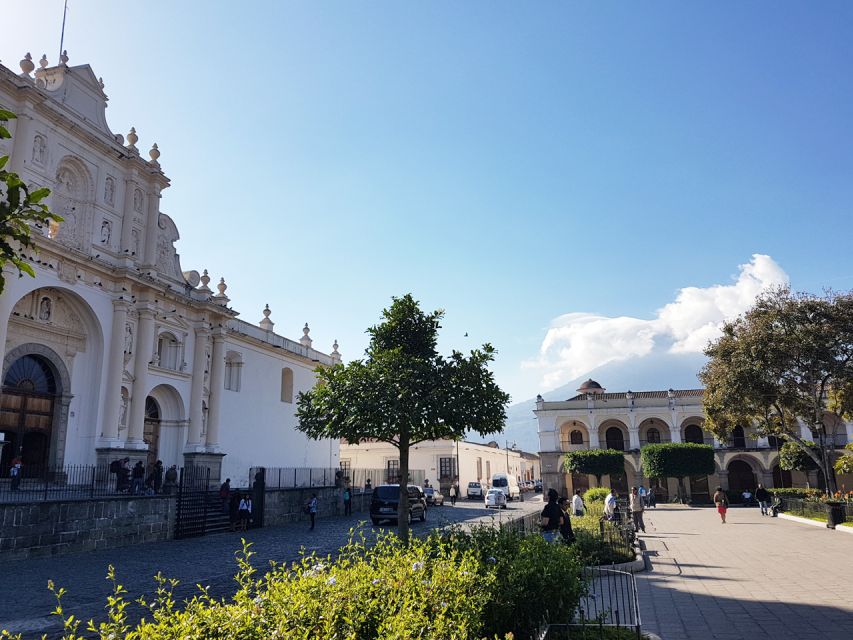
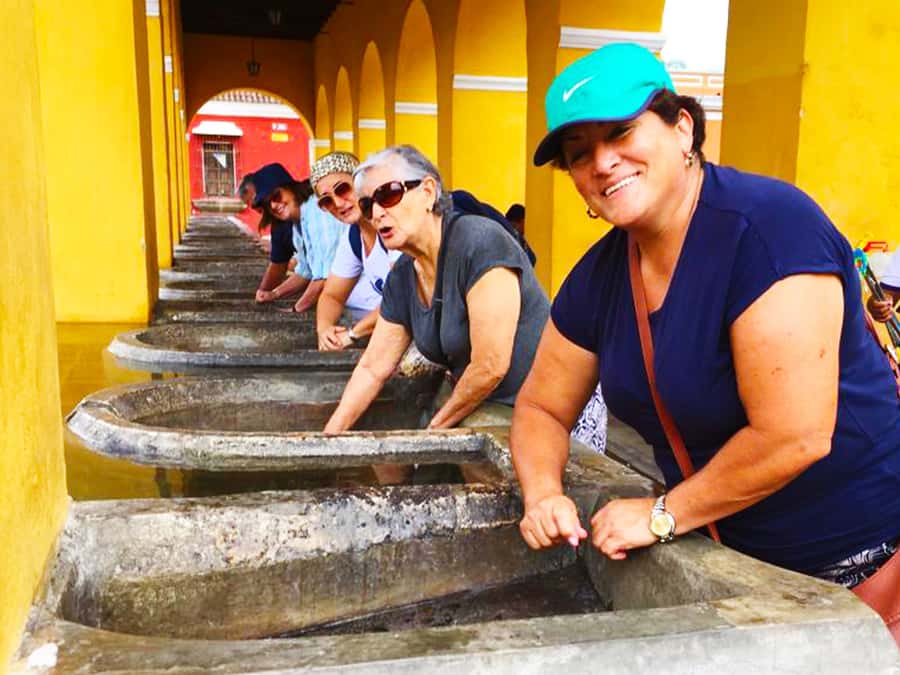
After the park area, you’ll visit La Unión tank, described as one of Antigua’s most iconic laundries. The reason it stands out is social: only big houses had laundry facilities, so many residents (especially housewives) used public laundries.
This tank was inaugurated on February 3, 1853. That date gives you a timeline anchor. You’re seeing infrastructure that supported everyday life long after the city’s most dramatic colonial beginnings.
For me, this stop is one of the best value-adds because it shifts you from big monuments to normal routines. Antigua becomes less like a museum and more like a place where people actually lived.
Lunch time in Antigua (not included): plan for energy, not a quick bite
You’ll get time for lunch in Antigua, but food and beverages aren’t included. That means the tour won’t rush you into one fixed meal option.
Here’s how I’d handle lunch strategically: keep your expectations flexible. Cobblestones and side streets can make quick service unpredictable. If you want to move smoothly later, choose something you can eat without burning time—then pace yourself for the Guatemala City portion of the day.
A simple rule: if you’re hungry, eat. If you’re not, grab something light. You still have plenty ahead.
Antigua to Guatemala City: shifting from colonial corners to modern avenues
After Antigua, you transfer back to Guatemala City and start sightseeing through the capital. The day’s structure is smart: you spend the morning understanding the colonial system visually, and then you see how Guatemala City layers history into modern city design.
This section also helps you see scale. Antigua feels compact and story-rich. Guatemala City is where you see the country’s administrative, economic, and cultural weight.
So don’t judge Guatemala City too quickly by the first street. Give it a couple of stops and it starts to make sense.
Las Américas Avenue and Berlin Plaza: monuments you can map fast
Your Guatemala City route begins on Las Américas Avenue. In the central garden you’ll see plazas and monuments in honor of countries of the American continent. It’s the kind of sight you can appreciate even if you don’t read every plaque because the layout helps you understand the city’s idea of public space.
Then comes Berlin Plaza, where you can see three concrete pieces brought from Germany, including original sections of the Berlin Wall. It’s a surprising moment in the middle of Central America. It also works as a reminder that cities carry international symbolism, not just local stories.
Right after that, you also get a view of part of the city and the volcanoes (the specific feature mentioned is the volcanic views from the area). If visibility is good, this is where a camera earns its keep.
La Reforma Avenue and Yurrita Church: European influence with local devotion
Next is La Reforma, an avenue inspired by French boulevards, with statues carved in stone, bronze, and marble brought from Italy. If you like the feel of “European-style streets” outside Europe, this is one of the most direct examples on the tour.
After that, you’ll visit Yurrita Church, described as a private chapel with mixed Baroque style, including Romanesque and Byzantine elements. It was built as a votive offering by Felipe Yurrita, native of Arevalo, Castilla, Spain, to the Virgin of Our Lady of Sorrows.
The reason ties to a dramatic historical event: he credited the Virgin with saving her life during the eruption of volcano Santa Maria. Even if you don’t know the full volcano timeline, the point is clear—faith and survival got built into a physical landmark.
This is also a stop where a good guide pays off. The architecture reads better when someone explains the layers and the motive.
Civic Center and Major Plaza: where power meets the public
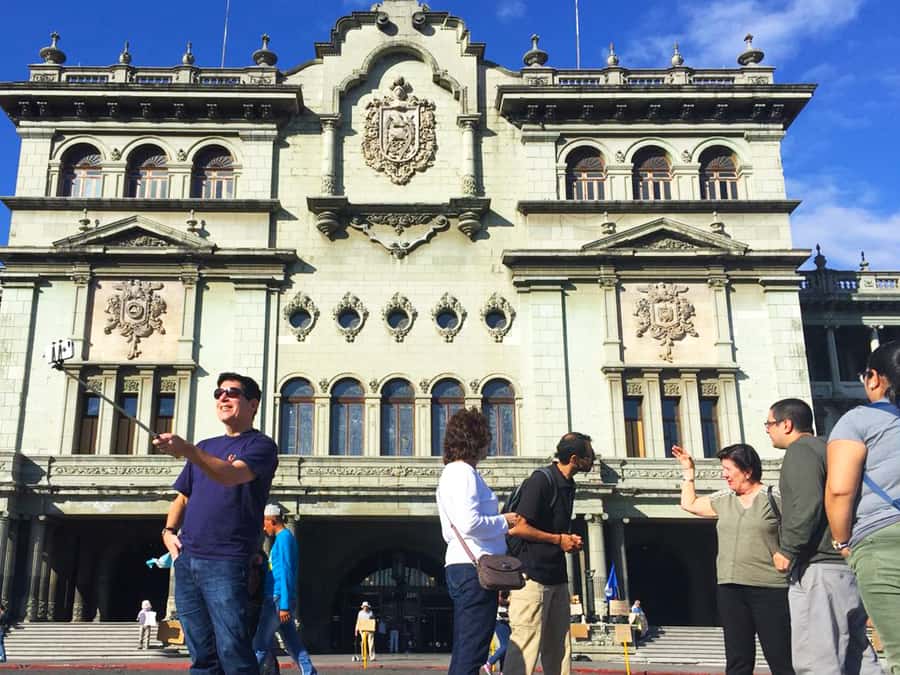
At the Civic Center of the City, you’ll see buildings constructed between the 50s and 60s, including the Supreme Court of Justice, Ministry of Public Finance, City Hall, Social Security, Bank of Guatemala, National Mortgage Bank, and the Guatemalan Tourism Commission. Think of this as Guatemala City’s administrative backbone.
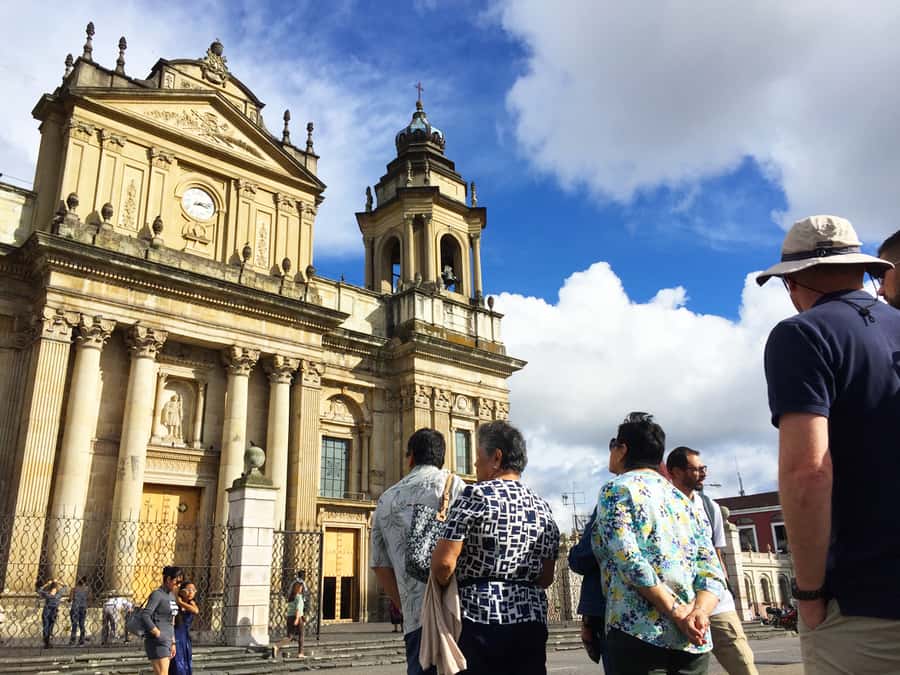
Then you arrive at the Major Plaza of the Constitution, described as the heart of the Historic Center. This is surrounded by major monuments: the National and Metropolitan Cathedral, Portal of Commerce, and Centenarian Park.
The value here isn’t only the photos. It’s the sense of how the city organizes itself around civic identity. After Antigua’s religious-plaza focus, Guatemala City shows a different kind of center—one tied to governance, institutions, and national presence.
Central Market area: shop for crafts, not just souvenirs
The tour includes a visit to the Central Market, located behind the Metropolitan Cathedral in the basement of Tabernacle Plaza.
This is where you can buy handicrafts from all over the country: ceramics, textiles, leather, wood, and silver. I like this approach because it’s practical. You’re seeing monuments upstairs, then stepping into a place where local craft and materials are part of daily trade.
If you plan to shop, go with a simple strategy:
- Pick 1–3 categories you care about (ceramics, textiles, or leather, for example).
- Ask questions about what you’re looking at rather than guessing.
- Budget your time so shopping doesn’t steal the best viewing moments at the cathedral area.
Pace, group size, and the real value of $65
This combo tour runs about 10 hours. That’s long, but it’s also a fair way to combine two major stops without you having to plan and book separate half-days.
The group is small, limited to 10 participants. In a city like Guatemala City, small-group tours are helpful because the guide can actually keep everyone together and answer questions without turning into a lecture for 30 people.
Price-wise, $65 per person is a bargain if the day runs smoothly: you get round-trip hotel transfers plus a bilingual Spanish/English guide. Food and beverages aren’t included, so you should budget lunch on your own.
The one thing I’d watch is how reliably pickup happens. While many people praise guides and comfort, a few past bookings reported not being picked up or receiving poor communication. That doesn’t mean it will happen to you, but it does mean you should confirm your pickup details and have a backup way to contact the operator.
Who this tour fits (and who should pick something else)
This combo is best for you if you:
- want Antigua’s core colonial sights plus the capital’s civic/modern highlights in one day
- like guided context (especially for churches and plazas)
- enjoy a small group pace rather than a large bus crowd
It’s not a great fit if you have mobility impairments, since it’s described as not suitable. Also, if you hate walking on uneven surfaces, you’ll likely feel the Antigua portion more than you want.
What the guide experience can feel like (based on past mentions)
The guide quality seems to be a strong part of the experience. In one highly rated account, a guide named Juan Pablo was praised as amazing and very knowledgeable. Another positive note emphasized the guide’s kindness and care, including a focus on keeping people comfortable and interested.
That’s the dream scenario: a guide who connects architecture to the real reasons behind it. And since you’ll move from Antigua’s religious and everyday-life sites into Guatemala City’s civic spaces, you’ll benefit from someone who can explain the “why” fast.
On the other hand, pickup reliability has drawn criticism in a few bookings. So plan to arrive ready and confirm your meeting details the day before.
Should you book the Colonial Antigua and Guatemala City Combo Tour?
I’d book this tour if you want a value-packed day that links two distinct parts of Guatemala—UNESCO Antigua’s colonial logic and Guatemala City’s plazas, institutions, and everyday shopping. The Antigua walking circuit and the mix of churches, parks, and practical sites like La Unión tank make it more than a photo loop.
I’d hesitate only if you’re very sensitive to potential pickup issues or you can’t do uneven walking. If you do book, keep your pickup details tight, wear comfortable shoes, and treat lunch as your own responsibility—then the day runs like a solid, well-paced sampler of the country’s two faces.
FAQ
How long is the Colonial Antigua & Guatemala City Explorer combo tour?
The tour duration is 10 hours.
What’s included in the price?
Round-trip hotel transfers from most hotels in Guatemala City and a bilingual Spanish/English guide.
Is lunch included?
No. Lunch is not included, though you’ll get time for lunch during the day.
How big is the group?
It’s a small group, limited to 10 participants.
What should I bring for the day?
Bring comfortable shoes, and it’s recommended to also bring a hat, sunglasses, and a camera.
Is the tour suitable for people with mobility impairments?
No, it’s listed as not suitable for people with mobility impairments.
What language options are available for the guide?
The guide is bilingual in English and Spanish. Other languages may be available with additional cost and guide availability, if you request them.